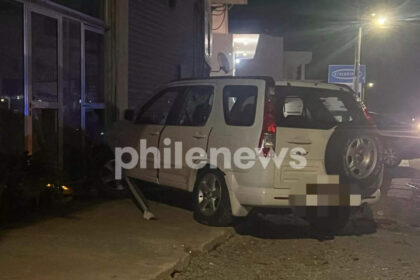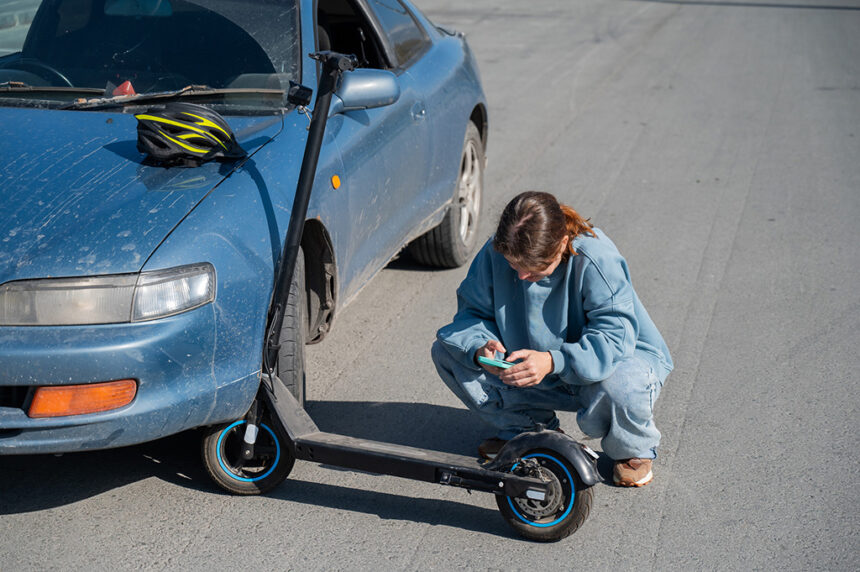
A growing number of car owners in Cyprus are facing financial losses due to damages caused by electric scooters and other two-wheeled vehicles, amid legal gaps that prevent police intervention. Social media platforms like TikTok and Instagram are flooded with posts from drivers documenting incidents where parked cars have been clipped or scratched by scooters, leading to repair costs that many are forced to cover out of pocket.
Electric scooter: Rising Incidents Highlighting Legal Loopholes
Viral clips circulating online depict the frustrating reality for car owners. One video features a dented BMW with a repair bill of approximately €600 after a scooter collided with it in Limassol. Another story from Nicosia shows a vehicle owner facing €450 in damages from a similar encounter. The common theme across these videos is the lack of police intervention, leaving victims to shoulder the burden of repairs themselves.
Police Confirm Limited Powers in Scooter Collisions
In an interview with the Sunday Mail, police officials confirmed that their ability to act in cases involving electric scooters, officially termed personal mobility devices (PMDs), is severely restricted. “Where there are serious traffic offences, serious injuries, or significant material damage, the police proceed to investigate a road collision involving a PMD or a bicycle. Otherwise, we cannot intervene,” the police stated.
Fines Issued but Enforcement Remains Weak
Authorities have issued 3,996 fines for PMD-related offences between 2023 and 2024. These include 1,592 fines for use in prohibited areas and 363 for operating outside designated lanes. However, the police acknowledged that enforcement remains a significant challenge. “This is intense in all cities and has reached worrying levels. Users of these devices, being vulnerable road users, are constantly exposed to risks on roads where the speed limit exceeds 30 km/h,” they added.
Legislation Stalled in Parliament
Despite escalating concerns, the legal framework governing electric scooters remains stagnant in parliament, leaving victims without adequate protection. Green Party MP Stavros Papadouris has pointed out the existing gaps, stating, “Depending on the area, supervision can fall under either the police or the municipality. If the situation is not fixed, there’s a risk that the legislation itself will collapse.”
Papadouris emphasised that the absence of registration and insurance is central to the ongoing issues. “These vehicles are not recorded anywhere and have no insurance coverage. We proposed a separate registry with identification plates and mandatory insurance so owners can be traced and costs covered,” he explained.
Human Cost and Legislative Challenges
The implications of the legal gaps extend beyond financial losses. Papadouris recounted a case where a motorcyclist was hospitalised for three months following a collision with an uninsured e-scooter, resulting in job loss and no compensation. He urged the government to recognise the legal void, stating, “If the government wanted, it could step in voluntarily, recognising the legal gap. But there are no legislative tools for that.”
Potential Stricter Measures Under Consideration
Disy MP Marinos Moushioutas mentioned that stricter measures are being considered by the House. “They are not insured, so we cannot intervene when an accident happens. Because the necessary measures are not being taken by the police, local authorities, scooter importers, and rental companies, we proposed banning scooters as a pressure measure,” he said, highlighting the urgency of the situation.
Municipalities Struggling with Enforcement
Local governments are also grappling with enforcement challenges. Kyriakos Xydias, the mayor of Amathus, commented on the legislative complexities, stating, “The scooters are a matter of legislation that has been passed. They are allowed to circulate below a certain speed limit, but there is no insurance. We have made professional plans, properly and legally, but we are not ready yet.”
Calls for a Comprehensive Micromobility Framework
Haris Christodoulou, an executive engineer at the transport ministry, acknowledged that while awareness campaigns have been launched, enforcement gaps are evident. “The absence of proper enforcement is the issue,” he stated, underscoring the need for a coherent legal framework that encompasses registration and insurance for e-scooters.
Police have suggested additional measures to enhance accountability, proposing that vehicles used in prohibited areas should be retained by law enforcement. “The bill should include provisions to ensure smooth implementation, including storage arrangements for retained PMDs,” they added.
Financial Burden on Car Owners
As social media continues to reveal incidents of damage, repair costs for collisions with scooters vary significantly, ranging from €300 to €750 per incident. High-traffic areas like university districts and promenades are particularly prone to such occurrences, prompting many drivers to alter their routes and parking strategies to avoid potential collisions.
Urgency for Legislative Action
With nearly 4,000 PMD-related fines issued in the past two years and injuries already reported, the need for a comprehensive and enforceable legal framework is becoming increasingly urgent. Papadouris warned that the collapse of the legal framework would lead to a return to unregulated conditions, jeopardising the safety of all road users.
As discussions in parliament continue over e-scooter legislation, the responsibility for accidents remains ambiguous. Car owners are left to absorb the costs, while officials and local authorities deliberate on the best course of action to ensure safety and accountability in Cyprus’s burgeoning micromobility sector.