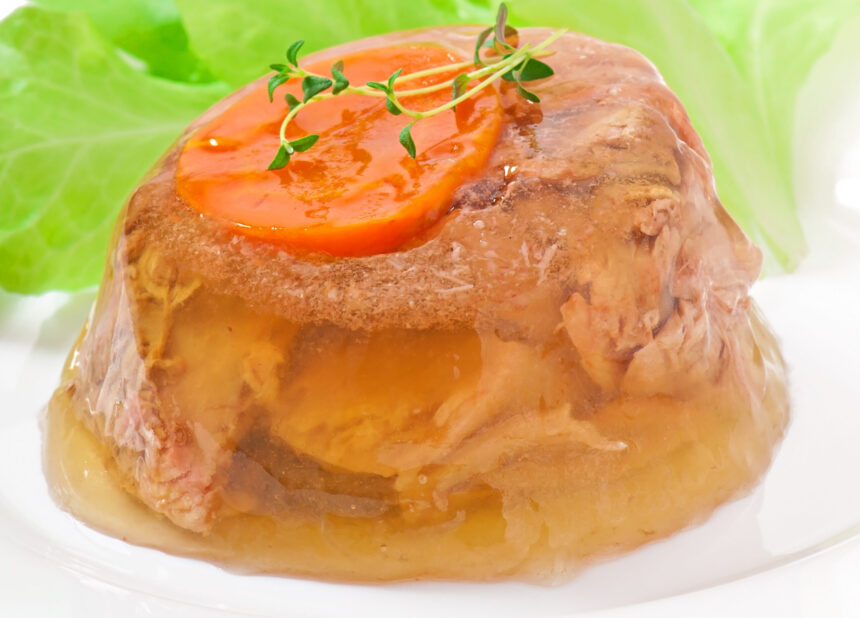
Polish Galareta is a culinary gem that encapsulates the heart of traditional Polish cuisine. Also known as ‘cold feet’, this savoury jelly, a type of aspic, showcases the art of preserving flavours and textures through a unique preparation method.
Polish galareta: A Journey Through Time
The origins of galareta can be traced back to 1518, when it made a grand appearance at the wedding feast of King Sigismund I the Old and Bona Sforza. The dish was initially crafted with a different approach than we see today, utilising poulard (young chicken), capon, or even fish, all simmered in a rich broth. The event marked the beginning of a tradition that would evolve over centuries.
From Rich Broth to Gelatinous Delicacy
The process of making galareta involves simmering meat and bones for an extended period, typically five to eight hours. This lengthy cooking time allows collagen to be released, resulting in a rich, gelatinous broth. Once the meat—often pork or chicken—and seasonal vegetables are added, the mixture is seasoned and left to cool, solidifying into its iconic jiggly form.
Serving Suggestions and Occasions
Traditionally served chilled, galareta has carved a niche as a popular appetizer or snack, especially during festive occasions and formal dinners. Its presentation often includes garnishes such as fresh herbs, sliced vegetables, or even a dollop of horseradish, enhancing both its visual appeal and flavour profile.
Evolution of Ingredients and Preparation
While the traditional recipe remains a favourite, the ingredients have evolved. Stanisław Czarnecki’s 1682 Compendium Ferculorum documented the preparation of meat jelly, highlighting the use of clear, seasoned broth and occasional colouring with linen flakes. These historical insights reveal how culinary practices adapt while retaining their essence.
Health and Safety Concerns
In the late 1990s, the reputation of gelatin products faced scrutiny due to fears surrounding mad cow disease. Public concern over the safety of beef gelatin led to a significant decline in its availability, paving the way for pork gelatin to take the forefront. Although apprehensions regarding potential prion risks linger, galareta has largely regained its cherished status in Polish households.
A Dish with International Kin
Galareta is not confined to Polish kitchens; it shares a family resemblance with savoury jellies found across Eastern and Central Europe. From England to Romania and as far as Vietnam, various cultures have embraced the practice of encasing ingredients in jelly. In Slavic nations, this dish goes by names such as kholodets or kholodne, literally meaning ‘cold’, highlighting its widespread appeal.
Regional Variations
Cyprus contributes its interpretation of the technique with zalatina, which showcases a similarly resourceful approach to cooking. In traditional zalatina, the entire animal is utilised, including parts like the head, feet, and, occasionally, ears and eyes. This method of preparation, often observed on the eve of Lent, underscores the cultural significance intertwined with the dish, reflecting both culinary and spiritual traditions.
Preservation and Practicality
At its core, the practice of creating savoury jellies like galareta and zalatina serves a practical purpose. By making the most of every part of the animal, these dishes represent a sustainable approach to cooking. Not only do they reduce waste, but they also ensure that no flavour goes unappreciated, turning even the most overlooked ingredients into something special.
The Modern Palate
In contemporary times, galareta continues to be a staple in Polish cuisine, often enjoyed by younger generations who appreciate both its unique texture and rich flavour. As culinary trends evolve, the dish adapts, with modern variations incorporating different meats, spices, and even vegetarian alternatives, appealing to a broader audience.
A Culinary Connection
As one savours a bite of galareta, it becomes evident that this dish is more than just a recipe; it is a connection to history, culture, and tradition. Each layer of flavour tells a story, inviting those who partake to appreciate the culinary heritage that has been lovingly preserved through generations.
Whether enjoyed at a festive gathering or as a comforting family meal, Polish galareta remains a testament to the ingenuity and resilience of traditional cooking, reminding us of the joys of sharing food that is both nourishing and steeped in history.