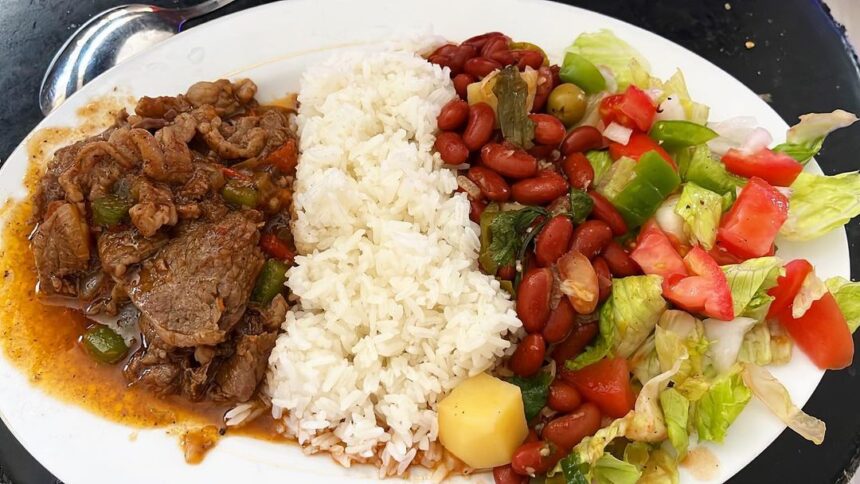
La Bandera, a dish emblematic of Dominican identity, offers a glimpse into the rich tapestry of the nation’s culinary heritage. This daily meal, translating to ‘the flag’, is a vibrant representation of the country’s culture, combining rice, beans, and a choice of meat into a balanced plate that resonates deeply with Dominicans.
A Historical Fusion of Flavours
The origins of La Bandera are steeped in the colonial and post-colonial history of the Dominican Republic. It showcases the fusion of diverse culinary traditions, particularly those of Spanish colonists, African slaves, and the indigenous Taino people. While La Bandera does not stem from a singular moment or inventor, it has evolved through generations, becoming a staple meal for families across different social strata by the 19th and 20th centuries.
The Core Components
At its heart, La Bandera comprises three key elements: white rice, stewed red beans, and a portion of meat, often chicken, beef, or pork. This combination not only provides nutritional balance but also reflects the symbolic interpretation of the Dominican flag itself. The rice signifies purity, beans represent the blood of the people, and the meat embodies strength and sustenance.
Everyday Preparation and Cultural Significance
La Bandera is predominantly prepared in homes, but it is also a common offering in small eateries known as comedores. These establishments often feature rotating daily menus, ensuring that this dish remains a near-constant presence in the lives of Dominicans. Its affordability and adaptability allow families to modify ingredients based on what is available, making it a versatile option for many households.
Urban vs Rural Variations
The preparation of La Bandera has also adapted to economic changes and urban migration patterns. In cities, the use of quicker cooking methods and modern kitchen appliances has streamlined its preparation, allowing for a faster-paced lifestyle. Conversely, rural communities often embrace traditional techniques, such as slow stewing, which enhances the depth of flavour in the dish.
Regional Differences and Seasonal Adaptations
As with many traditional dishes, regional variations of La Bandera exist throughout the Dominican Republic. Coastal areas frequently incorporate seafood, while mountainous regions may favour heartier meats and locally sourced beans. Despite these differences, the fundamental composition of the dish remains recognisable across the country.
Seasonality also plays a role in how La Bandera is served. During the hot months, lighter accompaniments such as fresh salads are preferred, while richer stews are more common during the cooler seasons. This flexibility reflects the island’s tropical climate and agricultural abundance, allowing the dish to adapt to both environmental and cultural shifts.
La Bandera in Celebrations and Gatherings
Beyond the everyday context, La Bandera holds a special place in family gatherings and national celebrations. Its presence during significant events further solidifies its role as a culinary anchor within Dominican identity. The dish not only satisfies hunger but also fosters a sense of community and belonging, linking generations through shared meals and traditions.
Shared Culinary Traditions Across Cultures
The structure of La Bandera finds parallels in various global cuisines, reflecting a broader convergence between Mediterranean and Caribbean cooking traditions. In Cyprus, for instance, everyday meals often combine starch, protein, and legumes in a manner similar to La Bandera, highlighting how simple, wholesome combinations form the backbone of home cooking across different cultures.
Continuity Amidst Change
Today, La Bandera remains a powerful symbol of continuity amidst change, linking generations through a shared daily ritual. Each carefully prepared plate served across the island and beyond holds within it not just the flavours of a meal, but the history and living culture of the Dominican Republic. It is a dish that embodies resilience, adaptability, and the enduring spirit of a nation proud of its culinary identity.