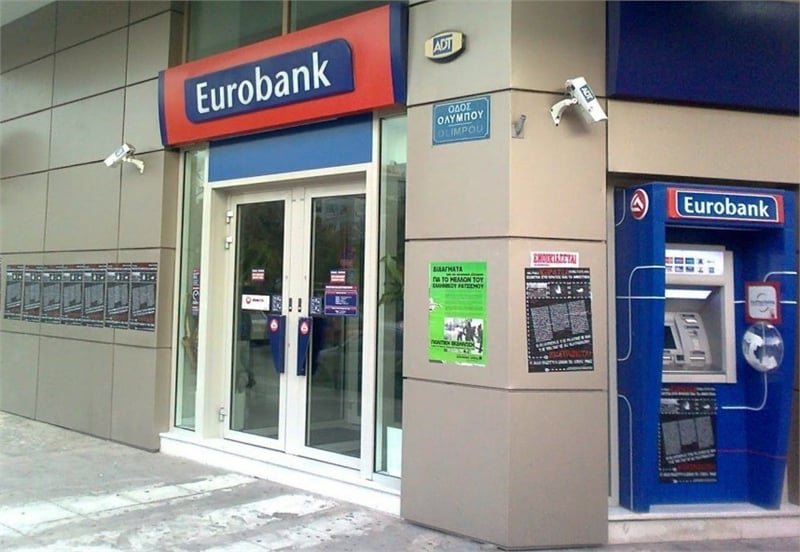
Eurobank has conducted a significant buyback, acquiring 1,334,684 of its own shares between August 11 and 14. The average purchase price for these shares was €3.45, amounting to a total expenditure of €4,606,846.31.
This initiative follows the approval of Eurobank’s Share Repurchase Programme, which was sanctioned by the Annual General Meeting of Shareholders on April 30, 2025. The programme was officially initiated on May 7, 2025, and the board of directors subsequently endorsed it.
The shares were purchased through Eurobank Equities Monoprosopi Anonymous Investment Services Company on the Athens Stock Exchange (ATHEX). Following these transactions, Eurobank Holdings now possesses a total of 32,836,468 of its own shares, which constitutes 0.8931 per cent of its share capital.
In the broader context of the Greek banking sector, systemic banks are poised to achieve robust net interest income, potentially reaching €8.5 billion by the end of 2025. This projection comes despite a series of interest rate declines already implemented and anticipated in the upcoming months.
Key to this positive outlook is net credit expansion, which has recorded unprecedented levels across Europe, with expectations to approach €14 billion this year. Most of the loans are currently aimed at businesses and are partly supported by the Recovery and Resilience Facility.
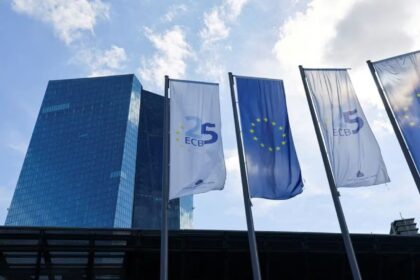
However, the mortgage lending sector remains largely stagnant. High property prices coupled with low household incomes deter many potential homebuyers, despite the more favourable interest rates. Data from the European Central Bank indicates that Greece recorded the second-highest annual credit expansion rate in the eurozone for non-financial corporate loans at 16.6 per cent as of June.
This impressive growth in credit is helping to counterbalance the pressures on interest income. Nonetheless, approximately €157 billion in deposits remain in savings and current accounts, which yield minimal to zero returns. These deposits belong to a mix of businesses, private individuals, and institutions, while only €47.4 billion is in term deposits that provide some return.
Currently, savings and current accounts account for 77 per cent of total deposits, with term deposits representing the remaining 23 per cent. By the end of the first half of 2025, total domestic deposits reached around €214 billion.
As of June, the interest rate spread in Greece remains one of the highest in Europe, standing at 4.27 per cent. This margin continues to be a key factor in sustaining bank profitability, even amid an expected gradual decrease in eurozone interest rates.
Looking ahead, Greek banks are forecasting strong profits for 2025, with total adjusted profits projected to reach approximately €4.7 billion, primarily driven by interest income and fees. As long as interest income continues to be resilient, the outlook for 2025 is promising compared to the solid results of 2024.
These strong earnings are facilitating substantial dividends for shareholders. In line with European practices, all four systemic banks—Piraeus, Eurobank, National Bank of Greece, and Alpha Bank—have announced interim dividends, ranging from 10 per cent to 20 per cent of net profits. Dividend yields for these distributions span between 1.2 per cent and 2.4 per cent, with the National Bank of Greece leading the pack with a distribution of €260 million, equating to 20 per cent of its profits.
In contrast, Piraeus Bank has opted for a more conservative approach, distributing only 10 per cent of its profits. These decisions signal a renewed sense of normalcy and confidence in the banking system’s stability, delivering tangible value to shareholders.
High share prices have led certain banks to temporarily pause their buyback programmes, though they plan to resume them later. The National Bank has also kept the door open for a potential final distribution, which could exceed 60 per cent of total profits.
The capital positions of Greek banks remain robust, reflecting successful stress tests conducted earlier this month. With ample capital, these banks are considering their next steps and exploring avenues to diversify their revenue streams.
As for mergers and acquisitions, the National Bank is actively searching within the insurance sector, although specific details were not provided during its recent half-year results presentation. Piraeus Bank is focused on completing its acquisition of Ethniki Insurance, while Alpha Bank maintains that any potential acquisition must meet strict investment criteria, ensuring it contributes positively to capital and earnings per share within a two to three-year timeframe without affecting its dividend policy.