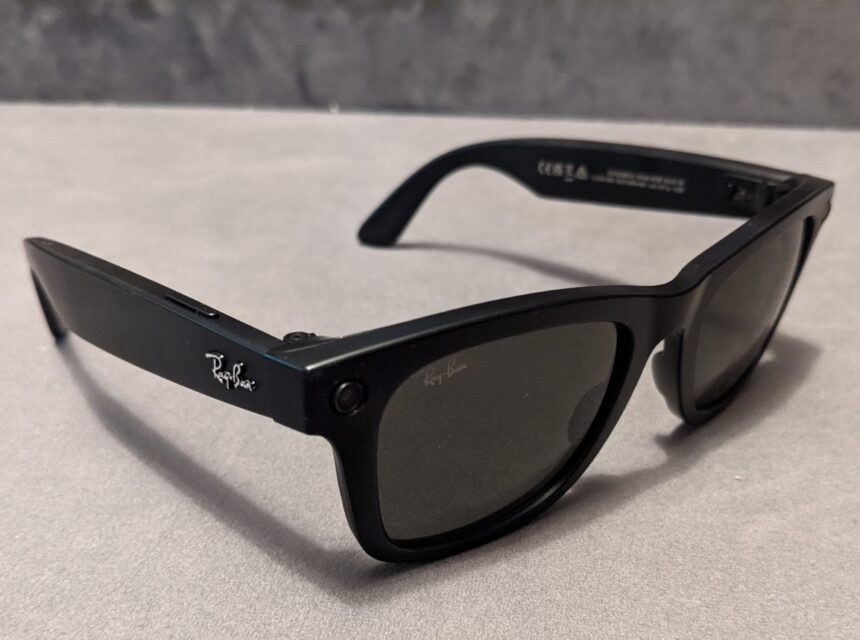
AI Smart Glasses Set to Revitalise Near-Eye Display Market
The near-eye display market is experiencing a shift as tech giants focus on AI smart glasses instead of virtual reality (VR) headsets. According to a recent analysis by Omdia, the sector is projected to recover significantly by 2026, with revenues anticipated to reach $675 million, marking a 12 per cent increase year-on-year. This recovery follows a challenging period marked by a sharp contraction in sales.
Projected Growth in Shipments and Revenue
Published on July 1, 2026, Omdia’s report indicates that shipments of near-eye displays will rise to 14.53 million units, a 16 per cent increase largely driven by the burgeoning augmented reality (AR) sector. This growth is particularly notable in the AR glasses segment, which is expected to emerge as the fastest-growing application within the market this year.
Rapid Expansion of Augmented Reality
Omdia forecasts that AR display shipments will soar to 4.1 million units, reflecting a remarkable 154 per cent year-on-year growth. Revenue from AR glasses is also predicted to jump by 152 per cent to $156 million. This enthusiasm is bolstered by new product launches from companies like RayNeo, Alibaba, XREAL, and VITURE, which are contributing to a robust ecosystem for AR technology.
Challenges Facing the VR Segment
In stark contrast to the AR market’s growth, the VR segment continues to face difficulties. After several years of declines, market sentiment around VR remains subdued, with any potential recovery anticipated to be slow. Major hurdles include a lack of substantial product refreshes, cumbersome device designs, and high power consumption. Furthermore, the VR ecosystem has yet to present compelling use cases that resonate with a broader audience.
Strategic Shifts Among Major Players
Valerie Li, principal analyst at Omdia, notes that since 2025, the extended reality (XR) industry has undergone a strategic shift. Major technology firms, including Meta, Apple, Samsung, and Huawei, are adapting their product roadmaps, opting to delay or limit VR headset launches in favour of developing lighter, AI-enabled smart glasses and AR devices. This transition underscores a growing industry investment focus on AI technologies.
Notable Developments in AI Smart Glasses
Investment and consumer interest are increasingly pivoting towards AI-enabled eyewear, as companies recognise the potential of lightweight AR devices. Meta has notably slowed its release schedule for new VR headsets as its existing models mature, while Apple’s Vision Pro has not met initial sales expectations. Similarly, Samsung’s Galaxy XR has struggled to gain traction in the marketplace.
Market Predictions for VR Display Shipments
Omdia predicts that VR display shipments will decline by 4 per cent year-on-year in 2026, falling to 10.5 million units. Revenue in this segment is also expected to decrease by 4 per cent, amounting to approximately $518.7 million. This trend indicates a cautious approach among leading vendors regarding their investment priorities and long-term growth expectations for the VR market.
Future of the Near-Eye Display Market
The ongoing transition to AI smart glasses and AR technology represents a significant evolution in the near-eye display market. As major tech companies recalibrate their strategies, the potential for growth in the AR segment presents a promising avenue for innovation and consumer engagement. With the right investments and product development, the industry could witness a transformative shift, paving the way for new applications and broader adoption of AR technologies.