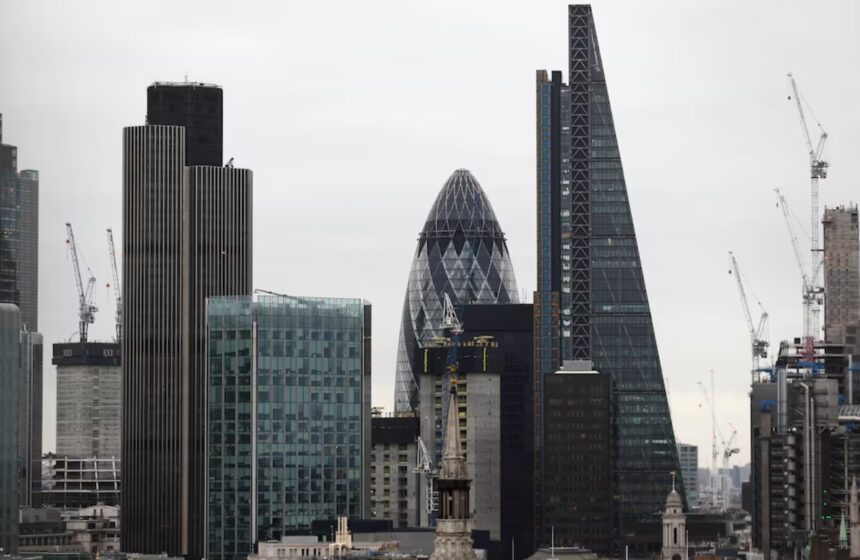
ipo market — ipo market — A surge in IPOs on the London Stock Exchange has ignited hopes for a revival in a market that has faced significant sluggishness. Last week, the exchange welcomed several new listings, signalling a potential turnaround after one of the quietest years in recent history.
In the nine months leading up to the end of September, London had only seen three IPOs on its main market, raising concerns about the city’s future as a prime location for public offerings. As companies sought higher valuations elsewhere, particularly in the United States and mainland Europe, the trend placed London at risk of experiencing its worst year for new share sales.
However, the recent entry of Cheshire-based Beauty Tech Group into the market has shifted the narrative. The company, renowned for its innovative LED red light face masks, floated on the London Stock Exchange at a valuation of £300 million ($403.41 million). Following its debut, shares climbed more than 5% during early trading, marking it as one of the top gainers across the exchange.
In addition to Beauty Tech Group, Princes Group, the owner of tinned tuna and Napolina, has confirmed its plans to list shares on the exchange, further adding to the positive momentum. The anticipated IPO from alternative lender Shawbrook is also on the horizon, with sources indicating that an application will be filed shortly.
The recent activity comes on the heels of Fermi, a data centre start-up run by former US energy secretary Rick Perry, which listed its shares on the London Stock Exchange after a brief stint on Nasdaq earlier in the week.
Industry experts have noted a shift in sentiment. Julian Morse, co-CEO of investment bank Cavendish, remarked on the recent interest from investors and a newfound willingness among companies to consider IPOs as a viable funding option. “There has been interest from investors wanting to put money in but there was just a lack of companies seeing an IPO as a proper alternative to other forms of funding,” he stated. “That pendulum seems to have swung, and these listings will really help. In the last few months, we’ve definitely seen an acceleration of companies coming to us seriously considering IPOs.”
Despite the recent uptick, London has faced challenges in retaining its status as a leading listing venue. Since January, it has captured only 2% of all European IPO volumes, with Zurich and Frankfurt emerging as the busiest markets. Factors contributing to this decline include the sluggish pace of Britain’s economic recovery and the perception that the stock market is undervalued. Notably, high-profile firms have opted to move their primary listings to overseas markets, as seen with fintech company Wise. The recent announcement from AstraZeneca to upgrade its listing in New York has further unsettled advisers and analysts regarding the future of London as a premier listing venue.
The recent influx of new debuts has sparked optimism among market participants. Michael Jacobs, a capital markets lawyer at Herbert Smith Freehills, expressed hope that successful early trading could unlock a sustained pipeline of new listings. He stated, “If they can successfully build their books and trade well, this will unlock a more sustained pipeline, which is significant.”
Beauty Tech Group’s CEO, Laurence Newman, expressed optimism about the future of IPOs in London, stating his hope that the company’s listing will mark a turning point. Charles Hall, head of research at investment bank Peel Hunt, echoed this sentiment, saying, “It’s encouraging to see the range of businesses coming to market across health tech, food and financing. This should be just the start – we are actively engaging with a number of exciting float candidates, which should help to put London back at the top of the league table.”
In response to the challenges faced by the market, ministers and regulators have begun to explore potential overhauls to the London Stock Exchange’s listing rules, aiming to attract more firms to go public. As the market looks to the future, larger deals anticipated over the next year could provide additional impetus for growth, such as the potential listing of software company Visma, which could be valued at around $20 billion.