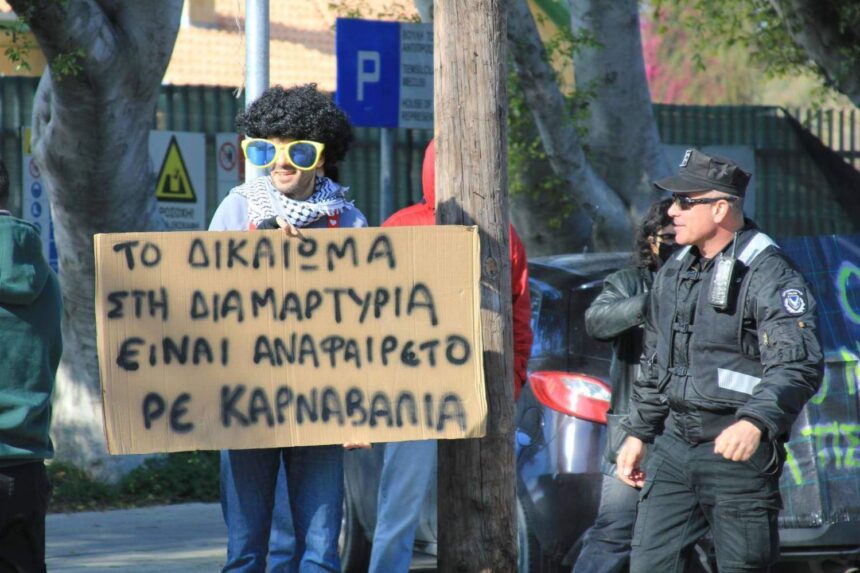
Cyprus Parliament has amended the protest law it approved last year, responding to criticism from the Organisation for Security and Co-operation in Europe (OSCE). The revisions, spearheaded by MP Irene Charalambides and the Justice Ministry, aim to align the legislation with OSCE recommendations regarding the right to peaceful assembly.
Key Changes to the Protest Law
The amended Public Gatherings and Parades Law introduces significant alterations. Notably, no permit is required to organise a protest, and organisers will not face penalties or liability for the actions of participants. This change addresses concerns regarding the previous law, which critics argued infringed on fundamental rights.
Under the new provisions, isolated acts of violence can be managed more effectively. Instead of the chief of police being authorised to disperse gatherings, the focus will now be on removing troublemakers, providing a more nuanced approach to maintaining public order during protests.
Individuals participating in protests are permitted to wear face coverings; however, if they carry weapons such as knives or clubs, police retain the right to request the removal of the covering to verify identities. This measure aims to balance security concerns with the right to protest.
Streamlined Notification Process for Organisers
The amended law simplifies the process for protest organisers. They can notify the police or local authorities at least seven days in advance regarding the time, place, and purpose of the intended gathering. This notification process allows for better coordination and safety measures without imposing undue restrictions on the right to assemble.
Spontaneous protests are also recognised under the new regulations, eliminating the requirement for a designated organiser. This change reflects a commitment to uphold the democratic right to peaceful assembly, even in situations where prior planning may not be feasible.
Provisions Against Dispersal of Gatherings
The law explicitly states that dispersing a gathering or parade should be a last resort. Police are now required to use proportionate force when necessary, reinforcing the principle that peaceful assembly should be respected unless absolutely required to intervene.
Protests are still prohibited inside public buildings, maintaining a clear boundary for protest activities. However, the revised framework provides a greater scope for public expression outside of these venues.
Political Reactions and Controversies
<pThe approval of the amendments was not without contention. The opposition party, AKEL, initially called for a complete repeal of the protest law and later proposed amendments that were ultimately rejected by the majority. AKEL's George Koukoumas expressed dissatisfaction with the changes, stating, "The legislation parliament passed last July is undemocratic. We have a proposal from Mrs Charalambides which improves the legislation but does not address critical points that keep the core of the legislation undemocratic."
Concerns raised by Koukoumas included the definition of spontaneous gatherings, the term “public morals” that allows for restrictions, and the expanded definition of an organiser, which could impose further limitations on protests.
Support for Amendments from Other Parties
Other political figures, such as DIPA’s Alekos Tryfonides, expressed support for the amendments, highlighting the importance of aligning Cyprus’s laws with international human rights standards. “We seek Cyprus’s full harmonisation with international standards on human rights. We are not afraid to revise our position when the public good and the rule of law require it,” he stated.
DIKO’s Panikos Leonidou indicated that they would support the proposal based on the OSCE’s observations and feedback, while also rejecting AKEL’s amendments, indicating a division in the political landscape regarding the approach to the protest law.
Public Sentiment and Recent Protests
Despite the controversy surrounding the law, there have been several protests since its enactment without significant issues. ELAM’s Sotiris Ioannou noted that eight protests related to Gaza, along with one bicommunal LGBTQI protest and another concerning Cyprus, were conducted without incident, suggesting a level of public compliance with the prevailing legal framework.
Final Vote and Legislative Outcome
The bill was ultimately passed with 29 votes in favour and 13 abstentions from AKEL MPs. The legislative process reflects a complex interplay of political opinions and public rights within the framework of Cypriot law.
As the amended protest law comes into effect, the extent of its impact on future public gatherings in Cyprus remains to be seen. Lawmakers have expressed a commitment to ensuring that citizens can exercise their rights to assembly and expression while maintaining an appropriate level of public safety.