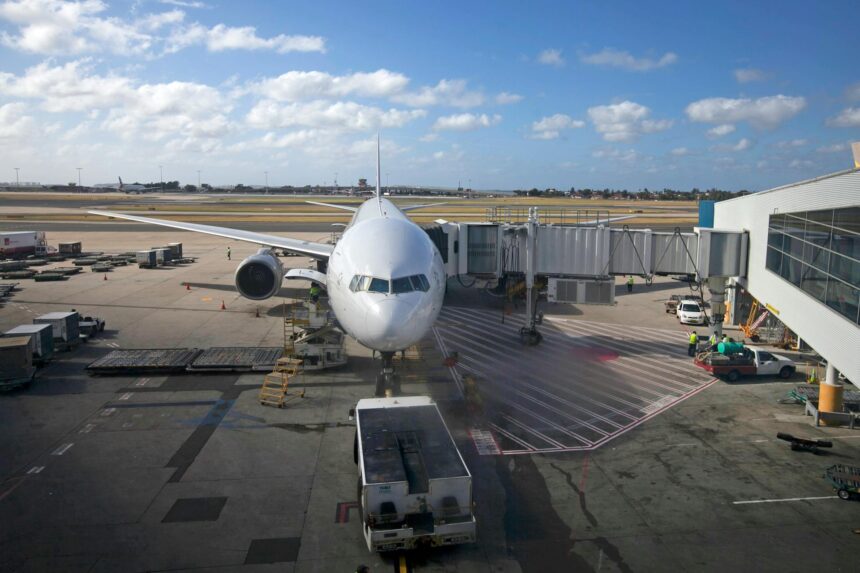
air freight — US businesses are increasingly using air freight as a strategic tool to dodge approximately $157 billion in tariff costs, according to a recent report from the International Air Transport Association (IATA).
The IATA’s findings highlight the crucial role of air cargo in maintaining global trade and supporting economic growth in 2025, particularly amid ongoing trade policy uncertainties. The report revealed that air cargo facilitated a significant frontloading of US imports during the first quarter of the year.
Air freight: Surge in Air Cargo Usage
In the first quarter of 2025, US imports surged by $193 billion compared to the previous year, marking a 26 per cent increase. This remarkable growth was predominantly driven by air transport, which saw the value of air-imported goods rise by 81 per cent year-on-year to $157 billion, making up 82 per cent of the total increase.
Adapting to Tariff Challenges
The report indicated that average applied US tariff rates reached around 17 per cent in 2025, the highest level recorded since the 1930s. In response to frequent policy shifts and rising trade friction, numerous companies turned to air cargo to pre-emptively accelerate shipments and mitigate the impact of tariffs.
Julia Seiermann, head of industry analysis at IATA, commented on the report, stating that “air cargo is a structural component of global economic resilience.” She elaborated that in 2025, air cargo played a vital role in helping businesses absorb tariff shocks and restructure trade routes to maintain economic activity.
Shifts in Trade Patterns
As importers adjusted their sourcing strategies to minimise tariff exposure, many began redirecting shipments towards less affected markets, particularly in Europe. This demonstrated air cargo’s agility in reallocating high-value, time-sensitive goods in response to changing trade policies.
During the April to December 2025 period, air cargo was more positively impacted by expanding trade lanes than negatively affected by those that contracted. Imports on expanding trade lanes saw an increase of $213 billion, with air cargo accounting for $174 billion of that total. Conversely, imports from contracting lanes fell by $257 billion, with air cargo typically involved in 30 per cent of these losses.
Driving AI Investment Growth
Amid the broader trade dynamics, air cargo also played a crucial role in the burgeoning artificial intelligence (AI) sector. The IATA reported that more than two thirds of the value of AI-related trade was transported by air in 2025, with consignments of AI goods seeing a year-on-year growth of 20 per cent.
Notably, AI-related goods constituted 53.5 per cent of the total value of air-transported trade, despite representing only 7 per cent of its volume. This emphasises the high value density of these goods, which have become increasingly strategic for the air cargo industry.
Seiermann remarked that the rapid increase in demand for AI-related goods in 2025 was effectively met thanks to air cargo, allowing investments in this sector to translate into economic activity rather than being constrained by logistical challenges.
Future of Air Cargo in Global Trade
As economies continue to focus on high-value technology goods, the importance of air cargo is expected to grow. IATA’s report underscores the critical function that air cargo will serve in ensuring the timely delivery of essential goods, particularly as global trade navigates complex policy landscapes.