kronos gas — The Kronos gas development project has emerged as a pivotal initiative for Cyprus, particularly following the approval of the Development and Production Plan on 19 May by the ENI-TotalEnergies consortium. This project aims to establish a fast-track subsea tie-back to existing Egyptian gas infrastructure, particularly leveraging the facilities linked to the Zohr gasfield for liquefaction at the Damietta LNG plant, with an eye on exports.
With an estimated 3 trillion cubic feet (tcf) of gas, the Kronos project is set to supply natural gas to Damietta by 2028. However, while initial excitement surrounds what could be Cyprus’ first gasfield development since the discovery of Aphrodite 15 years ago, the complexities of the project raise significant questions about its true value to the island.
At its core, the development of Kronos is fraught with uncertainties. The carbonate reservoir, similar to the one at Zohr, carries with it the potential for significant variances in recoverable volumes. Initial estimates can often be inflated due to assumptions about reservoir connectivity. For instance, the Zohr field’s estimated recoverable gas has drastically decreased from 30 tcf to just 10 tcf. For Kronos, a realistic working range is projected at around 2.0 to 2.2 tcf, with a more conservative downside case of about 1.5 tcf.
Kronos gas: Dependence on Egyptian Infrastructure
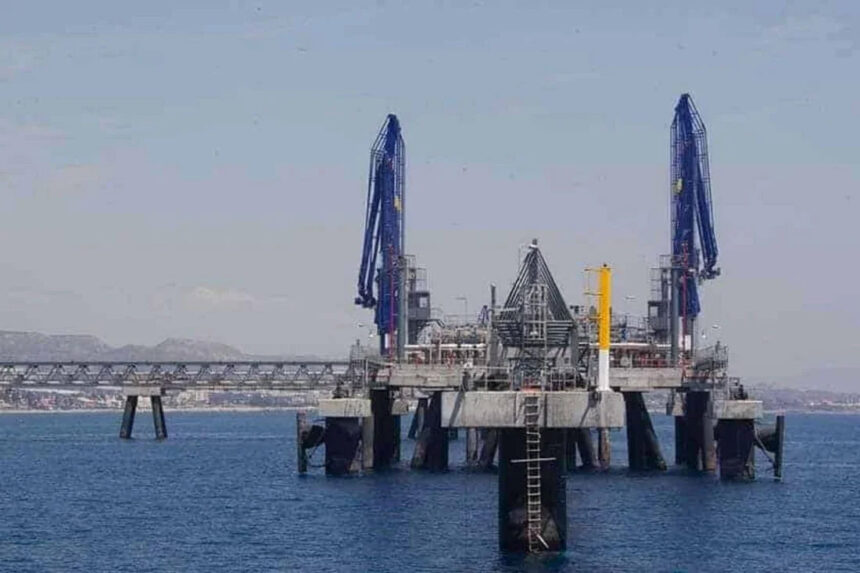
The development concept for Kronos is heavily reliant on existing Egyptian infrastructure. This includes processing through facilities associated with the Zohr gasfield, followed by liquefaction at the Damietta plant, before the gas is exported to international markets. While this approach minimises upfront capital costs, it simultaneously creates a structural dependency on Egyptian tariffs and operational conditions.
Pricing for Cyprus’ gas will be linked to the LNG prices at the inlet of the plant, but under a netback system that offers less exposure to LNG price fluctuations. Anticipated new LNG supplies entering the market by 2030 suggest that prices might fall significantly, expected to settle between $6 and $8 per million British thermal units (mmbtu) in Europe. With deductions for liquefaction, shipping, and midstream costs, the effective gas price could fall to between $1 and $3 per mmbtu — a crucial figure for assessing the project’s viability.
Economic Viability and Financial Returns
The projected full-cycle capital costs for Kronos remain high, even with the tie-back model. Estimates suggest costs could range from $2.8/mmBTU for a 2.2 tcf recoverable resource to $3.2/mmBTU for a 1.5 tcf resource. To achieve viable profit margins, the project would require LNG prices of approximately $8 to $9 per mmbtu. At lower price points, profitability could dwindle to the point of marginality or outright loss.
The fiscal structure governing the project adds another layer of complexity. Cyprus follows a production-sharing model where, during the first three years, companies recover costs with little return to the state. After this period, Cyprus is entitled to approximately 55 per cent of profit gas. This delay in revenue generation poses risks, particularly given forecasts suggesting that LNG prices could plummet to $6 to $7 per mmbtu after 2029, coinciding with when Cyprus expects to start seeing significant profits.
Why Companies Might Still Pursue Kronos
Despite the challenging economic landscape, there are compelling reasons for companies to proceed with the Kronos project. Much of the necessary infrastructure is already in place in Egypt, allowing companies to focus on incremental cash flow rather than the totality of project returns. This means that even if the overall profitability is limited, production could remain cash-positive, allowing companies to recover their sunk investments in under-utilised infrastructure.
However, Cyprus appears to have shouldered a larger share of the project’s risks. Reports suggest that concessions have been made to facilitate Kronos, including broad cost recovery, pass-through of Egyptian tariffs, and limited production guarantees. This asymmetrical risk allocation favours the companies involved, potentially leaving Cyprus with a modest return on its investment.
Future Prospects: Cluster Development
Looking ahead, once Kronos is underway, there is potential for a second phase that could involve the development of nearby discoveries, Zeus and Calypso, into a Block 6 cluster. This could enhance infrastructure efficiency, lower breakeven levels, and improve resilience in a fluctuating LNG price environment. However, the same structural issues remain: dependence on Egyptian tariffs and delayed revenues for Cyprus.
As it stands, while Kronos may fit within a broader infrastructure system and provide operational benefits for Egypt, the long-term value for Cyprus remains uncertain. The project is unlikely to be transformational for the island, serving instead as a tightly balanced endeavour whose true worth hinges on various market conditions and the level of recoverable reserves.