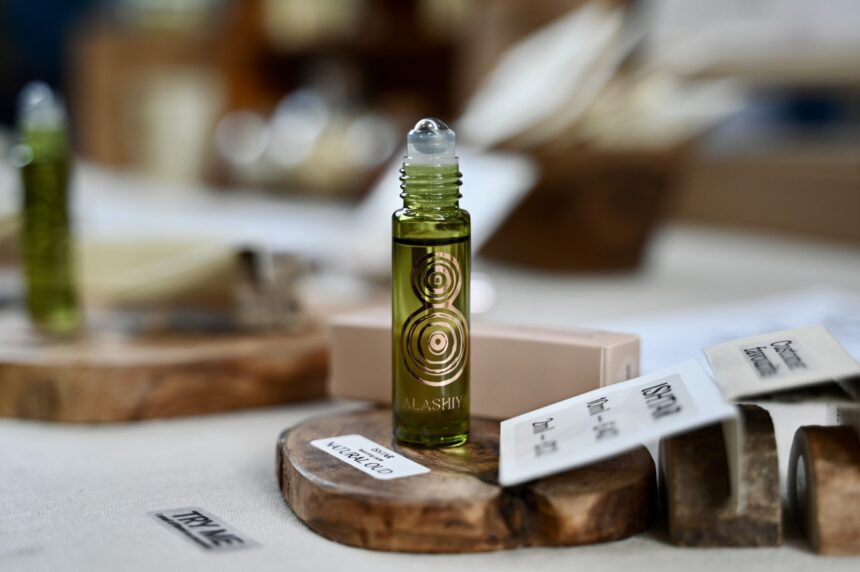
scents — For Omar Suleyman, perfume begins with a memory. The creation of his first fragrance, Ashera, took shape during the 2020 lockdown, a jasmine-based scent that evokes his childhood summers on the island of Cyprus. “The fact that I couldn’t fly to Cyprus made me miss it even more,” Suleyman reflects, encapsulating how deeply intertwined scent is with his personal history.
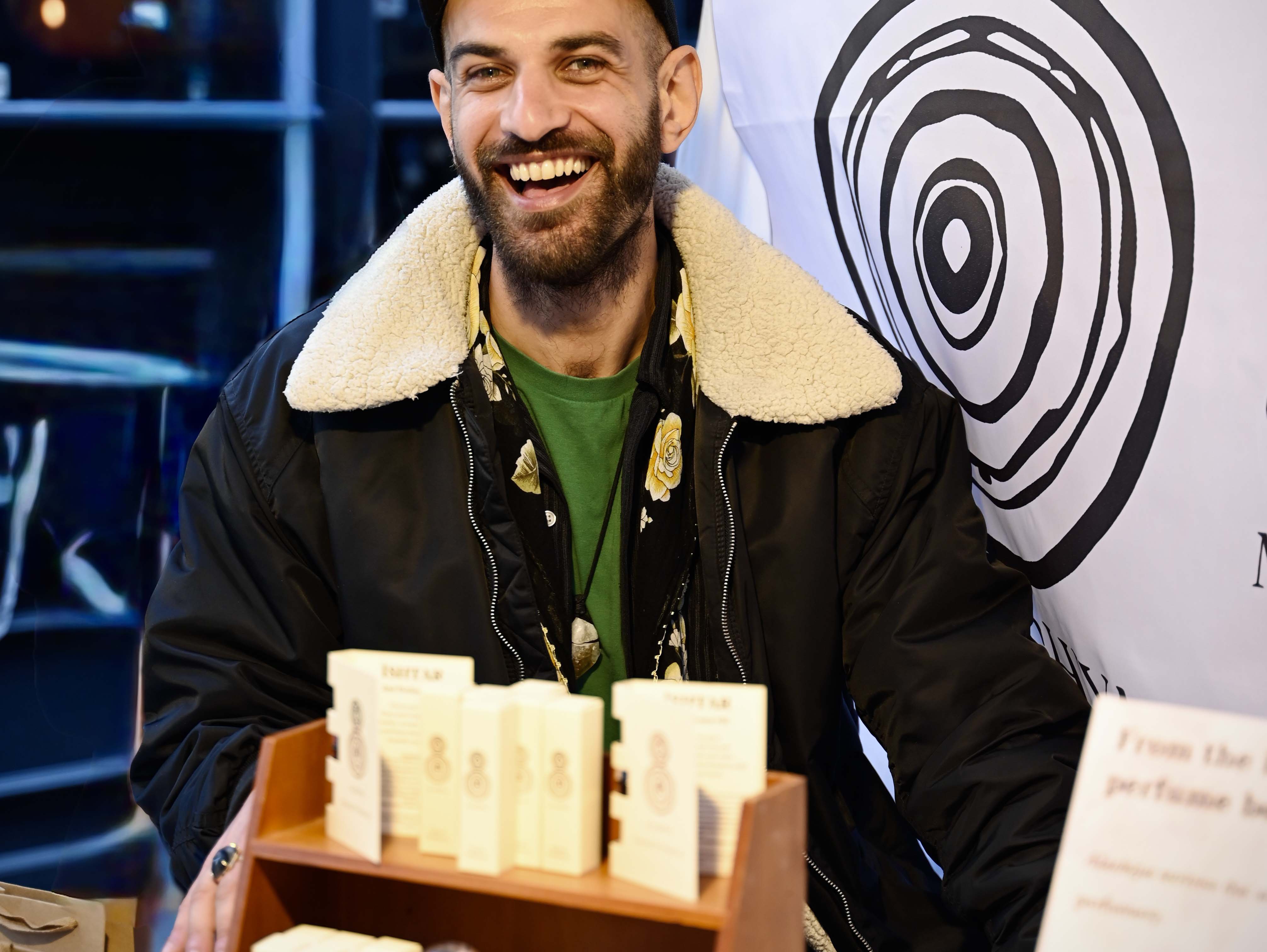
Photo: cyprus-mail.com
- The perfumes are available through his website, www.alashiya.co/, and can be shipped worldwide.
Born into a family from Paphos and Limassol, Suleyman identifies as one of those “in between worlds” children, straddling two cultures and two homes. His family spent holidays on the island after they were displaced to London in 1974, and those memories have shaped his approach to perfumery.

Photo: cyprus-mail.com
Prior to his venture into the world of scent, Suleyman studied biology and worked in research across London and Cambridge. However, his journey took a turn when he developed adverse reactions to synthetic fragrances. “I’ve always had an unusually sensitive nose,” he admits. “Generic fragrances trigger migraines and physical reactions in me. When I discovered that natural essences don’t have this effect, it changed everything.”
Through his brand, Alashiya, Suleyman crafts oil-based perfumes from natural ingredients like jasmine, rose, orange blossom, and labdanum—botanicals that resonate not only with Cyprus but the broader Eastern Mediterranean. His work is grounded in a remarkable, yet lesser-known, chapter of Cypriot history: the discovery of one of the world’s oldest known perfume workshops in Pyrgos, dating back around 4,000 years.
“This came as a surprise to me,” he shares, reflecting on how the ancient site redefined his understanding of perfumery. The workshop revealed that people were distilling plants such as rose, lavender, and coriander using copper stills long before modern methods. This historical context has become a wellspring of inspiration for Suleyman’s brand philosophy.
Rather than attempting to recreate ancient formulas, he opts to use historically relevant materials, reinterpreting them for contemporary audiences. “My interest is in using these historically significant materials, the ones that our ancestors worked with, and translating them through the lens of modern Cyprus,” he explains. This approach embodies a sense of continuity, honouring the same plants at different moments in time.
Labdanum, a resin native to Cyprus and the Mediterranean, is one such material. It has a storied legacy, playing a crucial role in the ‘Chypre’ fragrance family, named after Cyprus by French perfumer François Coty in 1917. Suleyman emphasises the personal nature of natural perfumes, which evolve uniquely on each individual. “They interact with your body’s chemistry, your skin’s pH, warmth, natural oils, to create something unique to you,” he says.
In addition to their aromatic profiles, Suleyman’s fragrances are steeped in emotional resonance. His orange blossom perfume, Anat, is a direct homage to his grandfather’s orange trees, which flourished in the village his family was displaced from in 1974. “I was always obsessed with the smell of those fields in spring when the trees were in bloom,” he recalls. The rich, intoxicating scent of blossoms is a memory he sought to capture in Anat.
His core collection features scents that evoke jasmine, roses, and orange blossoms—elements that are deeply rooted in Cypriot life and memory. “When other Cypriots smell them, they describe almost identical memories to the ones I was chasing when I created them,” he notes, a sentiment that sends chills down his spine every time. This emotional connection to fragrance is further deepened by the broader cultural significance of these botanicals across the Mediterranean and Levant.
“Jasmine in Damascus. Rose in Persia. Orange blossom in North Africa,” he elaborates. “These flowers don’t belong to one place; they belong to the region. But the way they smell on a hot Cypriot summer night? That’s ours.” This sense of shared heritage is also reflected in the brand name, Alashiya, believed to have been used by Cypriots during the Bronze Age, a time when Cyprus was a key player in Mediterranean trade.
Looking to the future, Suleyman envisions keeping Alashiya small and artisanal, while continuing to educate people about Cyprus’ forgotten perfume heritage. He dreams of cultivating a garden in Cyprus filled with native plants, where each year’s harvest would inspire a new fragrance—a “living archive” of the island itself. This ambition speaks to his commitment to preserving and celebrating the sensory memories that define not only his life but also the essence of a land steeped in history.
The perfumes are available through his website, www.alashiya.co/, and can be shipped worldwide.