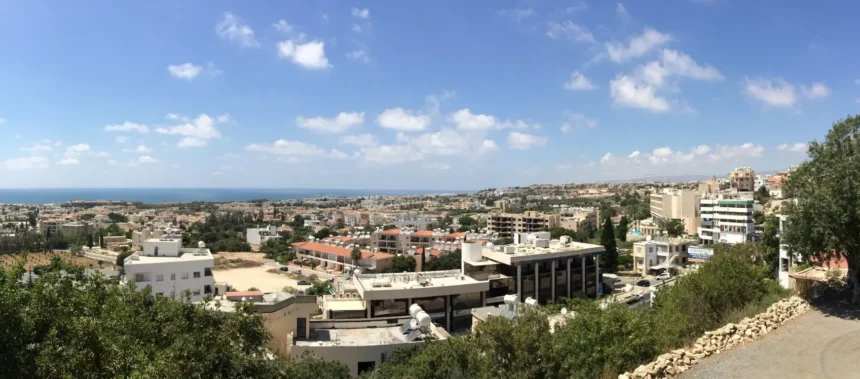
Foreign demand for property in Paphos continues to dominate Cyprus’ real estate market, with 5,477 applications submitted by third-country nationals to acquire property in the district over the past five years, according to figures presented to parliament.
Shifting Trends in Cyprus’ Property Market
Following Paphos, Limassol recorded 4,316 applications, while Larnaca saw 3,479. Nicosia and Famagusta lagged significantly behind with 886 and 816 applications, respectively. These statistics reflect a marked preference among foreign buyers for the Paphos area, which is known for its coastal charm and lifestyle amenities.
Property Transfers and Pending Contracts
As of July 7 this year, 53,100 property transfers to third-country nationals had been completed across Cyprus. Paphos led the way with 20,800 transactions, followed by Limassol at 17,100. Larnaca accounted for 9,200 sales, while Famagusta and Nicosia recorded 3,500 and 2,600, respectively.
In addition, there are currently 29,100 contracts pending with the land registry. Paphos has 9,500 of these pending contracts, a figure that underscores the ongoing interest in the district. Larnaca is next with 7,300, followed closely by Limassol with 7,200. Famagusta and Nicosia have 4,200 and 900 pending contracts, respectively.
Increasing Foreign Ownership in Cyprus
Foreign ownership in Cyprus has been on the rise, with non-EU buyers accounting for 27.35 per cent of all property transactions in 2024. Paphos remains at the forefront, where foreign buyers represented 44.19 per cent of the market. Larnaca follows at 33.85 per cent, and Limassol at 26.51 per cent. In stark contrast, Nicosia reported just 7.68 per cent foreign ownership.
Between 2021 and 2024, over 37,000 properties were sold to foreign nationals, while local buyers purchased more than 200,000 properties. This trend indicates a strong inclination from international buyers towards investing in Cypriot real estate.
Profiles of Foreign Buyers
British nationals are the most active foreign buyers in Paphos, while Russians dominate purchases in Limassol. In Larnaca, Lebanese buyers are leading the market, and Greeks are the top foreign purchasers in Nicosia. This diverse array of nationalities reflects the appeal of Cyprus as a desirable location for overseas investment.
Application Processing and Regulatory Insights
Interior Minister Constantinos Ioannou addressed the processing of applications during a parliamentary session, responding to queries from MP Nikos Georgiou. He explained that applications are handled by district administrations, typically by a single officer, with average processing times ranging from one to two months. However, delays can occur due to heavy workloads or necessary interdepartmental consultations.
Minister Ioannou noted that under Cap. 109, the term “acquisition of immovable property” encompasses not only purchase and sale agreements but also long-term leases exceeding 33 years, shareholdings in property-owning companies, and trusts favouring foreigners. Furthermore, a permit from the district governor is essential for property transfers to third-country nationals, although it is not required when filing a sale contract.
Concerns Over Market Sustainability
Despite the robust foreign demand for property, challenges remain. The current regulations allow foreigners to file transfer deeds before obtaining the necessary permits, leading to concerns about oversight. The Land Information System also lacks the capability to distinguish buyers by nationality, which complicates the monitoring of foreign ownership.
Industry professionals have expressed that the ongoing demand from foreign buyers is instrumental in maintaining a buoyant property market. However, there are growing concerns regarding affordability pressures for local Cypriots. The influx of foreign investment may impact housing prices, potentially making it more difficult for residents to enter the property market.
Looking Ahead: The Future of Paphos’ Property Market
As interest in Paphos continues to grow, the district remains a focal point for foreign investment in Cyprus. The balance between fostering a welcoming environment for international buyers and addressing the needs of local residents will be crucial for the future of the property market.
With the potential for further regulatory adjustments and a focus on sustainable growth, Paphos could continue to thrive as a destination for foreign property seekers while ensuring that local communities are not priced out of the market.