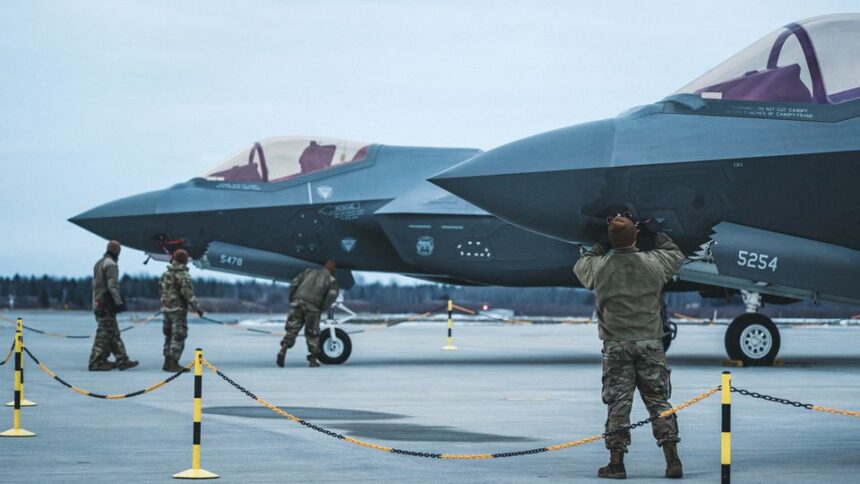
Turkey’s access to the F-35 fighter jet programme remains blocked, as the US continues to monitor Turkey’s application for participation. The US Ambassador to Ankara, Tom Barrack, indicated that a resolution to this matter is anticipated within the next four to six months.
US Officials Confirm Turkey’s F-35 Status
During a panel discussion in Istanbul, Barrack reiterated that the United States will not sell F-35 jets to Turkey. Instead, Turkey is reportedly considering purchasing Eurofighter jets to fulfil its defence needs. Barrack remarked, “President Trump called this situation ‘crazy’,” referring to the complexities surrounding Turkey’s defence procurement.
Turkey’s Defence Industry and Regional Implications
Turkey has developed a robust defence industry, including a domestic drone manufacturing sector led by Selcuk Bayraktar, President Erdogan’s son-in-law. This industry has supplied both Ukraine and Turkey’s own military programmes. In light of this, the Cypriot defence ministry has stated it is closely monitoring the situation, prepared to respond should developments threaten national security or regional stability.
Key Factors Affecting Turkey’s F-35 Participation
One of the main barriers to Turkey’s access to the F-35 programme has been its acquisition of the Russian S-400 anti-aircraft system, which is currently inactive. Barrack noted, “The problem with Turkey was the S-400; I believe that these issues will be resolved in the next 4 to 6 months.” This statement suggests a potential for rapprochement, although significant changes would still be necessary for Turkey to regain access to the F-35 programme.
Current Status of Turkey’s F-35 Assets
Despite Turkey’s involvement in the F-35 programme, including the storage of four F-35 jets in California and participation in fuselage assembly, Barrack confirmed, “they don’t have access” to these aircraft. This situation underscores the implications of Turkey’s geopolitical decisions on its military capabilities.
Diplomatic Relations and Military Hardware
Ambassadors from the US have made it clear that Turkey’s path to the F-35 programme remains restricted. US Ambassador to Israel, Mike Huckabee, stated that Turkey would not receive F-35 jets as long as it maintains Russian military systems in its inventory. “Who got the F-35s? Israel. Turkey will not get F-35s,” he stressed, highlighting the significant military hardware changes required for Turkey to re-enter the programme.
Future Implications for Turkish Defence Capabilities
Despite the challenges, Barrack expressed confidence in Turkey’s ongoing defence capabilities, suggesting that by the time discussions surrounding the F-35 conclude, it is likely that someone will have replicated or copied the aircraft. This statement points to a broader trend in military innovation and adaptation within Turkey’s defence sector.
Cyprus’s Vigilance Amidst Ongoing Negotiations
The Cypriot government has made it clear that it is closely observing the situation. The defence ministry’s declaration indicates a proactive stance regarding national security, reflecting the geopolitical sensitivities in the region. “The matter is entirely at the disposal of the US government. Cyprus is monitoring the situation closely and will act accordingly if developments affect our national security or regional stability,” the ministry stated.
The Road Ahead for Turkey and the US
As Turkey seeks a resolution regarding its F-35 application, the diplomatic landscape between Ankara and Washington continues to evolve. The complexities of military procurement and international relations are underscored by Turkey’s ongoing negotiations and the ramifications of its defence strategies. Ultimately, the future of Turkey’s participation in the F-35 programme will depend on both domestic reforms and its relations with the United States.
With a focus on strengthening its military capabilities, Turkey’s approach to the F-35 issue will likely remain a pivotal aspect of its foreign policy in the coming months. The interaction between Turkey’s domestic industries and international partnerships will continue to shape the region’s defence landscape.