cyprus business — cyprus business — Cyprus’ economic landscape is witnessing significant changes, with robust growth anticipated across various sectors, including shipping and tourism. Finance Minister Makis Keravnos announced on Wednesday that public debt is projected to fall to nearly 50 per cent of GDP by the end of 2025, surpassing earlier targets of dropping below 60 per cent by the end of 2026. This promising outlook emerged during a council of ministers meeting, where Keravnos highlighted the European Union’s 2025 European Semester Spring Package assessment.
Cyprus business: Debt Reduction Fuels Economic Potential
According to the Finance Minister, the EU’s assessment acknowledges Cyprus’ strong economic growth, which remains resilient despite a fragile international environment. The report notes high primary surpluses and rapid debt reduction, which Keravnos believes will unlock additional economic potential, paving the way for increased development spending and enhanced defence capabilities.
Kervanos further indicated that Cyprus is no longer classified as a nation with macroeconomic imbalances, citing improvements in both external and private debt. The report also highlights the ongoing efforts to diversify the country’s economic model, yielding steady results and showing progress towards achieving most UN Sustainable Development Goals.
Challenges Ahead
Despite these advancements, challenges remain. The report outlines that Cyprus’ planned spending growth for 2025 is projected at 6.8 per cent, surpassing the EU benchmark of 6 per cent. This discrepancy calls for careful monitoring as the government navigates economic policies in a rapidly changing global landscape.
Scrutiny Over Shipping Emissions
In the shipping sector, owners face increasing scrutiny regarding the use of scrubber technology. While this technology effectively reduces sulphur oxides in the air, it also discharges harmful contaminants into the sea. Cyprus has joined other European nations in moving to restrict the use of scrubbers in its port waters, reflecting a growing concern for environmental sustainability.
The International Maritime Organisation (IMO) has set stringent regulations requiring ships to burn fuel with no more than 0.1 per cent sulphur in designated sulphur emission control areas (SECAs). The Mediterranean SOx ECA will come into effect on May 1, 2025, joining similar regulations in the North Sea and Baltic Sea. Future expansions will include new zones in the Norwegian Sea and Canadian Arctic by March 2027, further solidifying Europe’s commitment to reducing maritime emissions.
Return of the Paphos Marina Project
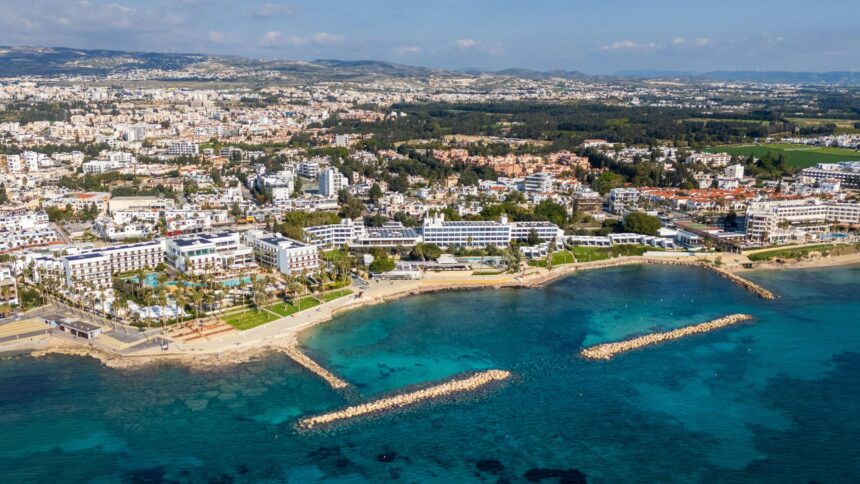
A long-awaited call for investor interest in the Paphos marina at Potima is expected to be announced soon, according to George Mais, president of the Paphos Chamber of Commerce and Industry. The Deputy Ministry of Tourism is preparing to release tender documents following delays caused by legal checks. The tender announcement, initially expected in June, was postponed to ensure thorough evaluation of joint ventures.
Mais emphasised that serious preparation is essential for prospective investors, as wider participation in the project could lead to the selection of the best proposal. Infrastructure projects in the area, including the new Paphos–Polis Chrysochous road, have also faced delays, highlighting the complexities of development in the region.
Strengthening Ties in Tourism
In a bid to enhance bilateral ties, Cyprus and Saudi Arabia are set to sign a memorandum of cooperation in tourism. This follows a recent teleconference between Deputy Minister of Tourism Costas Koumis and Saudi Princess Haifa Al Saud. Koumis underscored the importance of bolstering connections in the tourism sector, a sentiment the Saudi side fully supported.
The discussions included the establishment of a joint technical committee to oversee the agreement’s implementation and monitor its provisions. Both nations are prioritising air connectivity, with further teleconferences planned to enhance direct flight options between Cyprus and Saudi Arabia.
Empowering Innovation through Collaboration
Cyprus Seeds has embarked on a collaborative initiative with Conception X, aiming to bridge the gap between academic research and commercialisation. This partnership will enable researchers from Cypriot universities and Centres of Excellence to participate in specialised training and mentorship, equipping them with essential entrepreneurial tools to launch deep-tech ventures.
This collaboration represents a significant milestone for Cyprus Seeds, aligning with its mission to support scientific entrepreneurship. The organisation expressed enthusiasm for the partnership, anticipating positive outcomes for the innovation landscape on the island.
Asian Shipowners Maintain Competitive Edge
In the maritime industry, Demetris Chrysostomou, CEO of Columbia Group Asia Region, has dismissed claims suggesting Asian shipowners are lagging behind their European and American counterparts. He labelled these assertions as outdated and misleading, asserting that leading maritime nations in Asia, such as Japan, South Korea, and China, adhere to rigorous safety and quality standards.
Chrysostomou pointed out that Japan and Korea have long been synonymous with operational excellence, while China’s emergence as the largest shipowning nation underscores its commitment to international standards and maritime technology. This perspective reinforces the competitive standing of Asian shipowners in the global maritime market.
Tourism Records Set Despite Challenges
Cyprus’ tourism industry achieved a remarkable milestone in 2024, welcoming over four million visitors for the first time and generating revenues exceeding €3.2 billion. This achievement is particularly noteworthy given the geopolitical instability in the Middle East and economic pressures in Europe, reflecting the resilience of the island’s hospitality sector.
According to the Cyprus Hoteliers Association (Pasyxe), arrivals between January and December 2024 reached 4,040,200, marking a 5.1 per cent increase from the previous year. Revenues climbed to €3.209 billion, nearly 20 per cent higher than in 2019, the last pre-pandemic year. The tourism sector’s contribution to GDP stands at 18.3 per cent, with employment exceeding 62,000 jobs.
Pasyxe President Thanos Michaelides stated that 2024 marked a year of significant progress for the hotel and tourism industry, despite ongoing structural challenges such as unlicensed short-term rentals and competition from the occupied north. He emphasised that tourism remains a pillar of stability and development for Cyprus.