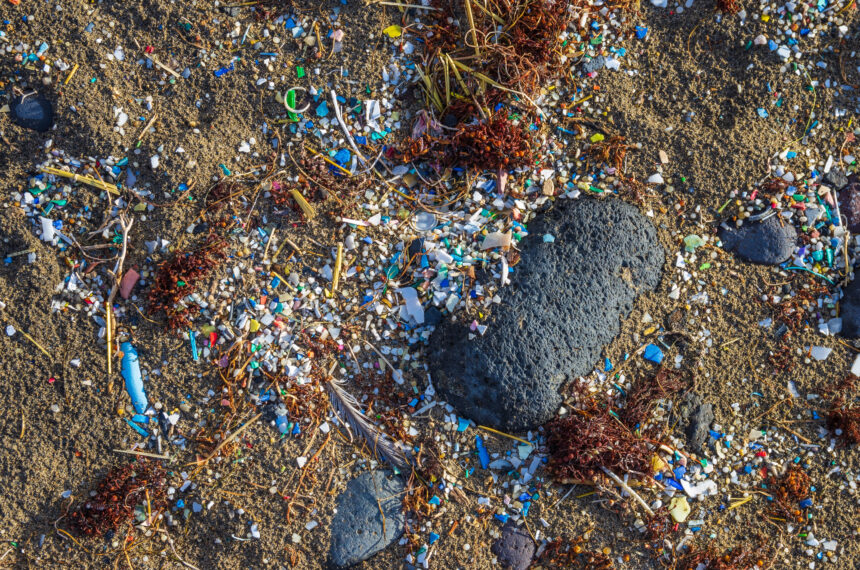
Our beaches are turning into dangerously colourful mosaics of plastic as microplastics infiltrate Cyprus’ coastal environment. A recent study reveals that these tiny plastic particles, averaging 337 per square metre, are becoming a pervasive issue.

Photo: cyprus-mail.com
Microplastics: Study Uncovers Alarming Microplastic Levels
The recently published research in the Journal of Environmental Chemical Engineering, led by Ioannis Savva, highlights the concerning reality of microplastic pollution in Cyprus. The study examined 16 beaches across the island, revealing staggering densities, with one location recording an average of 2,422 microplastic particles per square metre and individual samples reaching as high as 4,020 particles.
Sources of Plastic Pollution
Most of the plastics found along the Cypriot shores originate from land, but once in the marine environment, they can drift and break down from weathering processes before returning to the shore. Savva noted, “All these plastic fragments we saw here in Cyprus are broken pieces of plastics that have been drifting all around the Eastern Mediterranean region.” This highlights the issue of offshore contamination as a primary contributor to the pollution observed on local beaches.
Variability Across Locations
Microplastic pollution levels are not uniform across Cyprus. The study found significant discrepancies based on geographical location and hydrodynamic exposure. For instance, Dune beach in Akrotiri, highly exposed to oceanic forces, exhibited particularly high levels of pollution, earning it the description of a “colourful beach.”
Seasonal Changes in Pollution Levels
The research also revealed that pollution levels fluctuate with the seasons. Savva explained that during spring sampling, erosion can significantly alter the beach landscape, affecting the amount of plastic waste present. “We had two sites where due to erosion half of the beach was gone and the plastics with it,” he remarked.
Health Risks and Environmental Impact
The dangers of microplastics extend beyond aesthetic concerns. Savva warned that plastic-derived chemicals can disrupt the endocrine system and that plastics attract harmful organic chemicals from the surrounding environment. As marine life consumes these contaminated particles, the plastics ultimately make their way up the food chain, posing potential health risks to humans.
The Need for Research and Action
As the first comprehensive study on micro- and mesoplastics in Cyprus, Savva’s research establishes baseline data for future comparisons. Currently, there are no other studies available for direct comparison, complicating efforts to combat the issue. He stated, “The baseline levels are rather important because that’s where you have a line where you can compare it in the future.”
Despite the absence of extensive research, Savva pointed out that the fisheries department has initiated a separate ongoing study on microplastic pollution. This lack of data hampers effective management and remediation strategies.
Strategies for Coastal Management
Savva’s findings provide crucial information for authorities aiming to manage offshore contamination. He proposed the development of an allocation scheme to help identify shorelines most affected by marine-based plastic inputs. “Our approach can support more targeted and effective coastal management, helping authorities prioritise clean-up and prevention efforts,” he explained.
Looking ahead, Savva suggested that collaborative efforts across the Eastern Mediterranean region are essential to address the pervasive issue of plastic pollution. “The best-case scenario would be to get grants to have a multinational sort of dealing with plastic pollution in the Eastern Mediterranean,” he concluded.