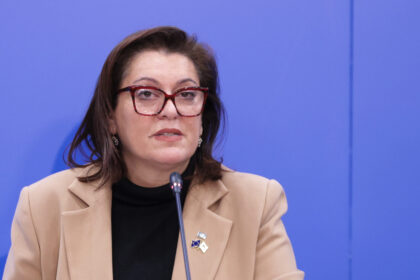
big brother — Justice Minister Marios Hartsiotis has been accused of attempting to introduce a ‘big brother’ approach to the audit office, as raised by Auditor-General Andreas Papaconstantinou during a session with the House legal committee.
- Kyriacos Kyriacou, the auditor-general's deputy, added that while the bills are not unconstitutional, they may be unenforceable, as the advisory role of the audit board would render it ineffective.
- To qualify for the role of auditor-general, candidates must be citizens of Cyprus, possess a high moral standard, and have recognised qualifications in accounting, auditing, or the financial sector.
During the discussion, Papaconstantinou expressed strong concerns about the proposed reforms, which include the creation of an audit board tasked with writing and publishing reports on the activities of the auditor-general. He described these changes as not only intrusive but also a potential source of ‘chaos’ within public debate and parliamentary committees.
Papaconstantinou firmly stated that the reforms mislead parliament, particularly highlighting Hartsiotis’ claim that the introduction of an audit board with multiple members would align Cyprus with the majority of European Union member states. While it is true that many EU countries employ multi-member audit boards, he pointed out that the responsibilities outlined in the government’s plans do not match those of their European counterparts.
He raised further objections to the proposed board, questioning the necessity of it submitting audit recommendations when the audit office currently produces 60 reports annually and receives over 300 recommendations. He argued that the existing capacity of the audit office makes additional recommendations redundant.
Moreover, Papaconstantinou queried how the proposed board could effectively monitor the report preparation process, noting that the audit office’s programme is subject to constant changes and is understaffed.
Despite his criticisms, Papaconstantinou acknowledged the government’s intention to grant financial autonomy to the auditor-general, a move he deemed positive. He also welcomed the proposed introduction of term limits for the auditor-general.
Kyriacos Kyriacou, the auditor-general’s deputy, added that while the bills are not unconstitutional, they may be unenforceable, as the advisory role of the audit board would render it ineffective.
In response to the accusations, Hartsiotis defended the proposed reforms, asserting that the audit board would not express opinions or make conclusions in its reports regarding the auditor-general. He emphasised that the board would merely provide an opportunity for a periodic review of the auditor-general’s work, insisting that there would be no dual leadership within the audit office.
Hartsiotis described the planned reforms as part of broader efforts to modernise state institutions, optimising them based on contemporary needs and best practices. He explained that these proposals are based on a study conducted by his ministry, which includes a comparative analysis of other EU member states that utilise multi-member boards.
He further detailed that the president would appoint the auditor-general under the new system, who would serve a maximum of eight years or until reaching 68 years of age, enforcing a one-term limit. The position’s salary and termination terms would align with those of a supreme court justice.
To qualify for the role of auditor-general, candidates must be citizens of Cyprus, possess a high moral standard, and have recognised qualifications in accounting, auditing, or the financial sector.
The proposed audit board would consist of three members appointed by the cabinet after an advisory council submits a shortlist of five candidates, along with evaluations of each. Hartsiotis stated that two of the board members must have accounting qualifications while the third must possess legal qualifications suitable for judicial appointment.