mushroom foraging — In Cyprus, the wild mushroom foraging season has proven to be a bit of a challenge this year, largely attributed to the impacts of climate change. As I explored my usual picking spots around Vavatsinia, Lythrodondas, and Troodos, my concerns grew. The forests are clearly showing signs of distress, with rising temperatures and prolonged dry spells taking their toll.

Photo: cyprus-mail.com
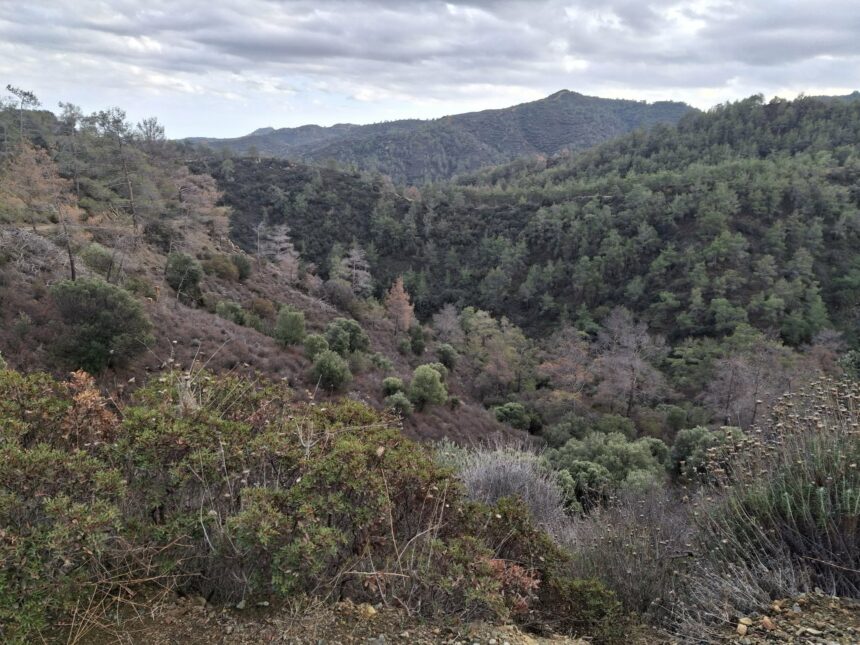
Recently, I drove along one of my favourite forest routes from Vavatsinia to Kyprovasa, past Lefkara dam. The sight was alarming; extensive tree felling had occurred, leaving numerous dead trees, including substantial Calabrian pines. It was shocking to realise that many had succumbed to drought.

Photo: cyprus-mail.com
The south-facing slopes exhibited clear signs of tree mortality, where the soil dries out and the water table drops beyond the reach of tree roots. Adding to my concerns was the visibly low water level in Lefkara dam.
The Cyprus Institute reports that climate change is significantly affecting the island’s climate. They predict that between 2020 and 2050, there will be an increase in extremely hot summer days, with maximum temperatures exceeding 38°C for an additional two weeks each year. By the end of the century, Nicosia could experience two additional months of hot days, similar to conditions currently seen in cities like Cairo or Bahrain. This troubling trend is compounded by a projected decrease in rainfall of 10-15% over the same period.
The situation is dire, with Kouris dam currently holding less than 11% of its capacity. Last summer’s wildfires have left behind barren slopes, exacerbating soil erosion and increasing the urgency for vegetation recovery.
As for the wild mushrooms, the adverse effects of climate change are not the only challenges faced this season. I often witness foragers using rakes to collect mushrooms, disrupting the delicate ecosystem of leaves, pine needles, and decomposing twigs. This practice not only endangers countless insects whose life cycles are interrupted but also prevents fungi from distributing their spores before being discarded. Such tools are prohibited by the Forest Law, with penalties including fines of up to €5,000 or even imprisonment for up to a year. Yet, despite these regulations, this destructive behaviour persists.
This year’s mushroom harvest has been disappointing, primarily because the rains arrived too late in the season. By the time the ground was sufficiently wet, the temperature had already dropped too low for optimal growth. Wild fungi thrive best at temperatures between 10 to 13°C, and if it remains cold and wet, they often become waterlogged and mouldy.
The ‘milk cap’ mushroom, or Lactarius deliciosus, known locally as the red pine mushroom, is a favourite among Cypriots. As a lifelong forester, I enjoy foraging for various mushrooms, but I advise caution to novices. Some species, like the pink-capped variant known as ‘the sickener’, can cause severe stomach reactions.
One of my personal favourites is the ‘Slippery Jack’ (Suillus luteus), a brown-capped boletus that I often slice and dry for soups and risottos. Interestingly, while this Mediterranean species is commonly harvested in Europe, much of what is sold as Italian ‘porcini’ mushroom is imported from the pine forests of Chile.
Living in Lefkara, I am well-acquainted with the ‘Giant Fennel Oyster Mushroom’ (Pleurotus eryngii var. ferulae), which locals skillfully forage, with prices reaching €20 per kilo. Although not a forest mushroom, it thrives on decaying roots of giant fennel, found throughout the Mediterranean region. Unfortunately, this year has not favoured these field mushrooms either, with the lack of autumn rain impacting yields. If we experience some warm days soon, there might still be a glimmer of hope for mushroom enthusiasts.
The decline in wild mushrooms is a stark reminder of the broader implications of climate change. While it may seem trivial in the grand scheme, it highlights a much larger crisis looming over Cyprus. We are facing a future where heat and drought will become increasingly challenging, and it is imperative that we prepare and adapt.
Since raising awareness on social media about the alarming conditions in Cyprus’ forests, I’ve received insightful feedback. Roger Cartwright from the UK’s Landscape Trust noted the evident impact of extreme summer climates on south-facing slopes during a study visit to the Cyprus Forestry Department. Evgenia Emets, a former student of the ‘Guardians of the Forest’ programme, stressed the need for forests that protect water sources, highlighting the urgent requirement for more sustainable forest management in the Mediterranean.
The challenge remains: how do we establish resilient forests in Cyprus when water is often prioritised for tourists, leaving landowners struggling with irrigation? Here are some suggestions for addressing these pressing issues:
- Encourage tourists to minimise water use, such as taking fewer showers.
- Support initiatives for recycling water from roofs and household appliances.
- Avoid planting trees on hot, dry south-facing slopes, and focus on native species that can better withstand heat and drought.
- Limit the planting of vulnerable species like Calabrian pine, which poses fire hazards and struggles in extreme conditions.
- Regulate well drilling to prevent further depletion of groundwater.
- Reconsider the practicality of swimming pools in villas and the environmental impact of excessive car washing.
- Discourage the construction of golf courses, which require unsustainable amounts of water.
- Promote hydroponics in agriculture to use water more efficiently.
- Invest in traditional methods of water storage, such as underground tanks and cisterns.
- Address water waste due to leaks in transport infrastructure.
The situation is indeed alarming, but it is crucial to take action to secure a sustainable future for Cyprus’ forests and ecosystems.