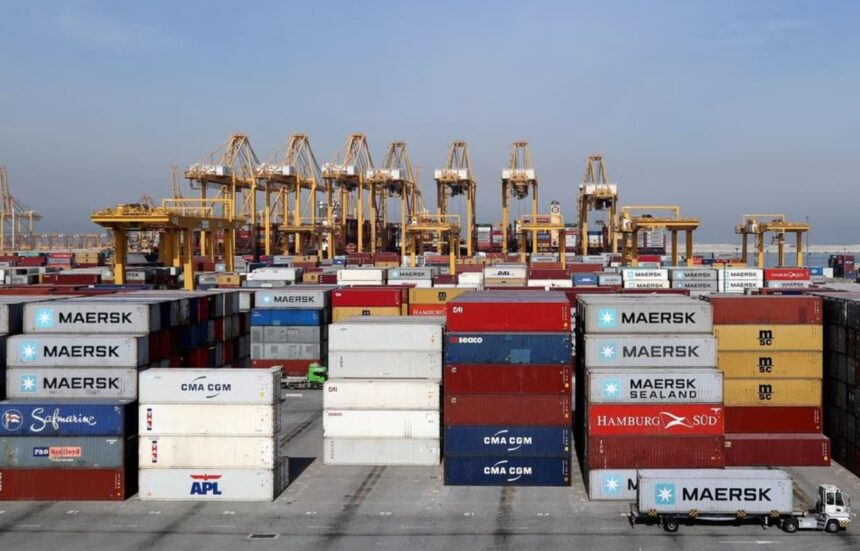
eu sea — The European Union’s sea ports handled an estimated 3.4 billion tonnes of freight in 2024, a figure that remains unchanged from the previous year and continues to trail behind the peak levels of 2019. This stagnation highlights the ongoing challenges the EU faces as it navigates shifting trade patterns across its major maritime hubs.
Eu sea: Rotterdam Maintains Dominance
According to Eurostat, the leading port in the EU remains Rotterdam in the Netherlands, which managed to handle 397 million tonnes of freight in 2024. This solidifies Rotterdam’s position as the bloc’s primary logistics hub, showcasing its resilience in a fluctuating market.
Competition Among Major Ports
Following Rotterdam, Belgium’s Antwerp-Bruges port processed 244 million tonnes, while Germany’s Hamburg port came in third with 97 million tonnes. The performance among the EU’s ten busiest ports, however, has been uneven, with only four ports reporting annual increases.
Growth and Decline
Valencia led the growth with a notable rise of 3.6 per cent, while Algeciras in Spain saw an increase of 2.6 per cent. In contrast, Constanța in Romania faced significant challenges, experiencing a sharp decline of 14.3 per cent. Similarly, Gdańsk in Poland reported an 11.0 per cent drop, reflecting the localised pressures that have impacted throughput in these regions.
Freight Composition in EU Ports
The composition of freight handled by EU ports indicates a strong reliance on specific categories of goods. Coal and lignite, crude petroleum, and natural gas together accounted for 19.0 per cent of all freight. Additionally, coke produced from coal, primarily used in steelmaking, along with refined petroleum products such as fuels and lubricants, made up 16.5 per cent of the total freight volume.
Sector Distribution
Metal ores and other mining and quarrying materials constituted 7.4 per cent, while chemicals, rubber, plastics, and nuclear fuel represented a combined 7.2 per cent of the total. Meanwhile, products derived from agriculture, hunting, forestry, and fisheries accounted for 6.3 per cent, with food products, beverages, and tobacco making up 4.9 per cent of all goods transported through EU ports in 2024.
Looking Ahead
The stagnation seen in EU sea port freight volumes underscores the complexities of the maritime logistics landscape in Europe. As these ports adapt to new trade dynamics, the ability to regain pre-pandemic levels remains uncertain.