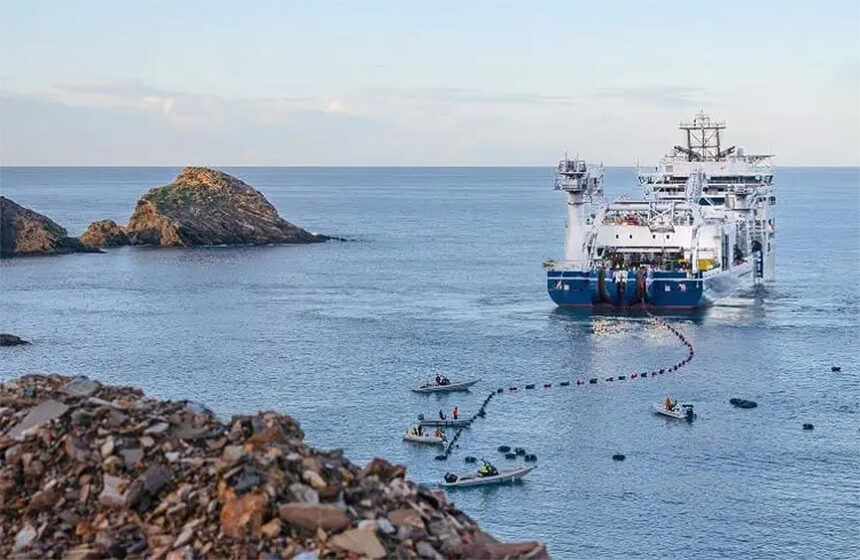
The Great Sea Interconnector’s cost remains a topic of heated debate as stakeholders assess the project’s future. Recently, discussions in Athens aimed at updating the techno-economic parameters have led to mixed interpretations about the project’s viability.

Photo: cyprus-mail.com
Critics argue that the announcement of a new feasibility study signals delays and uncertainty. President Nikos Christodoulides of Cyprus and Greek Prime Minister Kyriacos Mitsotakis indicated that the project, which aims to connect the electricity grids of Cyprus and Greece, is far from straightforward. The need for a fresh study raises questions about the project’s financial feasibility and the significant funding gap that remains.
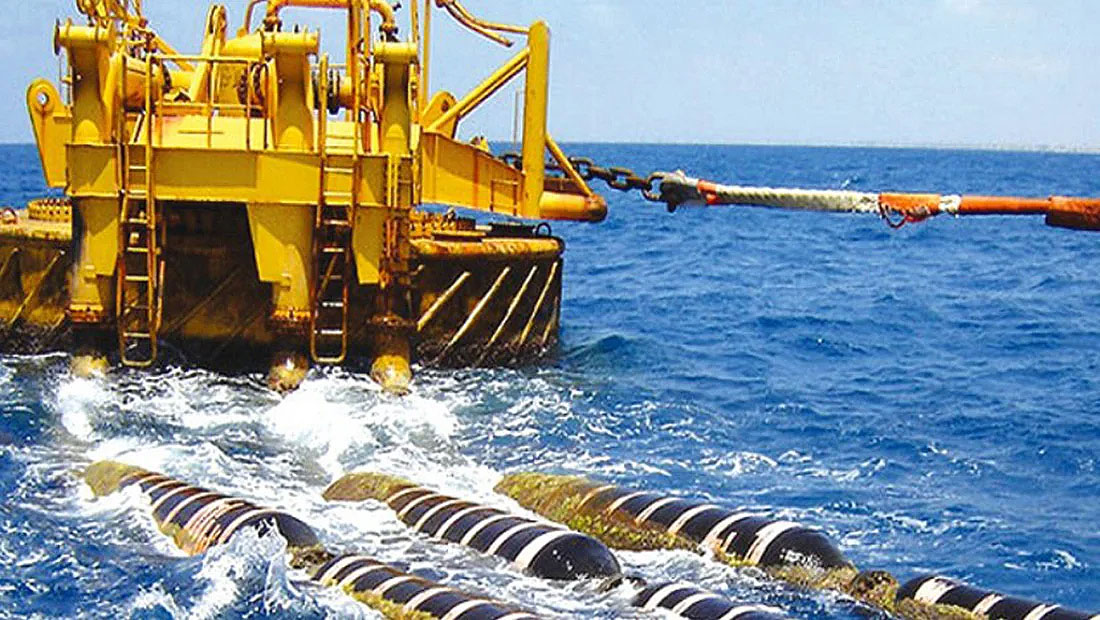
Photo: cyprus-mail.com
Currently, estimates suggest that the Great Sea Interconnector could cost around €1.9 billion, while existing commitments from Admie, Greece’s independent transmission operator, and the European Commission total approximately €950 million. This leaves a staggering funding gap of about €1 billion, prompting sceptics to question the project’s sustainability.
Despite claims from Admie about investor interest, there is little concrete evidence to support this optimism. For instance, while the United States International Development Finance Corporation has purportedly expressed interest, no formal commitments have been made public. Energy Minister Stavros Papastavrou insists that American companies are indeed interested in the project, emphasising the necessity of clear financial data to attract investment.
Moreover, the Turkish navy’s deployment of gunships to obstruct depth surveys for the subsea cable raises further concerns about the project’s progression. Without these surveys, the initiation of construction becomes increasingly improbable. A knowledgeable source revealed that even Admie lacks clarity regarding the final cost of the GSI, echoing Finance Minister Makis Keravnos’s apprehensions about the project’s future.
The interconnector was initially proposed by EuroAsia Interconnector Ltd., which withdrew from the project in October 2023, leaving Admie to take over. A previous cost-benefit analysis submitted to the European Investment Bank (EIB) by EuroAsia did not seek funding but rather aimed to gather insights on the interconnector’s feasibility, which the EIB ultimately advised against, suggesting investment in storage solutions instead.
Following this, Admie commissioned a second analysis from the same consultancy, which yielded a more optimistic outlook, albeit based on questionable assumptions. This discrepancy has led to further confusion regarding the project’s financial viability.
Yet, some stakeholders remain hopeful about the GSI. Pavlos Liasides, involved in energy policy formulation for the Disy party, asserts that the interconnector is vital for ensuring Cyprus’s energy security. He views the updated feasibility study as an essential step towards attracting investment, regardless of the delays it may cause.
Liasides highlights the geopolitical importance of the project, indicating that it is part of a broader initiative to establish interconnectors linking Europe, the Middle East, and Africa. By omitting certain countries from the discussions, the DII’s plans for regional interconnectors reflect a clear political stance, underscoring the significance of the GSI beyond mere economic implications.
Addressing concerns about project financing, Liasides remains unfazed, suggesting that even if the interconnector were completed but unused, the financial burden on consumers would be minimal—approximately €15 annually over 25 to 30 years. He dismisses claims of tension between Cyprus and Greece, pointing to the recent solidarity displayed by their leaders in Athens.
As the project moves forward, it is crucial for both governments to manage public perceptions and mitigate adversarial narratives, particularly from Turkey, which has its own competing interconnector proposals. Liasides emphasises that the GSI is not merely a local endeavour but part of a significant geopolitical strategy that could reshape energy security in the region.