foot-and-mouth disease — Foot-and-mouth disease has now affected 120 units across the island, with recent cases reported in the Nicosia district. The latest outbreak has prompted President Nikos Christodoulides to personally intervene in the crisis as farmers prepare to protest at the Presidential Palace this Friday.
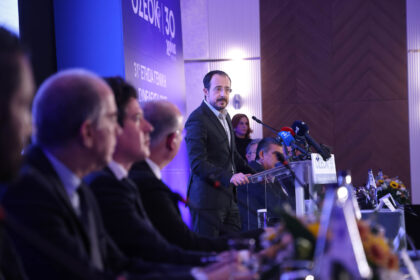
In a statement made from Limassol, President Christodoulides asserted his commitment to addressing the issue directly with those impacted. He emphasised the importance of communication, saying, “I will personally take charge of this issue. I will speak myself so that those directly concerned and those directly affected know.” This decision comes after farmers expressed concerns over the adequacy of response measures.
During a Cabinet meeting on Wednesday, the topic of additional testing was discussed, though the Veterinary Services maintained that repeat testing was not deemed necessary according to international protocols. The President defended the Veterinary Services against accusations of poor biosecurity, suggesting that breaches in compliance by some individuals contributed to the outbreak spreading to Pachna in Limassol. He warned, “Either we all cooperate to follow what needs to be followed, or we will not be able to meet this challenge.”
The outbreak has severely impacted goat and sheep units, with 103 of the 120 infected units belonging to these categories. Larnaca is the most affected area, accounting for 73 units, while Nicosia and Limassol follow with 29 and one unit respectively. Additionally, 14 cattle units and three pig units have also reported infections.
The total number of animals affected by the disease has reached 78,060, comprising 50,526 goats and sheep, 24,483 pigs, and 3,051 cattle. To date, 43,156 goats and sheep have been culled, which represents 11% of the total adult population of these animals, alongside 24,483 pigs (about 8%) and 3,018 cattle (4%).
Authorities are conducting a second round of epidemiological investigations in Limassol, Paphos, and Famagusta districts, following negative results from the initial round. However, one new case was identified on May 14 in Pachna, which involved a farm with 62 goats and sheep. All district veterinary offices have been instructed to collect samples from livestock assembly and fattening units, with expected completion within the week.
Today, the Agriculture Minister will meet with the Veterinary Services leadership to evaluate the ongoing outbreak and review containment measures. The meeting will include discussions on the geographical spread of the disease and the vaccination programme currently in place.
As the crisis escalates, farmers are voicing their frustrations, with a protest planned for Friday outside the Presidential Palace. They argue that they have “reached the limit” and are demanding an end to the mass culling of healthy or asymptomatic animals, as well as more reliable laboratory testing. Farmers plan to make their presence felt in large numbers, insisting on fundamental changes in crisis management.
In a collective effort, five farming organisations—PEK, EKA, Panagrotic, New Farming Movement, and Euroagrotic—have sent an urgent request for a meeting with President Christodoulides. They are calling for immediate economic support measures to prevent what they describe as the complete destruction of domestic livestock production and the halloumi industry.