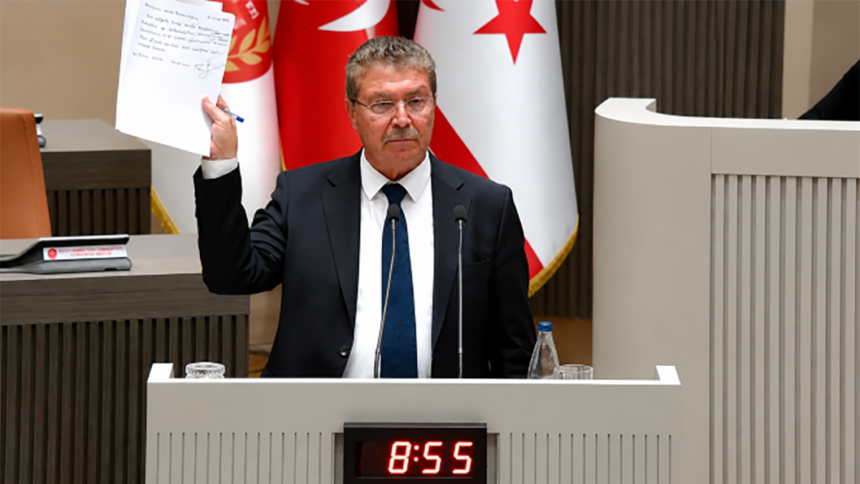
Ustel has handwritted a draft bill to cut Turkish Cypriot politicians’ salaries by 10 per cent, reflecting growing concerns about the rising cost of living in Northern Cyprus. During a session of the Turkish Cypriot legislature, this proposal was introduced as members debated pressing economic issues.
In the context of a staggering year-on-year inflation rate of 40 per cent for food prices, opposition figures have voiced significant concerns regarding income equality. Devrim Barcin from the main opposition party, CTP, highlighted that despite gross salary increases, higher tax payments have resulted in stagnant disposable incomes for Turkish Cypriots. Barcin argued that the ruling coalition has failed to adequately address these economic challenges, accusing them of merely redistributing financial resources without improving citizens’ situations.
“Increases in gross salaries mostly end up being paid as tax in the end,” Barcin stated, emphasising the need for tax rates to be adjusted annually in line with inflation. He pointed out that a committee formed to review tax rates has yet to convene, leaving many citizens feeling the pinch.
Amidst these discussions, Ustel took the opportunity to position himself as a leader willing to share the burden. By suggesting a cut to politicians’ salaries, he aimed to set an example for others in the public and private sectors. He asserted, “Let us be the first. The unions say that politicians should be the first to pull their weight. So, we will pull our weight.” This move was intended to reflect a commitment to economic responsibility rather than simply addressing the symptoms of the underlying issues.
Ustel’s approach was straightforward. He asked for a piece of paper and proceeded to draft the bill right there in front of his fellow lawmakers, stating, “I shall be the first to sign here.” His action was intended to convey sincerity and urgency in addressing the financial struggles faced by constituents. Following his lead, members from his coalition, including ‘deputy prime minister’ Fikri Ataoglu and ‘transport minister’ Erhan Arikli, also signed the bill.
However, not all members of the assembly were convinced by Ustel’s handwritten initiative. CTP deputy leader Asim Akansoy expressed scepticism, stating that while he supports the idea of salary cuts for politicians and high-ranking bureaucrats, the manner in which Ustel presented the bill was insufficient. Akansoy insisted on the necessity of a properly drafted proposal and suggested that the legislature should convene to discuss a more formal approach within a specified timeframe.
The ongoing dialogue reflects a broader concern within Northern Cyprus regarding the economic landscape and the perceived disconnect between politicians and the public. As inflation continues to erode purchasing power, the effectiveness of such measures remains to be seen. The call for a structured approach to economic reform resonates with many citizens who are grappling with their financial realities.
In the coming days, Ustel has promised that the tax committee will meet to further discuss adjustments, which could potentially lead to more substantial changes in fiscal policy. Whether this will alleviate the economic pressures faced by Turkish Cypriots or merely serve as a symbolic gesture remains uncertain, but the attention to these issues reflects a growing awareness of the need for reform.