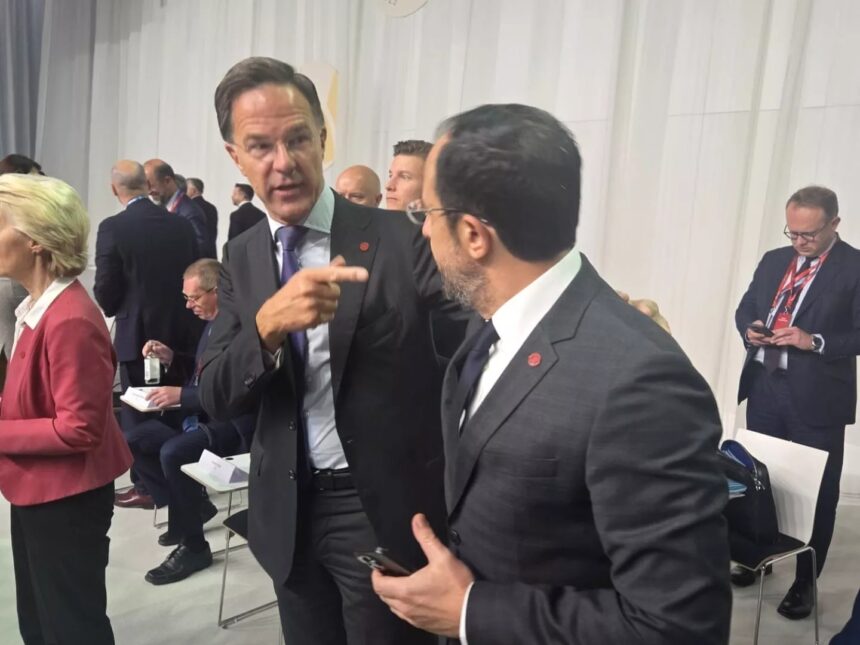
turkey safe — turkey safe — NATO Secretary General Mark Rutte recently requested a meeting with Cyprus President Nikos Christodoulides during an informal European Council summit in Copenhagen to discuss Turkey’s participation in the European Union’s SAFE defence programme. This initiative, which Turkey is eager to join, has been a source of frustration for Ankara due to its exclusion.
The informal discussions aimed to address Turkey’s growing irritation over its inability to access the SAFE programme, which provides crucial funding for defence industry advancements. Turkey has been vocal about its desire to participate directly, as the programme is seen as essential for maintaining its military capabilities.
During the meeting, Rutte acted as a mediator on behalf of Turkey, leveraging his established rapport with Christodoulides, whom he has known since his time as Prime Minister of the Netherlands. Sources indicate that Turkey hopes to use this relationship to navigate the Cypriot opposition and secure access to the SAFE programme.
Turkey’s application for SAFE participation was formally submitted on 11 September. Following this, Rutte appeared before Coreper, the committee of 27 EU ambassadors, to advocate for Turkey’s bid. His presence at such a meeting marks a significant escalation in NATO’s diplomatic efforts to promote Turkey’s defence interests within the EU framework.
However, Turkey’s path to participation is fraught with challenges, primarily due to the requirement for unanimous consent from all EU member states. With Turkey currently occupying part of the Republic of Cyprus and its ongoing threats towards both Cyprus and Greece, the likelihood of a double veto from Nicosia and Athens looms large.
European Council President António Costa has clarified the prerequisites for third-country participation in the SAFE programme, stating that any country threatening the security of EU member states cannot be allowed access. This position underscores the complex geopolitical landscape surrounding Turkey’s ambitions.
In response to Rutte’s overtures, President Christodoulides reiterated the need for Turkey to respect EU regulations regarding participation. He suggested that a positive gesture from Turkey would involve a willingness to engage in negotiations concerning the Cyprus issue, indicating that diplomatic progress in this area could influence perceptions around Turkey’s defence ambitions.
Greek Prime Minister Kyriakos Mitsotakis has also firmly opposed Turkey’s participation, citing Ankara’s ongoing threats as a barrier to any potential acceptance. Mitsotakis emphasised that Turkey cannot engage in the SAFE programme while maintaining its position of hostility towards Greece.
Despite these political hurdles, there are avenues for Turkish defence firms to indirectly benefit from the SAFE programme, particularly through partnerships with European subsidiaries. For instance, Turkish drone manufacturer Baykar’s acquisition of Italian company Piaggio Aerospace exemplifies how Turkish entities can navigate EU regulations to access defence markets.
Turkey’s interest in the SAFE programme is part of a broader EU initiative aimed at enhancing defence readiness, with the European Commission set to mobilise up to €150 billion in funding for member states by 2030. The SAFE programme, which entered into force on 29 May 2025, aims to bolster defence procurement capabilities across Europe.
As Cyprus prepares to receive €1.18 billion from SAFE, and Greece has been allocated €787.7 million, the stakes for Turkey remain high. The programme supports a range of critical defence projects, from ammunition and missile systems to air and maritime capabilities, all while imposing strict eligibility criteria for non-EU participants.