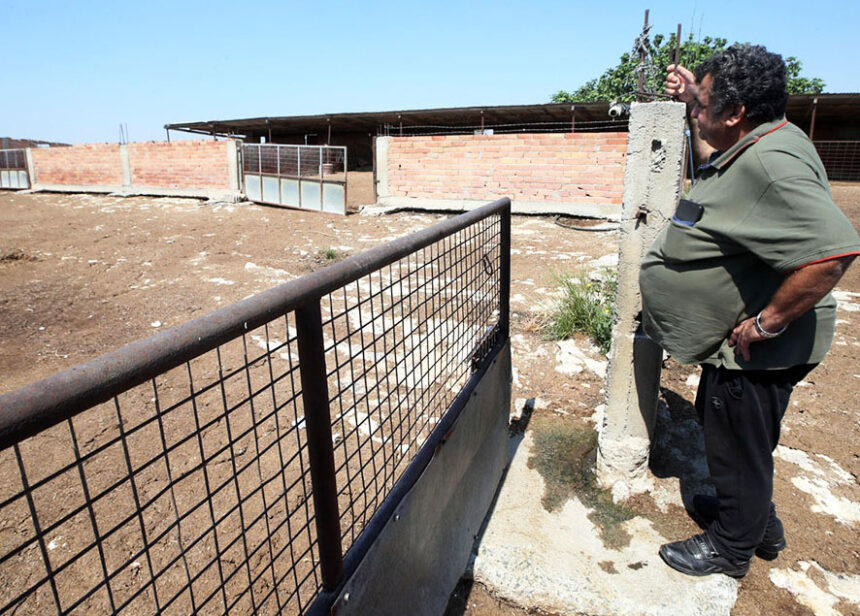
Foot and mouth disease has cast a long shadow over Cyprus, leaving farmers grappling with profound emotional and financial losses. Each day, Sotiris Kadis drives to his farm, unlocking the gates to an empty yard that once echoed with the sounds of hundreds of sheep. Now, the silence is deafening, and there is nothing left to tend or care for. For the first time in his life, he faces the stark reality of a farm without animals.

Photo: cyprus-mail.com
- In an effort to encourage participation, the mental health services are being offered outside the usual referral processes. This is crucial in providing timely support to those in desperate need.
- If you or someone you know is struggling due to the impact of foot and mouth disease, please reach out to the dedicated mental health hotline at 94069682 for support.
“I cannot describe what we went through. We don’t have animals for the first time. It is soul-wrenching,” Kadis reflects. He has lost over 1,000 animals, a devastating blow not just to his livelihood but to his family’s heritage and history.

Photo: cyprus-mail.com
Foot and: The Scale of Destruction Across Cyprus
The impact of the disease has rippled through the island, with over 80,000 animals culled and 121 farming units affected. For many farmers, like Kadis, the loss extends beyond financial concerns; it represents the erasure of generations of family farming traditions. The emotional toll is substantial, affecting not just the farmers but also the veterinarians tasked with the brutal duty of carrying out the culling.
“I come and sit in an empty farm every day. I can’t wait for the time we have animals again,” Kadis laments. The emotional scars left by witnessing the culling process are deep, and the community is left struggling to cope.
Understanding the Emotional Impact
The psychological ramifications of such mass culling can be immense. Studies from previous outbreaks, like the UK’s 2001 foot-and-mouth crisis, indicate increased rates of anxiety, depression, and symptoms akin to post-traumatic stress disorder within farming communities. Mental health professionals in Cyprus warn that similar patterns may soon emerge.
Dr Antonis Farmakas, head of mental health services overseeing support for affected individuals, notes, “Many people contacted us because they were in a difficult position. We have carried out home visits and support was also provided to family members who struggled to cope with what happened.” However, the uptake for psychological support remains low. Only eight individuals have reached out to the dedicated support hotline, and five home visits have been conducted.
Barriers to Mental Health Support
Despite the establishment of a psychological support hotline by the health ministry, stigma surrounding mental health in Cyprus poses a significant barrier. Farmakas explains that many individuals fear being perceived as weak or unstable, leading to a reluctance to seek help. “In Cyprus, there is a broader prejudice and stigma surrounding psychological support,” he says.
In an effort to encourage participation, the mental health services are being offered outside the usual referral processes. This is crucial in providing timely support to those in desperate need.
The Veterinarians’ Plight
The emotional burden also extends to veterinarians involved in the culling operations. Dr Dimitris Epaminondas, president of the Pancyprian Veterinary Association, explains that the methods used, such as captive bolt devices or injectable euthanasia, involve direct contact with the animals, adding to the professionals’ emotional strain. A 2018 study highlighted that veterinarians often report feelings of moral distress and compassion fatigue when involved in disease-control culls.
Community Resilience Amidst Devastation
Sotiris Kadis is not alone in his suffering. Zisos Zisimou, another farmer, lost over 2,000 goats and sheep. He shares the same feelings of devastation, stating, “The most difficult thing was that the disease is not visible on the animals and then suddenly the culls began.” The emotional impact extends to their families, disrupting the entire household dynamic.
While some, like Zisimou, believe they can cope without psychological support, relying on friends for emotional resilience, others are concerned about the economic implications of the culls. “With the compensation we received, you can only buy back half the animals. If the state supports us further, maybe something can be done,” Zisimou remarks, highlighting the intertwining of financial and emotional struggles.
The Long Road to Recovery
The full consequences of the outbreak may not be immediately apparent. Dr Farmakas warns, “Post-traumatic stress can appear three to four months after the events. That is why prevention is so important.” As farmers and their families attempt to rebuild their lives, the long-term effects of this crisis loom.
As the Cypriot government focuses on controlling the disease, it remains vital to address the mental health needs of those affected. With ongoing support, both emotional and financial, the farming community may find a path toward healing.
If you or someone you know is struggling due to the impact of foot and mouth disease, please reach out to the dedicated mental health hotline at 94069682 for support.