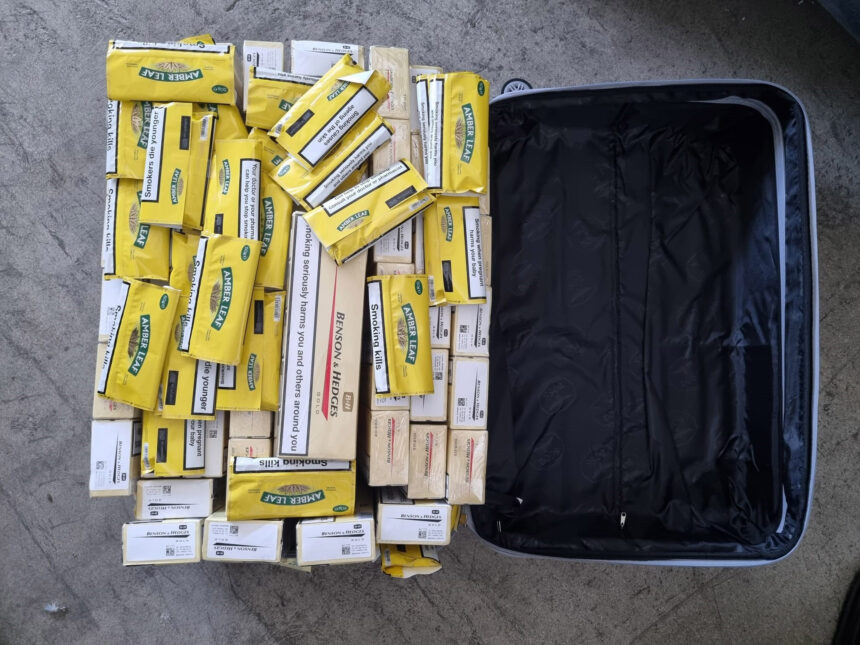
Smuggling across the divide has become a significant issue in Cyprus, particularly since the crossing points opened in 2003. What began as a casual crossing for family visits and social interactions has morphed into a booming underground economy, with tobacco products leading the charge.

Photo: cyprus-mail.com
Rise of Smuggling Since 2003
For over two decades, crossing points have allowed free movement between the northern and southern parts of Cyprus. However, this has also facilitated a surge in smuggling activities. George Constantinou, a customs officer, notes that the smuggling of goods has evolved into a highly profitable enterprise. In 2025 alone, customs officials confiscated 2,865 cartons of cigarettes at Larnaca and Paphos airports, a clear indication of the scale of this illicit trade.

Photo: cyprus-mail.com
Diverse Smuggling Methods
The ingenuity of smugglers knows no bounds. Items ranging from washing detergent to outdated air conditioning coolant have been attempted across the green line, but tobacco products remain the primary target. Cigarettes, often sold for less than half the price in the south, have become a common import from the north. The established regulations allow individuals to bring two packs of cigarettes per crossing, but many exploit these rules for larger gains.
Customs Struggles with Enforcement
Constantinou elaborates on the difficulties faced by customs officials in combating this trend. The volume of seized tobacco products has surged, with a staggering 650 per cent increase in quantities smuggled between 2022 and 2024. He explains that the lack of cooperation between authorities on both sides of the divide complicates enforcement efforts.
Case Studies of Smuggling Operations
One notable case involved an elderly Greek Cypriot coffee shop owner, who was discovered with nearly 2,600 cartons of cigarettes hidden behind a parrot cage. This individual allegedly supplied tobacco to local customers. In stark contrast, smugglers targeting international markets often use airports to transport large quantities of cigarettes, with Turkish Cypriots frequently involved in these operations.
Unmonitored Areas Serve as Smuggling Corridors
Constantinou reveals that while some smugglers attempt to pass through official checkpoints, many large shipments are transported through unmonitored areas of the buffer zone. Only a limited number of inspections occur, particularly for sea cargo containers, which are rarely checked thoroughly. The recent trend shows smugglers using sophisticated methods to transport goods unnoticed, raising questions about the effectiveness of current security measures.
Motivation Behind Smuggling
The motivation for smugglers is primarily financial, as highlighted by Constantinou. Many caught in the act claim ignorance about the contents of their bags, while others obstruct customs by using locked suitcases. However, behind individual efforts lies a more extensive network, with organised groups facilitating these operations. The allure of profit continues to drive the smuggling business despite law enforcement’s attempts to curtail it.
Challenges in Addressing Smuggling
Constantinou points out that the complexities of inter-agency communication hinder significant progress in tackling smuggling. The lack of cooperation with authorities in the north further complicates matters. Even seemingly innocuous items, like washing detergent, are often brought across with the intent to resell, highlighting the grey areas in enforcement.
Legal Loopholes and Out-of-Court Settlements
Many smugglers face fines that appear trivial compared to the profits gained from their activities. For instance, a recent case involved a 35-year-old caught smuggling cigarettes from Larnaca to the UK, who paid a €2,200 fine. This raises concerns over the effectiveness of penalties in deterring smuggling efforts. While fines are levied, the money collected goes to the finance ministry, not to direct enforcement efforts.
Future of Smuggling in Cyprus
As the smuggling situation continues to evolve, Constantinou emphasises the need for a broader resolution to the Cyprus problem to effectively combat this issue. Until then, smuggling across the divide is likely to persist, driven by the complex interplay of financial incentives and regulatory challenges.