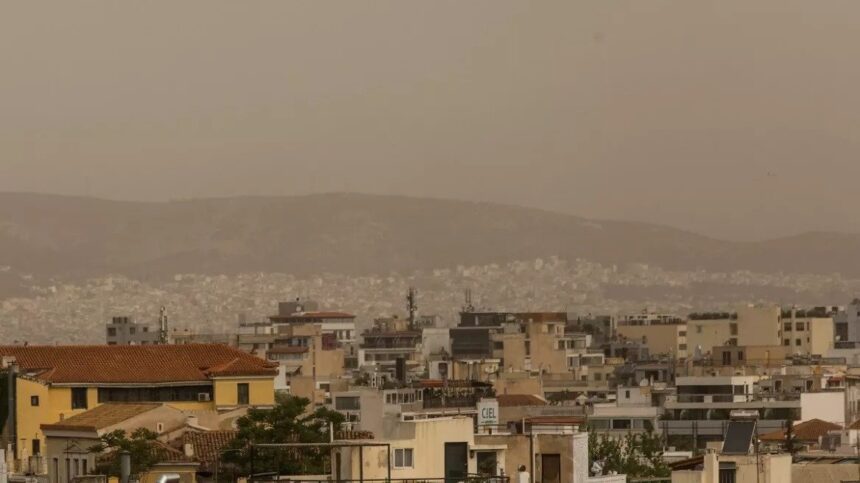
The Sahara dust storm has caused record levels of dust to envelop Cyprus, severely affecting air quality and visibility across the island. The Cyprus Atmospheric Remote Sensing Observatory (CARO), part of the Eratosthenes Centre of Excellence, reported on Tuesday that dust concentrations have exceeded 2,000 μgr/m³ in the lower atmosphere, leading to significant health concerns.
- Reports indicate that cities like Paphos and Larnaca have experienced dust levels that are triple the legal limit, highlighting the widespread nature of this phenomenon across the island.
Sahara dust: Severe Air Quality Impact
As the dust settles in the first two kilometres above the ground, vertical visibility has dropped to less than one kilometre. This phenomenon is expected to peak in Limassol on Tuesday evening, according to the MONARCH dust forecast model.
Record Concentrations and Health Risks
Experts have indicated that ground-level dust concentrations could reach alarming levels, with predictions suggesting figures might soar to 500 μgr/m³. This amount is ten times higher than the safety limits established by the Department of Labour Inspection, raising concerns for public health, especially for vulnerable groups.
Timing and Forecast of the Dust Episode
The dust episode has been building over the past few days, with the situation peaking today. Meteorologists attribute the event to a specific weather system that has also brought rainfall to various parts of the island.
Potential for Wet Deposition
Interestingly, the rainfall is expected to create a process known as “wet deposition,” whereby precipitation helps to clear the suspended dust particles from the atmosphere. This could provide some relief from the current conditions, although a gradual departure of the dust is anticipated on Thursday morning. However, a secondary wave of dust is forecasted to return later that evening.
Advice from Authorities
The Department of Labour Inspection is actively advising vulnerable groups, including children, the elderly, and individuals with existing respiratory conditions, to limit outdoor activities during this period. Employers are also required to implement protective measures for workers who operate in open spaces.
Recent Dust Levels in Other Areas
Reports indicate that cities like Paphos and Larnaca have experienced dust levels that are triple the legal limit, highlighting the widespread nature of this phenomenon across the island.
Looking Ahead
As the situation continues to evolve, local authorities and health officials stress the importance of monitoring air quality and adhering to safety guidelines. The combination of dust storms and changing weather patterns underscores the need for ongoing vigilance in Cyprus.
Public Awareness and Preparedness
Public awareness campaigns may be essential in informing residents about the risks associated with high dust levels, as well as the importance of staying indoors during peak episodes. The observatory and health departments are expected to provide regular updates regarding air quality and health advisories.
As Cyprus experiences this significant environmental challenge, the collaboration between meteorological experts and health authorities will be vital in mitigating the effects of the Sahara dust storm.