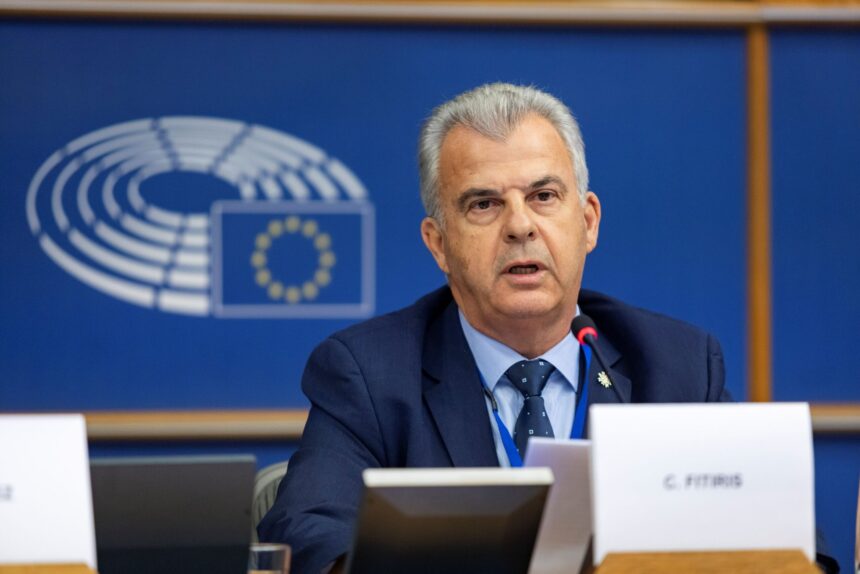
Tackling organised crime will be a central priority of Cyprus’s EU council presidency, according to justice minister Costas Fitiris. Speaking to the European Parliament on Tuesday, he highlighted the urgent need for a robust response to the rapidly evolving landscape of criminal networks.
- “Without strong international and cross-sectoral cooperation, we cannot be one step ahead of criminal networks,” he noted, underscoring the importance of collective action.
- The minister also acknowledged the vital role of Europol, expressing a commitment to ensuring that the upcoming review of the agency’s mandate aligns with the operational needs of member states.
- Addressing the Schengen area, he asserted that restoring a fully functional system without internal border controls hinges on the swift implementation of agreed measures.
- In his concluding remarks, Fitiris reinforced that “security, justice and human rights are not conflicting goals, they are interrelated conditions for a strong and democratic Europe.”
As Cyprus assumes its role with both pride and a strong sense of responsibility, Fitiris emphasised the increasing social instability across Europe and the challenges that come with it. He stated, “Organised crime is evolving at an unprecedented pace and requires an equally dynamic response.”
Fitiris outlined plans for a comprehensive, multi-sector strategy designed to adapt to the changing nature of these criminal networks. He stressed the necessity of operational cooperation and legislative initiatives that would enhance collaboration not only within the EU but also with third countries and the private sector.
“Without strong international and cross-sectoral cooperation, we cannot be one step ahead of criminal networks,” he noted, underscoring the importance of collective action.
A significant focus of the presidency will be on the recovery and confiscation of illicit assets, which Fitiris described as one of the most effective tools against organised crime. He asserted that attacking the financial underpinnings of criminal networks is crucial, stating, “The most effective way to combat organised crime is to target the financial pillars of criminal networks.”
Fitiris pointed out that asset recovery measures can strike “at the seeds of crime” and highlighted the EU’s asset recovery and confiscation directive as an essential resource for authorities. He urged for its integration into national law by November 2026.
The minister also acknowledged the vital role of Europol, expressing a commitment to ensuring that the upcoming review of the agency’s mandate aligns with the operational needs of member states.
On the topic of drug policy, Fitiris advocated for a balanced approach that combines efforts against trafficking with measures aimed at reducing drug use and its associated harms. He remarked, “Detention must remain a measure of last resort,” especially for minors and young users, advocating for diversion towards health services and treatment as a more effective societal response.
Fitiris further stated that the presidency would seek to expedite political agreement on legislation designed to prevent and combat child sexual abuse, cautioning that any delays could undermine the protection of vulnerable children.
Addressing the Schengen area, he asserted that restoring a fully functional system without internal border controls hinges on the swift implementation of agreed measures.
Amidst these discussions, Fitiris did not shy away from the pressing threat of violent extremism, noting a concerning rise in radicalisation and recruitment of minors. He emphasised that jihadism remains a significant concern for EU member states.
New technologies, particularly artificial intelligence and the internet, are reshaping the threat landscape, prompting Fitiris to state, “The threat is changing and we must constantly adapt our tools and policies.”
In his concluding remarks, Fitiris reinforced that “security, justice and human rights are not conflicting goals, they are interrelated conditions for a strong and democratic Europe.”