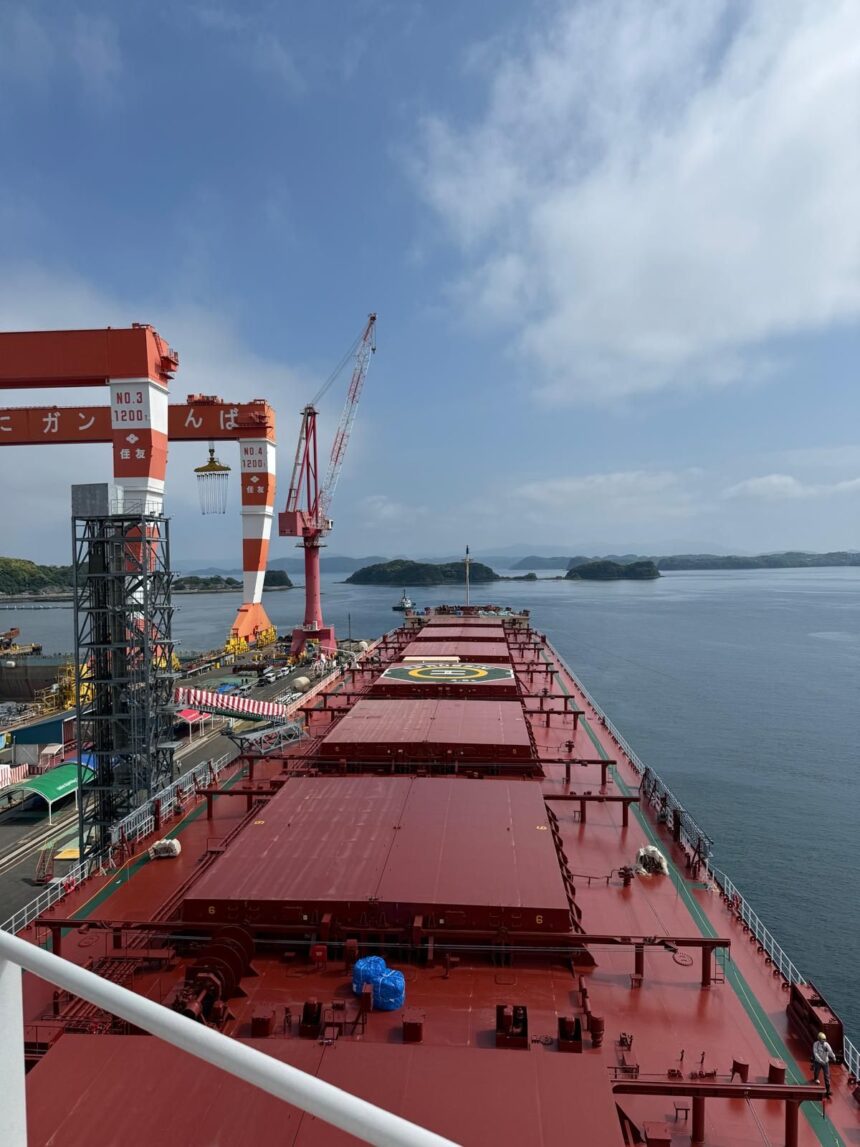
Safe Bulkers, a Limassol-linked dry-bulk shipowner listed on the New York Stock Exchange, achieved a net income of $17.8 million in the third quarter of 2025 despite facing a softer market and geopolitical disruptions. This figure reflects a decline from $25.1 million in the same period last year but highlights the company’s resilience amid challenging conditions.
Safe bulkers: Financial Performance and Dividend Declaration
For Q3 2025, Safe Bulkers reported an adjusted net income of $13.9 million, with revenue totalling $73.1 million, down from $75.9 million year-on-year. The board has declared a dividend of $0.05 per common share, set to be paid on December 19, 2025. The company’s president, Loukas Barmparis, noted that the quarter was influenced by the “postponement of the IMO net-zero framework” alongside market fragmentation due to geopolitical factors, port fees, and tariffs.
Market Conditions and Operational Costs
The average daily Time Charter Equivalent (TCE) rate for the quarter decreased to $15,507 from $17,108, influenced by lower charter hires and reduced earnings from scrubber-fitted vessels. Vessel operating expenses slightly declined to $21.8 million, attributed mainly to lower repair and maintenance costs. Daily operational expenses decreased to $5,104, although when excluding dry-docking and pre-delivery costs, it rose to $5,060, reflecting a 1% increase year-on-year.
Depreciation costs increased to $15.1 million as newer vessels were added to the fleet while older ships were sold. General and administrative expenses also rose, with daily admin costs climbing to $1,762, partly due to fluctuations in euro–dollar exchange rates. Voyage expenses increased to $7.3 million, largely driven by increased bunker consumption under scrubber-related charters. However, foreign exchange losses saw a significant reduction, narrowing to $0.1 million from $2.6 million last year, while interest expenses remained stable at $7.6 million.
Liquidity and Debt Management
Safe Bulkers maintained a strong liquidity position at the end of September, holding $123.9 million in cash and having $266.5 million in undrawn revolving credit facilities. The total debt amounted to $516.3 million, which includes a €100 million unsecured bond scheduled to mature in 2027. The company’s consolidated leverage stood at approximately 35 percent.
Sustainability Initiatives and Fleet Renewal
In July 2025, Safe Bulkers secured a new $75 million sustainability-linked revolving credit facility. This facility is tied to independently verified reductions in fleet carbon intensity, replacing an older credit facility from the same lender. The fleet comprised 45 vessels at the end of the quarter, boasting an average age of 10.3 years and a total carrying capacity of 4.6 million deadweight tonnes (dwt).
As part of its environmental upgrade programme, 24 vessels have already been enhanced with low-friction paints and energy-saving devices. The company has also taken delivery of twelve IMO Phase 3–NOx Tier III newbuilds, demonstrating its commitment to sustainability and modernisation. Currently, Safe Bulkers has a six-vessel newbuild orderbook, including two methanol dual-fuel Kamsarmax units set for delivery in 2026–2027.
Operational Outlook and Chartering Activity
Looking ahead, Safe Bulkers anticipates 71 days of dry-docking downtime in Q4 2025 and another 57 days in Q1 2026. The company’s chartering strategy remains diversified; as of November 21, 2025, 17 vessels were active in the spot market while 29 were on period charters. Contracted revenue from non-cancellable charters reached $153.5 million, excluding benefits from scrubbers. Capesize vessels continue to provide strong visibility, with an average remaining charter duration of 1.7 years and daily rates averaging $24,780.
Geopolitical Considerations and Crew Safety
Safe Bulkers has reaffirmed that its fleet does not include Russian or Ukrainian crew members and has opted to avoid operations in the Black Sea and the Red Sea due to security concerns. Management is actively monitoring developments related to the ongoing Ukraine conflict as well as instability in the Middle East, remaining vigilant to any potential impacts on operations.
Commitment to Shareholders
The company has confirmed its ongoing dividend policy following prior payments on its Series C and D preferred shares. Future dividends will be contingent on market conditions, liquidity needs, and board discretion, ensuring that shareholder interests are safeguarded amidst changing market dynamics.