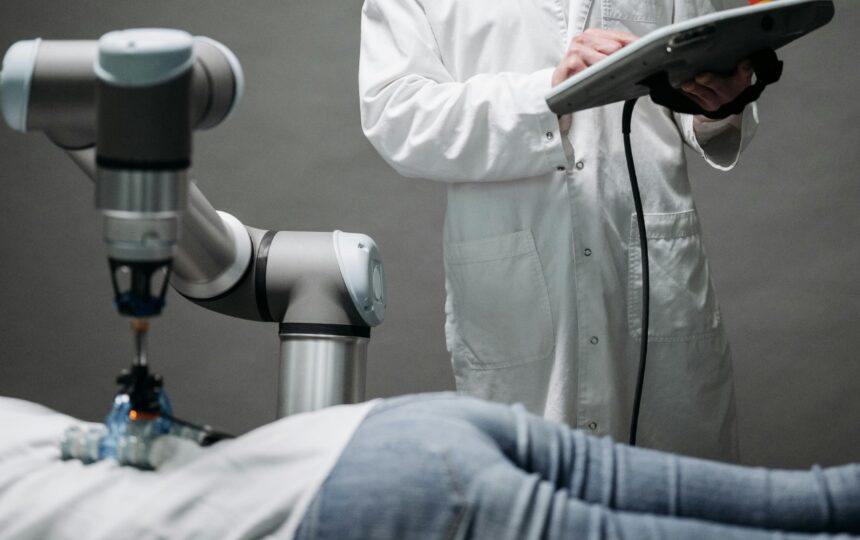
Researchers are developing robotic fingertips that could restore surgeons’ sense of touch during minimally invasive and robotic operations. This innovative technology seeks to overcome a significant challenge in modern surgery, where the transition from traditional open surgeries to keyhole techniques has diminished tactile feedback. Surgeons have lost the ability to directly feel organs and tissues, making it more difficult to detect abnormalities during procedures.
Robotic fingertips: Bridging the Gap in Surgical Sensation
A collaborative effort among surgeons and engineers across Europe is underway within an EU-funded project called PALPABLE. The initiative aims to create soft robotic fingertips designed to sense the firmness or softness of tissue, thus enhancing the surgeon’s ability to make informed decisions during surgery. The research is set to continue until the end of 2026, with the first prototype expected for testing by March 2026.
Advancements in Technology
The team is leveraging a combination of optical sensing, soft robotics, and artificial intelligence to create a probe that mimics the tactile sensation of a human fingertip. This device will gently probe organs and generate a visual map of tissue stiffness, which will be displayed on a screen for surgeons to reference during operations.
The Evolution of Surgical Techniques
Professor Alberto Arezzo from the University of Turin, Italy, highlights the evolution of surgical practices over the past three decades. Initially, surgeons relied on direct tactile feedback during open surgeries. However, the introduction of keyhole surgery in the 1990s, which employs long instruments and cameras, significantly reduced tactile sensation. While this method offers benefits such as reduced trauma and shorter recovery times for patients, it also compromises the surgeon’s ability to feel the texture and condition of tissue.
Importance of Tactile Feedback
For surgeons, the loss of direct touch is a crucial trade-off. Tumours can exhibit different textures compared to healthy tissue, and experienced surgeons can often feel these differences. When operating on cancerous tissues, the challenge lies in achieving a balance—removing enough tissue to eliminate cancer while preserving surrounding healthy structures. Dr Gadi Marom from Hadassah Medical Centre in Jerusalem emphasises the importance of this balance, stating, “We don’t want to do that. We want it done in one shot.”
Innovative Sensing Technology
The robotic fingertip technology aims to recreate the tactile sensation by translating physical contact into a visual format, such as a colour-coded map that indicates softer and firmer areas. This visualisation could assist surgeons in determining the margins around a tumour more effectively, enhancing their decision-making capabilities during surgery.
How the Technology Works
The probe being developed features fibre-optic cables integrated into a soft, flexible tip. When the tip is pressed against tissue, it deforms, causing changes in the light that travels through the fibres. Dr Georgios Violakis at Hellenic Mediterranean University explains, “A silicone dome presses against soft tissue, allowing us to map both the direction and the magnitude of the applied force.” These subtle changes in light intensity and wavelength provide critical information about tissue stiffness.
Collaboration Across Europe
The research involves several academic and technological partners. Queen Mary University of London is contributing to the design and refinement of the membranes, while the Fraunhofer Institute in Germany is working on functional films. Other contributors, including Bendabl and Tech Hive Labs in Greece and the University of Essex in the UK, are focused on developing the software necessary to create tactile maps from the data collected.
Testing and Future Prospects
Before being used in clinical settings, the prototype will undergo rigorous laboratory testing. The fibre-optic cables used in the device are remarkably thin, about the width of a human hair, allowing for the detection of minute differences in tissue characteristics. Although similar sensing technology has been employed in various industries, its application in surgical settings represents a significant advancement in minimising invasiveness while maximising information transfer.
Challenges in Robotic Surgery
As robotic surgery becomes more prevalent, the absence of tactile feedback remains a critical concern. Arezzo points out that without enhanced sensory information, the effectiveness of robotic procedures may be compromised. He states, “In robotic surgery, tactile feedback is largely absent. That’s why this work is so important.”
Future of Surgery
Both Arezzo and Marom agree that the future of surgery will likely be dominated by robotic techniques, provided that advancements in sensory feedback continue. Marom notes the significant advantages that robotic surgery offers, including improved 3D vision and reduced physical strain on surgeons during lengthy procedures. He believes that with the integration of new technologies, surgeons can better care for their patients.
As the PALPABLE project progresses, the potential to restore a sense of touch in robotic surgery could revolutionise surgical practice, ultimately leading to improved patient outcomes and enhanced surgical precision.