Concerns surrounding the proposed expansion of quarrying activity in the Pyrga area have intensified among residents of nearby communities. Questions have been raised regarding the environmental impacts and the proximity of the quarry to residential zones, prompting political scrutiny.
- Vafeades explained that transporting quarry materials from more distant locations is deemed environmentally and economically unfeasible, adding pressure to consider the expansion of the Pyrga site.
The situation escalated when Andreas Pasiourtides, the MP for Larnaca from the Akel party, sought information from the agriculture ministry about the expansion plans. His inquiries reflect a broader unease within the community regarding the implications of increased quarrying operations.
In a recent statement, Agriculture Minister Maria Panayiotou highlighted the rising demand for quarry materials over the past five years, attributing this growth to the construction sector and significant infrastructure projects. She warned that existing licensed reserves across Cyprus are projected to be depleted within the next seven to eight years, making the consideration of quarry expansion crucial for maintaining adequate aggregate supplies.
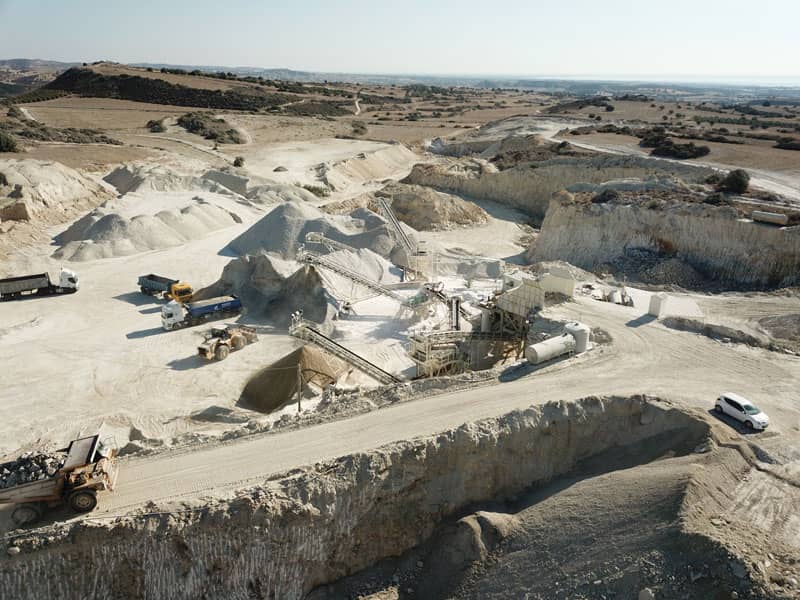
The Pyrga quarry, managed by Skyra Lima, is currently the largest producer of aggregate materials in Cyprus. Transport Minister Alexis Vafeades revealed that annual sales of quarry products reached approximately 1.3 million tonnes in 2024, with projections of 1.4 million tonnes for 2025. This upward trend in demand is estimated at seven per cent per year.
Historically, the Pyrga quarry has played a vital role in supplying construction materials to the Larnaca and Nicosia districts since it began operations in 1960. Its significance grew after 1974, when it became the only active quarry in the government-controlled areas, underscoring its crucial position in the local economy.
Geological surveys conducted to the northwest of the existing quarry have identified substantial reserves of high-quality rock, further reinforcing the case for expansion. However, officials have cautioned that failing to expand could lead to supply shortages in the construction industry, necessitating the development of a new quarry site elsewhere in the Larnaca district.
Vafeades explained that transporting quarry materials from more distant locations is deemed environmentally and economically unfeasible, adding pressure to consider the expansion of the Pyrga site.
Residents and environmental advocates have voiced their apprehensions about the potential impacts on biodiversity, dust pollution, and noise levels, particularly given the quarry’s close proximity to residential communities. These concerns have sparked a call for more rigorous assessments and transparency in the decision-making process.
While Panayiotou reassured the public that the existing quarry and the proposed expansion are not located within a Natura 2000 site, she acknowledged the need for careful scrutiny. The environmental authority is expected to review whether specialised ecological, dust, or noise studies are necessary to ensure that no significant impacts arise on protected habitats and species during the environmental assessment process.
Officials have also referenced studies measuring air quality near quarries, indicating that PM10 concentrations have remained within statutory limits, showing no significant pollution directly linked to quarry activities. Nonetheless, the ongoing discussions reflect a growing awareness and concern among residents about the balance between economic development and environmental preservation.