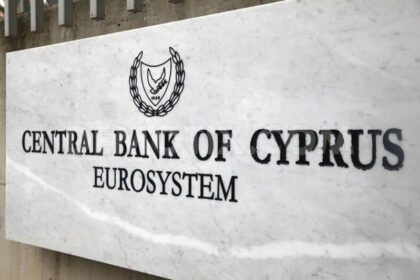
The Cyprus banking sector has reached a milestone, posting the lowest non-performing loan ratio since 2014, as reported by the Central Bank of Cyprus (CBC).
- The Cyprus banking sector has reached a milestone, posting the lowest non-performing loan ratio since 2014, as reported by the Central Bank of Cyprus (CBC).
According to the CBC, the banking sector remained robust and well-capitalised during the third quarter of 2025. The financial soundness indicators released highlight a continued improvement in asset quality and a stable capital position across credit institutions.
Strong Capital and Profitability
As of September 2025, the Common Equity Tier 1 ratio stood at an impressive 26.1 per cent. This reflects a sustained positive profitability trend within the sector, reinforcing its solvency over recent years. The leverage ratio also remained stable, underscoring the banks’ resilient financial footing.
Decline in Non-Performing Loans
Notably, the non-performing loans (NPL) ratio has dropped to 4.5 per cent, marking the lowest level since 2014. The CBC attributed this reduction to ongoing efforts by credit institutions to deleverage their balance sheets and enhance asset quality.
The methodology used to calculate this ratio, as outlined by the European Banking Authority Risk Dashboard, includes loans and advances to central banks and credit institutions. Under this framework, the NPL ratio further decreased to 2.3 per cent at the end of September 2025, down from 2.9 per cent in June 2025.
Improvement in Risk Classification
Loans classified as Stage 2, indicating increased credit risk without default, also showed improvement during the third quarter of 2025. This classification fell to 5.8 per cent of total loans, significantly below the EU average of 9.4 per cent as of June 2025.
Resilience Amid Changing Conditions
The CBC noted that the increasing coverage ratio for non-performing loans reflects the sector’s ability to absorb potential future credit losses. Profitability remained positive, largely driven by net interest income generated from a diverse range of interest-bearing assets.
However, interest income for the first nine months of 2025 was lower compared to the same period in 2024. This decline is attributed to the recent decreases in European Central Bank (ECB) interest rates, which also affected net interest margins and returns on equity.
Liquidity Remains Strong
Despite the challenges posed by a lower interest rate environment, liquidity conditions in the Cyprus banking sector remained strong. Liquidity ratios consistently exceeded the minimum supervisory requirement of 100 per cent, surpassing the EU average, even as lending activity increased in recent years.
Asset Composition and Structure
In terms of asset composition, the domestic banking sector’s assets were primarily concentrated in loans and advances, cash and balances held with the ECB, and debt instruments. On the liabilities side, deposits and equity constituted the largest shares.
Overall, the indicators presented by the CBC confirm that the Cyprus banking sector has maintained a strong capital base and high liquidity, while also improving asset quality significantly during the third quarter of 2025.