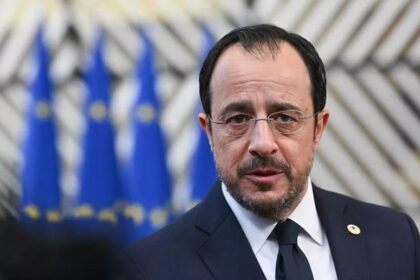
protesting — President Nikos Christodoulides has firmly stated that no one is banned from protesting, addressing public anger following a police crackdown on a demonstration outside the foreign ministry on Thursday night.
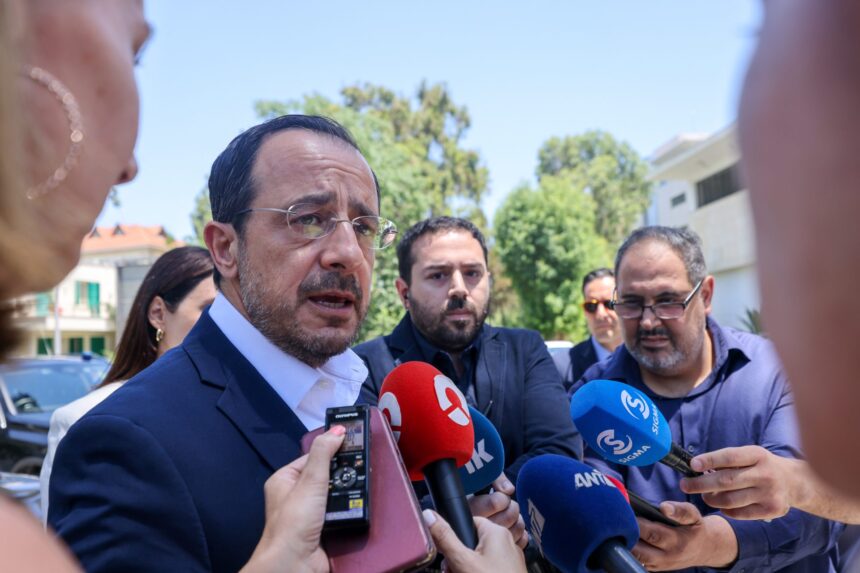
Speaking to journalists at a rural culture festival in Lofou, Christodoulides emphasised that the right to protest is a guaranteed aspect of democratic life in Cyprus. He noted, “On the contrary, the right to protest is guaranteed and you see that very often, there are such protests.”
The president’s comments came in the wake of criticism aimed at law enforcement, following the police’s aggressive response to the protest aimed at condemning Israel’s interception of humanitarian boats heading to Gaza. Protesters faced riot police who resorted to deploying pepper spray amid scuffles.
In a further defence of the government’s stance, Christodoulides pointed to a law passed in July that imposes stricter regulations on protests and large gatherings. While acknowledging the criticism surrounding this legislation, he maintained that the measures were necessary and that he had “nothing else to add on this specific issue.”
When questioned about the police’s actions during the protest, he stated that they are often under scrutiny and urged for a balanced view of law enforcement conduct. He said, “The police are constantly being criticised. We must respect the members of the security forces a little, and the conditions in which they operate.”
Christodoulides confirmed that an announcement regarding the police’s response had been issued, and assured that if any excessive force was discovered, appropriate actions would be taken against involved officers. He reiterated the importance of allowing security forces to operate within legal frameworks.
The Thursday protest saw demonstrators rallying against the Israeli military’s actions, leading to clashes with police. Following the event, the political party Akel condemned the police’s response as an “unprovoked attack” and called for another protest the following day, urging citizens to mobilise against state repression and government complicity with the Israeli regime.
Volt, another political entity, echoed these sentiments, issuing a statement condemning the police violence against peaceful demonstrators and asserting that such actions have no place in a democratic society. They highlighted the nature of the protest, which was aimed at addressing violations of international law regarding the treatment of the Gaza-bound boats.
Eyewitness accounts added to the controversy, with media reports detailing instances of police using shields and pepper spray against protesters. A journalist from the newspaper Haravgi reported being assaulted by police while covering the event. Veteran journalist Christos Christofides recounted being thrown to the ground during the altercation, thanking bystanders who helped him during the chaos.
In the aftermath, the Cypriot journalists’ union condemned the use of force against their members and demanded an investigation into the police actions. They stated that the journalist involved had identified herself multiple times yet still faced aggression from law enforcement.
The police defended their actions, claiming that protesters had obstructed traffic, which prompted their intervention to clear the area. The protest was part of a broader wave of global demonstrations against the Israeli military’s actions, with similar events occurring in cities such as Barcelona, Milan, and Paris.