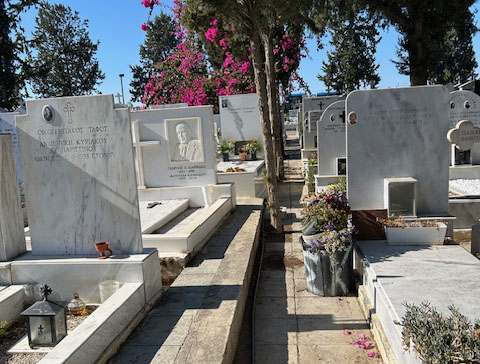
Neglect and overcrowding in Cyprus cemeteries have raised significant concerns among locals and visitors alike. A recent visit to a cemetery in Nicosia revealed a troubling scene where space was scarce, and many graves had not been maintained for decades. This stark contrast to cemeteries in other countries, particularly Germany, has led to questions about the management and cultural attitudes towards burial practices in Cyprus.

Photo: cyprus-mail.com
Cyprus cemeteries: Reflecting on Cemetery Conditions
During a visit to the Strovolos cemetery, one of the most overcrowded sites in Nicosia, a visitor expressed shock at the conditions. “There is hardly space to walk to a grave, and many of them have not been looked after for decades,” they noted. This sentiment resonates with many who observe the stark differences between Cypriot graveyards and those in northern Europe.

Photo: cyprus-mail.com
Contrasting Approaches to Cemetery Design
In Germany, cemeteries are often designed with a park-like atmosphere, featuring wide lanes for walking and landscaped areas where families can gather. A local resident remarked, “The main cemetery in Dortmund is where most people walk their dogs. It is a place where you feel at peace.” This recreational aspect of cemeteries contrasts sharply with the experience in Cyprus, where the lack of upkeep and space leaves little room for reflection or comfort.
Land Ownership and Its Impact
The issue of overcrowding in Cypriot cemeteries can be partly attributed to land ownership structures. Much of the land in Cyprus is owned by the church, which has been able to convert cemetery land for other uses, including luxury housing developments. Critics argue that the church could allocate more space to create better environments for both the deceased and their living relatives. However, it is essential to understand the complexities surrounding these decisions.
Cultural Perspectives on Burial Practices
Cemeteries serve as a reflection of societal values and cultural traditions. Differences in cemetery design and management can be influenced by various factors, including climate and historical context. As one expert noted, “Differences exist in cemetery design and grave space management, which can be influenced by region, climate, and cultural traditions.” In Cyprus, the concept of perpetual burial rights means that families can reserve plots indefinitely, which is a significant factor contributing to the overcrowding seen today.
The Temporary Nature of Graves in Germany
In contrast, grave spaces in Germany are typically leased for a limited period. In urban areas, graves may be available for 20 years, while in rural settings, this may extend to 30 years. After this duration, families are contacted to remove headstones and any other markers of remembrance. If no action is taken, the grave is often repurposed. This temporary approach to burial allows for more efficient use of space and lessens the burden of maintenance over time.
Perpetual Rights and Its Consequences
The perpetual rights system in Cyprus is deeply rooted in the cultural mindset of the people. Many Cypriots treasure the idea of having a permanent resting place for their loved ones, reflecting a profound respect for family traditions. However, this can lead to challenges as graves become neglected over time, particularly when relatives are no longer able to care for them. The pressing question remains: what happens to these eternal resting places when families fade away or move on?
A Nationwide Reluctance Towards Cremation
Another contributing factor to the overcrowding issue in Cyprus is the general reluctance towards cremation. In northern Europe, cremation is a common practice, with countries like Germany reporting approximately 779,100 cremations in 2022, accounting for about 78 per cent of total deaths. This shift towards cremation reduces the demand for grave spaces and alleviates the maintenance burden associated with traditional burials.
The Absence of Crematoriums in Cyprus
Despite the evident need for alternative burial options, Cyprus has yet to establish a crematorium. This absence raises questions about the cultural attitudes towards death and how they influence burial practices. While some may argue that a crematorium could help alleviate the pressure on existing cemeteries, the traditional preference for burial remains strong within the community.
Finding Solutions for Future Generations
The challenges faced by Cyprus cemeteries are not easily solvable and require a multifaceted approach. As the population continues to grow, the need for adequate burial spaces becomes increasingly urgent. Conversations about cemetery management, land use, and cultural attitudes towards death will be essential in addressing these issues. Locals and authorities alike must engage in discussions to find a balance that respects traditions while adapting to modern needs.
As the visitor to Nicosia’s cemetery reflected, “There must be reasons why such crowded cemeteries exist in Cyprus, and why they are so different from northern countries.” Understanding these differences is crucial as the community seeks to create spaces that honour the deceased while providing comfort and reflection for the living.