limassol company — limassol company — Russia has secretly constructed an Arctic undersea surveillance network to spy on NATO, using technology acquired through front companies, including a Cyprus-registered firm. This revelation comes from a joint investigation by the International Consortium of Investigative Journalists (ICIJ) along with major international media outlets such as The Washington Post and German state media.
Limassol company: Mostrello Commercial Ltd.’s Role
The company implicated in this espionage is Mostrello Commercial Ltd., which is registered at 155, Arch. Makarios III Avenue, Proteas Tower, Limassol. According to the Cyprus Registrar of Companies, this firm has been identified as a crucial link in Russia’s acquisition of Western surveillance technology. On October 30, 2024, the US Treasury sanctioned Mostrello, citing its involvement in Russia’s marine sector procurement.
The Harmony Surveillance Network
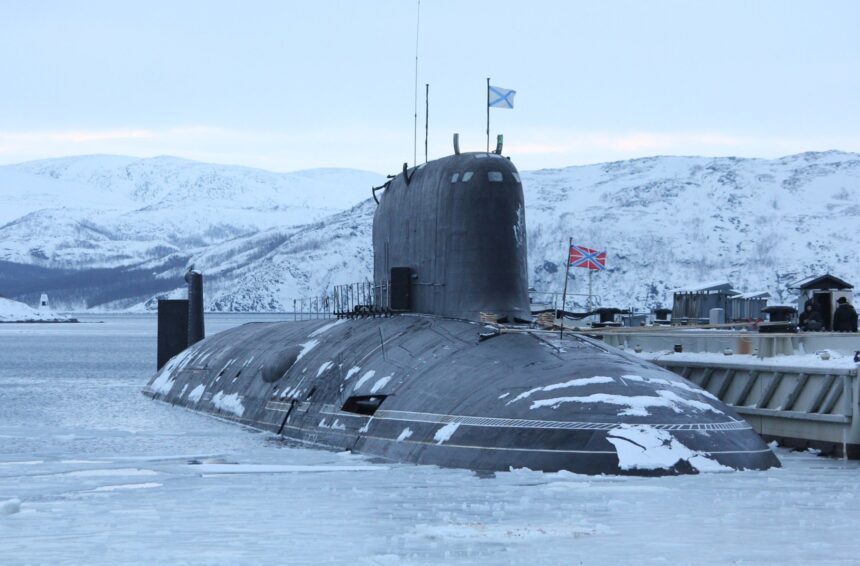
The network, known as “Harmony,” is designed to protect Moscow’s nuclear ballistic-missile submarines while challenging US and NATO naval dominance in the Arctic. Documents reviewed by the Washington Post and ICIJ reveal that Harmony relies on fixed acoustic arrays on the seafloor to detect submarines entering key Arctic waters. These passive sensors transmit data via fibre-optic links to onshore command centres.
Procurement from European Suppliers
Leaked records indicate that Mostrello engaged in business with over 50 suppliers, primarily from Europe, procuring sensitive components essential for the Harmony network. Notably, Mostrello purchased US-made hull-mounted survey sonars from companies like EdgeTech and R2Sonic, which are crucial for high-resolution seabed mapping.
Vessel Tracking and Strategic Implications
Vessel-tracking data reveals that the Harmony network forms an arc stretching from Murmansk to Novaya Zemlya and north to Franz Josef Land, effectively protecting the Northern Fleet’s main bases. Military analysts suggest that this network enhances Russia’s layered anti-submarine defence, providing greater security for its ballistic-missile submarines, such as the Borei-class.
Failed Transactions and Intelligence Insights
Norwegian authorities intervened to block the sale of a high-speed acoustic positioning system from Kongsberg to Mostrello after it was flagged by domestic intelligence. Earlier records show that Russia began acquiring similar systems as early as 2015. Vice Admiral Nils Andreas Stensønes, head of the Norwegian intelligence agency, highlighted that Russia continuously seeks to evade Western sanctions by establishing complex procurement networks with legitimate European companies.
Mostrello’s Disappearance
When Dutch journalists visited Mostrello’s registered office in Limassol this fall, they found it abandoned, indicating a potential shift in operations following the exposure of its activities. The investigation, named Russian Secrets, involved multiple international media outlets and sheds light on the intricate webs through which Russia operates in the global market.