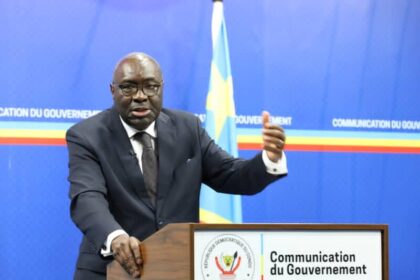
Government spokesman Konstantinos Letymbiotis has firmly dismissed calls for a renewed investigation into the controversial ‘spy van affair.’ His remarks, made on Thursday, came in response to the opposition party Akel’s push for the inquiry to be reopened, a move Letymbiotis suggested was politically motivated, aimed at enhancing Akel’s polling numbers ahead of the parliamentary election.
“I understand the period through which we are going, and I am sure that in the next few weeks, we will see tension in several positions,” Letymbiotis stated, highlighting the charged atmosphere of the electoral campaign. He emphasised the need for consistency in public statements, cautioning, “On the one hand, political parties or politicians cannot rightly claim and demand respect for the independence of institutions and at the same time, through their interventions, not respect the same independence of institutions.”
Letymbiotis reiterated that prior investigations into the spy van incident had been completed before the current government took office in 2023. “Any investigations have been carried out,” he confirmed, asserting that if any new evidence emerges, it should be immediately reported to the appropriate bodies.
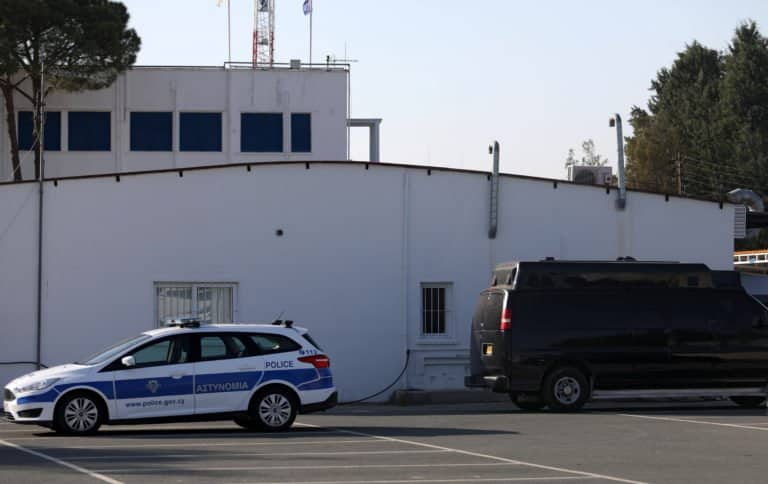
The spy van affair first gained public attention when it was revealed that a private company, WiSpear, was providing surveillance services via technology installed in a van. The situation escalated when Tal Dilian, then the CEO of WiSpear, was arrested in Cyprus, although he was later released. The company faced a fine of €76,000 following the incident.
Recent developments have reignited calls for a fresh investigation, particularly after Greek prosecutor-general Konstantinos Tzavellas decided not to reopen a case involving Dilian. This decision followed comments made by Dilian to Reuters, where he claimed that his surveillance technology had “only been sold to governments.” His assertions have prompted concerns regarding potential involvement from high-ranking government officials.
In Greece, the implications of the surveillance technology have been severe, with reports indicating that it was used to hack the mobile phones of 87 individuals, including government ministers and military officials. One notable target was Nikos Androulakis, who currently leads the Greek opposition. Androulakis has suggested that Dilian’s comments indicate a deeper involvement from the higher echelons of the Greek government, a claim vehemently denied by Prime Minister Kyriakos Mitsotakis.
Androulakis stated, “It all starts from the Maximos Mansion,” referring to the prime minister’s official residence, highlighting the gravity of the situation. He has also alleged that four chiefs of staff from the armed forces were among those targeted. The political fallout has led to accusations against Mitsotakis, with Androulakis describing the government’s actions as reminiscent of a “gang” operating within the state apparatus.
As the narrative unfolds, Akel leader Stefanos Stefanou has expressed discontent with the Cypriot legal service for suspending the criminal prosecution of Dilian, pointing out that the legal service’s response was insufficient, citing only “general and vague” public interest. He characterised the issues surrounding surveillance and institutional integrity as critically serious, underscoring the necessity of protecting citizens’ rights and the democratic process.
Stefanou remarked, “Shadows cannot be cast over such cases, and the credibility of institutions cannot be tarnished by those who should be the first to safeguard it.” He emphasised that the spy van affair has exacerbated public distrust towards both the state and its prosecuting authorities.
In a parallel development, Dilian has faced significant legal repercussions in Greece, receiving a 126-year prison sentence for his role in the surveillance scandal, with eight of those years to be served behind bars. However, he remains free pending an appeal that is set to be heard in December.