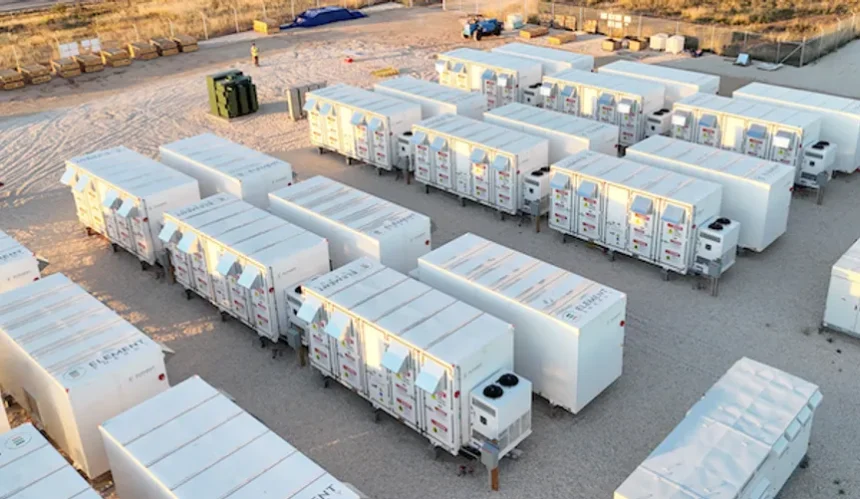
grid batteries — grid batteries — The first contracts for large-scale electricity storage batteries in Cyprus are set to be signed on Tuesday, marking a pivotal step towards mitigating renewable energy curtailments and enhancing the capacity for solar power integration into the national grid.
Grid batteries: A Major Initiative in Energy Storage
Energy Minister Michalis Damianos announced that these agreements will encompass 120MW of centralised storage capacity, which will be overseen by the transmission system operator (TSO). This initiative aims to tackle one of the electricity system’s most enduring challenges, as Cyprus seeks to increase its reliance on renewable energy sources.
Project Timeline and Financial Commitment
The €50 million project envisions delivery of the batteries by January 2027, with installation expected to take two to three months. By summer 2027, the TSO anticipates having at least 120MW of storage batteries operational. “This means that energy from photovoltaics that is currently lost because it cannot be stored will now be able to be utilised,” Damianos explained.
Addressing Renewable Energy Losses
The introduction of these storage systems is crucial for capturing excess renewable electricity during periods of overproduction. This will enable the released energy to meet demand spikes, thereby reducing the curtailments that currently impact solar generators across the island.
Historical Context and Challenges
Former energy minister George Papanastasiou remarked that this project has been in the making since 2023, developed in collaboration with the European Commission to address escalating losses from renewable energy production. By the end of May this year, approximately 160,000 megawatt hours of green energy had been lost due to curtailments affecting residential photovoltaic systems, commercial solar parks, and wind installations.
The Growing Need for Storage Solutions
Papanastasiou noted, “The problem arises because during several hours of the day, electricity production from renewable energy sources exceeds demand. Significant quantities of energy cannot be utilised.” This issue has become more pressing as solar capacity has expanded more rapidly than the infrastructure required to manage surplus generation.
Data Highlights Increasing Curtailments
According to data from the distribution system operator, around 306 gigawatt hours of renewable energy were curtailed in 2025, a significant rise from approximately 167 gigawatt hours the previous year. Papanastasiou acknowledged the criticism regarding the lack of concurrent development of storage infrastructure alongside renewable generation but highlighted that regulatory and funding hurdles had hindered implementation. “Production and storage had to go together,” he stated, emphasising that storage has lagged behind production.
Future of Energy Storage in Cyprus
In addition to the state-backed project, the electricity authority (EAC) and private developers are pursuing further storage investments. Recent figures indicate 36 applications for battery storage projects, totalling a requested capacity of around 925MW. The EAC has submitted applications for storage facilities in Dhekelia and Moni with a combined capacity of 180MW, while private sector projects exceeding 150MW are progressing through various approval stages.
Strategic Role of State-Owned Storage Systems
Papanastasiou clarified that the state-owned battery system would not function on a commercial basis but rather aim to bolster grid stability and energy security. “Its role will be to support the stability of the grid, storing energy during periods of overproduction and channelling it when there is a deficit or risk of outages,” he explained. This development could also lead to lower electricity costs in the future, as privately operated storage systems may enable operators to store cheaper renewable energy for use during peak demand periods.