Eurozone leaders are advocating for targeted relief measures as the energy shock stemming from the Middle East crisis continues to impact growth and inflation across Europe.
- Eurozone leaders are advocating for targeted relief measures as the energy shock stemming from the Middle East crisis continues to impact growth and inflation across Europe.
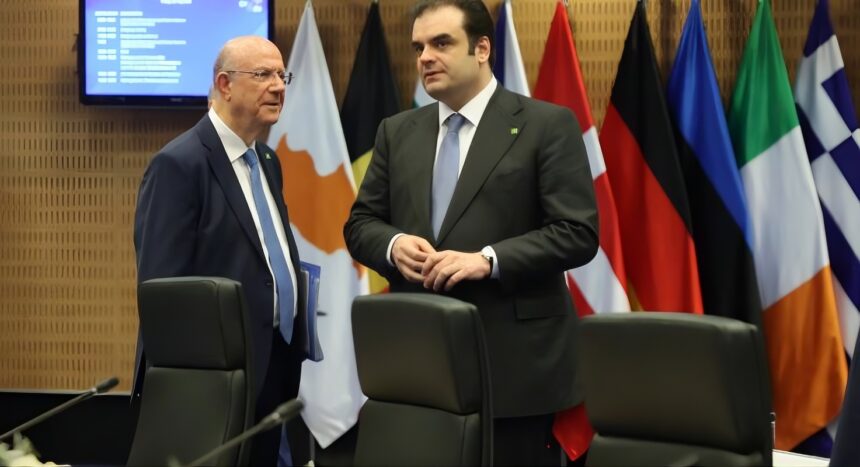
During a Eurogroup meeting in Nicosia on Friday, finance ministers and central bankers expressed concerns that the economic repercussions of the ongoing conflict could be more persistent than anticipated. They emphasised the need for temporary support for households and businesses, advising against broad fiscal interventions.
European Commissioner for Economy Valdis Dombrovskis noted that recent developments have significantly altered the EU’s economic outlook. “The conflict in the Middle East has triggered a new energy shock affecting inflation, growth and public finances across the EU,” he stated.
According to the European Commission’s Spring Economic Forecasts, inflation in the EU is projected to rise to 3.1 per cent by 2026 before easing to 2.4 per cent in 2027. Growth is expected to be modest, at 1.1 per cent for 2026 and 1.4 per cent for 2027. Fiscal pressures are also likely to increase, with average EU budget deficits forecast to rise from 3.1 per cent of GDP in 2025 to 3.5 per cent in 2026 and 3.6 per cent in 2027. The number of member states breaching the 3 per cent threshold is anticipated to climb from ten to thirteen.
Despite these weaker economic projections, officials underlined that the current situation is distinct from the energy crisis triggered by Russia’s invasion of Ukraine in 2022. Eurogroup president Kyriakos Pierrakakis asserted that forecasts indicate resilience in the euro area economy, stating, “We are clearly far from a recession scenario.” Nevertheless, he acknowledged that developments around the Strait of Hormuz have heightened risks not only for oil and gas supplies but also for strategic goods and supply chains, including fertilisers.
Christine Lagarde, president of the European Central Bank (ECB), highlighted that the effects of the crisis may linger even if geopolitical tensions ease. She pointed out that inflationary pressures could persist due to transmission effects from the conflict. “Even if the crisis were resolved now, there would be lagged effects that would continue to emerge,” she explained, cautioning consumers against expecting a return to previous price levels.
As discussions progressed, a consensus emerged among Eurozone leaders to resist large-scale fiscal stimulus, despite calls from some member states, particularly Italy, for more flexibility. Dombrovskis acknowledged ongoing discussions but noted a general agreement against broad support measures. He stated that responses should focus on existing financial instruments rather than new initiatives.
In this context, funding available under RepowerEU and the Recovery and Resilience Facility was mentioned as tools designed to tackle energy-related challenges. Dombrovskis indicated that these options still contain significant unspent investment capacity, allowing for targeted responses to the current pressures.
Pierrakakis stressed the importance of aligning fiscal and monetary policies to avoid counterproductive actions. He remarked, “We all understand we must not act in a counterproductive way.” Lagarde reinforced this message, advocating for support measures that adhere to the ‘Triple T principle’—temporary, targeted, and tailored. She warned that broader interventions could provoke a different monetary policy response from the ECB.
Reflecting on lessons learned from the 2022 crisis, Pierrakakis noted that measures implemented since then have reduced the economic impact of energy shocks by approximately 12 per cent. The focus remains on a precise and optimal response to the current crisis.
Officials also addressed deeper structural vulnerabilities in the European economy, with European Stability Mechanism managing director Pierre Gramegna warning that markets have lowered growth expectations while increasing inflation forecasts. He highlighted the need for strengthened investment and innovation to bolster the region’s resilience.
Amid these discussions, longer-term issues such as housing affordability and the potential for a digital euro were also on the agenda. Pierrakakis expressed optimism that legislation on the digital euro could be finalised by the end of the year, indicating a collaborative approach to addressing these challenges.