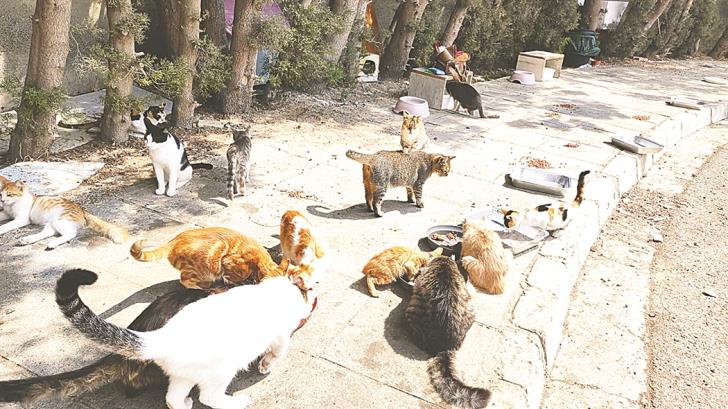
cyprus cats — Free-roaming cats in Cyprus travel surprisingly far, and their movements may increase contact with wildlife and sensitive habitats, a study has shown.
- cyprus cats — Free-roaming cats in Cyprus travel surprisingly far, and their movements may increase contact with wildlife and sensitive habitats, a study has shown.
Cyprus cats: Daily Adventures of Stray Cats
GPS tracking has revealed that the average daily movement of stray cats is about 1km, with some males even covering nearly four kilometres in a single day. This research, conducted in Nicosia, tracked 15 free-roaming cats—six females and nine males—across various environments, including forest, agricultural, and urban areas.
Understanding Their Home Ranges
The lightweight GPS trackers were worn by the cats over an average tracking period of 5.6 days, recording their locations every ten minutes. The results indicated that the animals exhibited larger home ranges in rural and forested areas compared to their urban counterparts. This suggests that cats near natural habitats may have more opportunities to encounter local wildlife.
The Cat Population in Cyprus
While free-roaming cats in Cyprus have never been officially counted, informal estimates suggest there are around one million, translating to approximately 108 cats per square kilometre. This density is notably higher than in major cities like New York or Texas, highlighting the unique ecological context of Cyprus.
Ecological Implications of Cat Movement
The study suggests that the cats’ extensive roaming patterns may be influenced by the island’s ecology. The absence of large natural predators allows these cats to behave as apex predators, which could pose risks to local wildlife. The researchers noted that free-roaming cats were most active in the early morning and late afternoon, coinciding with times when wildlife is also on the move. This overlap raises concerns about potential encounters with birds, reptiles, and small mammals.
Uncertain Impact on Wildlife
While the study does not quantify the number of animals killed by these cats, it highlights the potential risks their movements pose to wildlife. The findings indicate that the far-reaching and opportunistic behaviours of free-roaming cats in Cyprus may lead to increased interactions with vulnerable species, although the exact scale of the ecological impact remains unknown.