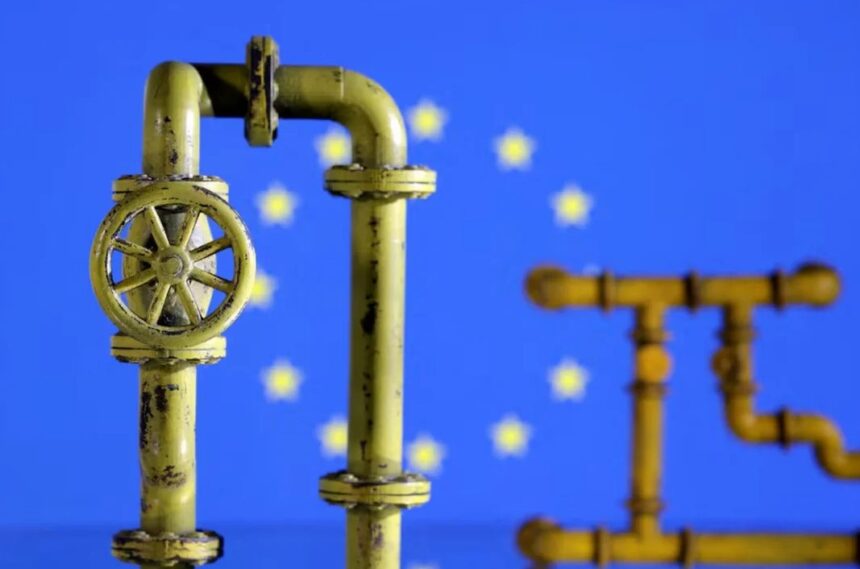
lng dependence — lng dependence — The EU’s growing reliance on the US for LNG imports raises significant risks for energy security. Forecasts indicate that by 2030, the EU could depend on the US for 80 per cent of its LNG, translating to around 40 per cent of all gas and LNG imports. This level of dependence mirrors the previously dominant reliance on Russian gas, which was widely regarded as a precarious position.

Photo: cyprus-mail.com
- As the EU navigates these complex energy dynamics, the push for a diversified and secure energy future is more critical than ever, particularly in light of the shifting geopolitical landscape.
In response to geopolitical tensions, the EU has committed to a complete ban on Russian LNG by 2026 and pipeline gas by 2027. This decision reinforces the bloc’s shift toward US LNG, a move that brings its own set of uncertainties. Currently, the EU accounts for over 50 per cent of US LNG exports, highlighting a concerning over-reliance that contradicts efforts to diversify energy sources.

Photo: cyprus-mail.com
The political landscape has shifted dramatically, especially following President Trump’s controversial remarks about Greenland and potential tariff threats against European nations. While the immediate threats have subsided, the underlying risks remain, casting doubt on the EU’s assumption of US LNG as a stable alternative to Russian gas.
Concerns about energy supply security have intensified, as the EU’s dependence on US energy has grown beyond LNG to include oil, with projections showing that over 16 per cent of imports in 2024 will originate from the US. This shift has been formalised under a frozen trade deal aimed at enhancing energy cooperation, with a projected $750 billion in energy procurement through 2028.
However, escalating tensions between the US and EU, particularly in the wake of Trump’s aggressive posturing, have led to a freeze on the deal’s approval process. European leaders are increasingly advocating for “strategic autonomy” to mitigate reliance on US energy supplies. Despite the potential for increased US energy product exports, the political climate complicates future growth.
Interestingly, the global LNG market is set to expand significantly, with new capacity additions expected to reach 170-200 million tonnes per annum by 2030. This influx could lead to lower prices and provide the EU with more options, including securing supplies from Qatar and other emerging exporters. As demand for gas is projected to decline by 7-10 per cent due to renewable energy initiatives, the EU has an opportunity to diversify its energy sources.
Moreover, a collaborative project among nine European nations aims to establish a comprehensive offshore wind grid in the North Sea, reinforcing the commitment to renewable energy and reducing dependency on external sources. While the EU remains open to energy trading with the US, the focus is on developing its own energy capabilities.
For Cyprus, the situation is less immediately pressing, but the island must consider its future energy options as it transitions from diesel to natural gas. Rising electricity costs and emissions drive the urgency for change, but delays could leave Cyprus reliant on expensive fossil fuels instead of tapping into the more affordable LNG market. The completion of the Vassilikos LNG import project remains critical, and exploring every avenue, including EU derogations, will be essential.
As the EU navigates these complex energy dynamics, the push for a diversified and secure energy future is more critical than ever, particularly in light of the shifting geopolitical landscape.