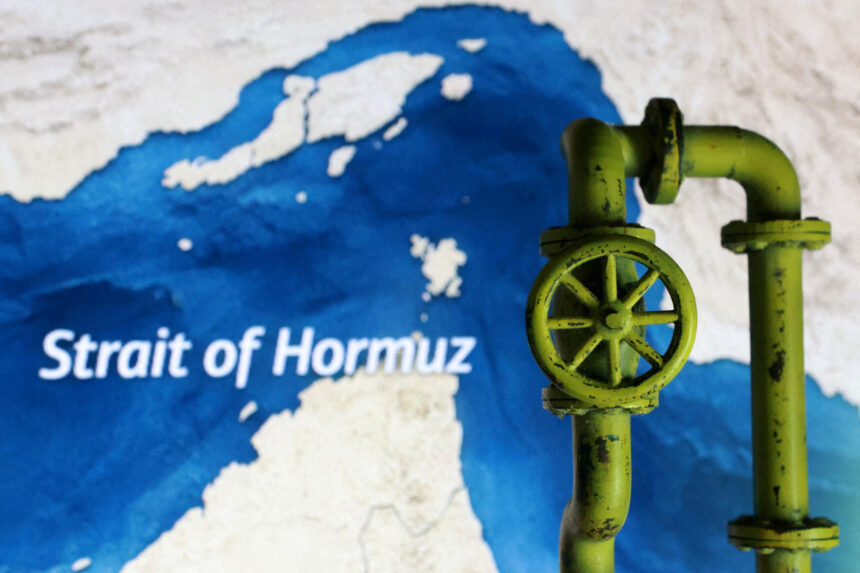
easier to — The phrase “it is easier to start a war than to end one” aptly captures the current situation as geopolitical tensions between the US, Israel, and Iran escalate. The conflict, now three months in, has led to significant disruptions in fuel supply, particularly affecting markets in Asia and Europe.
Easier to: Fuel Supply Disruptions and Economic Impact
The ongoing war has resulted in a shutdown of crude oil and product flows through the strategically critical Strait of Hormuz. This closure has pushed oil prices to unprecedented levels, exacerbating a crisis in the jet fuel market, where supply insecurity is becoming increasingly acute.
While the Strait of Hormuz may occasionally reopen, this should not be misconstrued as a return to normalcy. Each opening and closing cycle contributes to a volatile environment, where uncertainty becomes the predominant economic force, overshadowing traditional supply-and-demand dynamics.
Geopolitical Tensions Drive Volatility
As demonstrated by recent events, geopolitical tensions are now driving energy prices rather than market fundamentals. For instance, in April, following President Trump’s threats against Iran, Brent crude oil prices surged above $110 per barrel. A brief reprieve followed when he downplayed the situation, but prices quickly rebounded as tensions escalated.
On April 20, after the US Navy seized an Iranian cargo ship, Brent prices rose again, reaching $99 by April 22. Current threats to ceasefire have only added to the upward pressure on prices, which are now hovering around $118 per barrel.
Potential Outcomes of Continued Instability
If a diplomatic resolution is not reached during upcoming negotiations, the risk of prolonged conflict looms large. This could lead to significant shortages of essential oil products, including jet fuel, petrol, and diesel, with dire economic consequences.
- Uncertainty and paralysis: The repeated openings and closings of the Strait of Hormuz create an environment of uncertainty, which can paralyse markets.
- Volatility without resolution: The lack of a clear resolution leads to extreme volatility in oil prices.
- Permanent risk premiums: Markets are now pricing in a permanent geopolitical premium due to ongoing tensions.
Markets are generally more adept at handling clear but unfavourable conditions than they are at managing a climate of constant uncertainty. This has resulted in oil traders building in a risk premium, leading to extreme price fluctuations and a market that is hesitant to commit to long-term strategies.
Future Scenarios and Economic Disruption
The continued instability in the Strait of Hormuz is unsustainable, and it could lead to one of three possible outcomes:
- Stabilisation through deterrence: A strong military presence could help keep the Strait open.
- Escalation into prolonged disruption: This scenario would see markets adjust to structurally higher prices.
- Managed-tension equilibrium: The Strait remains technically open but operates under constant risk.
As the cycle of openings and closings continues, economic disruption intensifies. Even without a complete closure, uncertainty is becoming the primary cost factor, slowing global trade and exacerbating existing economic challenges.
Implications for Energy Security and Market Dynamics
Should the “stop-go” pattern persist for another one to three months, regional fuel supply shortages may worsen, driving Brent crude prices between $100 and $130 per barrel. In extreme cases, fuel prices could rise by as much as 30% to 50%.
Greek refineries have already reported securing sufficient oil only until early June, with the potential for shortages in Cyprus by the end of May or June if the situation does not improve. This is particularly troubling as Greek refineries are a primary supplier of oil products to Cyprus.
Long-term Strategic Shifts in Energy Supply
The eventual reopening of the Strait of Hormuz, when it occurs, will not signify a return to pre-war conditions but rather a temporary pause in disruption. Geopolitical risks will persist, and it may take several months for fuel flows to recover fully.
Several long-term structural effects are expected:
- Supply disruptions will cause ongoing price volatility.
- Countries like China are reviving coal-to-gas projects to diversify energy sources.
- Europe is prioritising liquefied natural gas (LNG) supplies from outside the Gulf.
- Asia is increasing its energy storage capabilities and diversifying suppliers.
The global energy landscape is undergoing a strategic review, with a greater emphasis on energy security over mere cost-effectiveness. Investments in strategic reserves, alternative shipping routes, and domestic energy sources are on the rise.
The Ongoing Importance of the Strait of Hormuz
Despite these shifts, reliance on Middle Eastern energy supplies will remain critical. This underscores the need for maintaining a delicate balance in the Strait of Hormuz, which will likely remain under Iranian influence.
In the short term, a partial return to normality may occur with resumed fuel flows and falling prices, but medium- and long-term scenarios will involve persistent risk premiums and cautious trade behaviours.
The energy system is transitioning from one focused on efficiency to one prioritising risk management and resilience, which may result in higher costs. As a result, energy prices are expected to remain above pre-crisis levels for the foreseeable future, with implications for global growth and trade stabilisation.