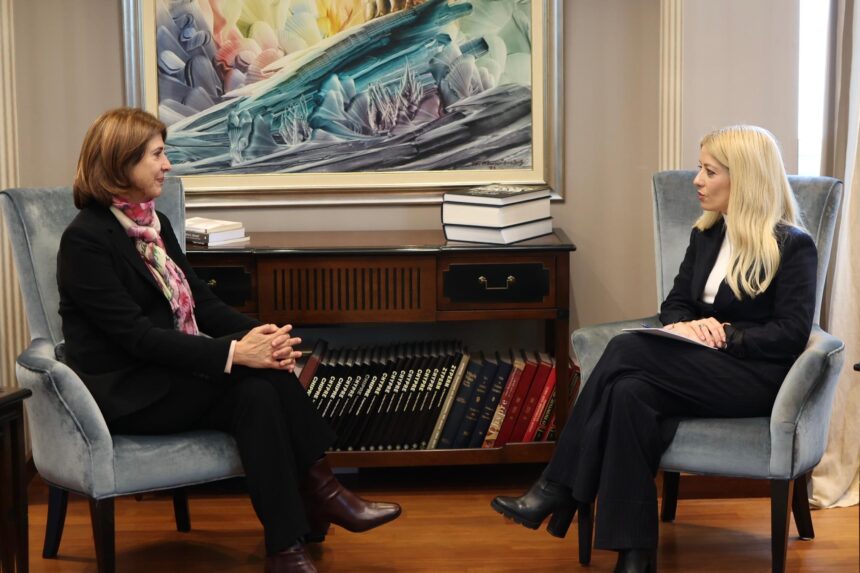
House President Annita Demetriou expressed disappointment over the lack of progress achieved in discussions surrounding the Cyprus problem during a recent tripartite meeting.
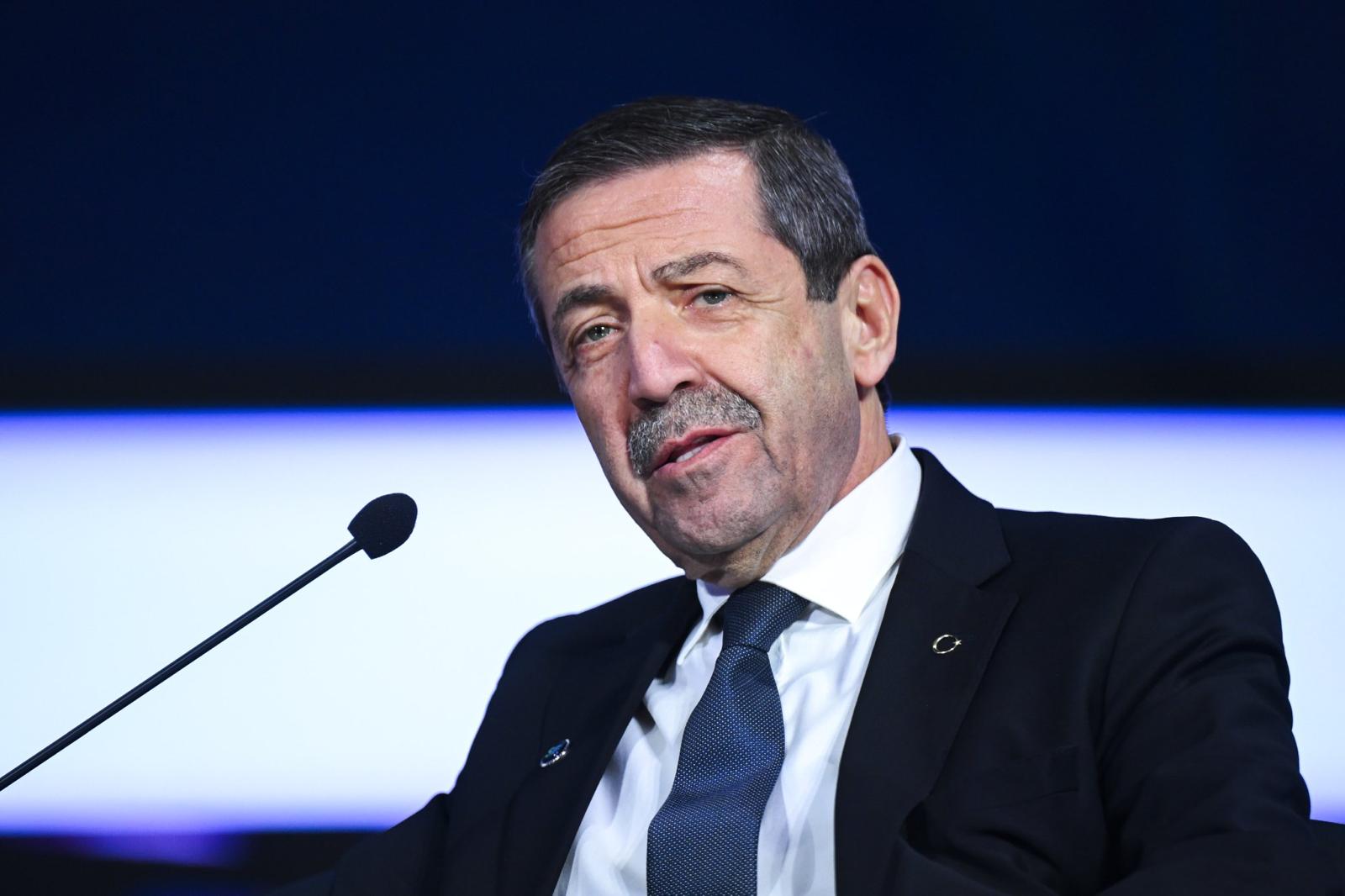
Photo: cyprus-mail.com
- House President Annita Demetriou expressed disappointment over the lack of progress achieved in discussions surrounding the Cyprus problem during a recent tripartite meeting.
Cyprus problem: Mixed Reactions Following the Tripartite Meeting
During the tripartite meeting held on Wednesday, key stakeholders in the Cyprus issue gathered but failed to make significant strides towards resolution. Demetriou conveyed her frustration after meeting with United Nations envoy Maria Angela Holguin, stating, “We are disappointed that, so far, the necessary conditions have not been met for convening an enlarged meeting.”
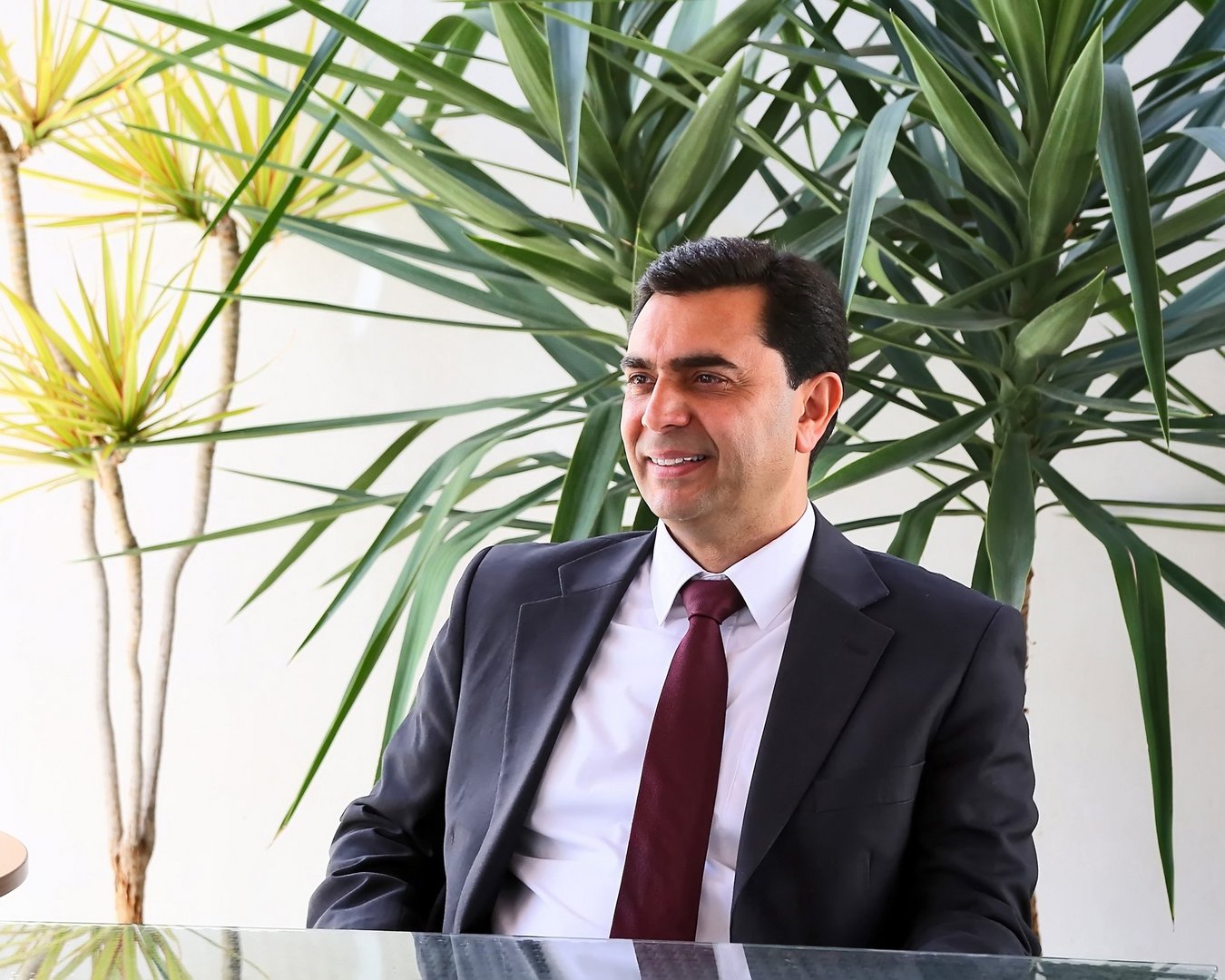
Photo: cyprus-mail.com
Despite her disappointment, Demetriou maintained a cautious optimism about future discussions, asserting that “the process is not over” and emphasising the need for ongoing dialogue. She reiterated that her party, Disy, remains “unwaveringly committed to the goal of resolving the Cyprus problem” based on UN resolutions and agreements that have been established.
Commitment to Reunification
Demetriou framed the resolution of the Cyprus problem as a national imperative, declaring, “For us, the liberation and reunification of our homeland is our national duty and our highest mission.” She called for the resumption of substantive negotiations aimed at achieving a solution that would end the presence of occupying troops, eliminate outdated guarantees, and remove interventionist rights.
Contrasting Views from the North
In stark contrast to Demetriou’s sentiments, Tahsin Ertugruloglu, the so-called foreign minister of the Turkish Republic of Northern Cyprus, stated that negotiations with the Greek Cypriot administration are futile. He articulated his belief that “the Cyprus problem cannot be solved by negotiating” with the current Greek Cypriot leadership, suggesting that the true obstacle lies in the Greek Cypriots’ recognition as the Republic of Cyprus.
Ertugruloglu called for a demonstration of what he described as the Greek Cypriot side’s intransigence to the international community, arguing that the ongoing dialogue is hindered by “populist and romantic rhetoric” that overlooks the root causes of the conflict. He also expressed criticism of Turkish Cypriot leader Tufan Erhurman, accusing him of pursuing a federal solution that he believes is ineffective.
Calls for Resumed Negotiations
Meanwhile, the political party Akel urged both President Nikos Christodoulides and Erhurman to intensify their meetings to work towards resuming substantive negotiations. Their statement emphasised the importance of recommencing discussions from where they left off in 2017, during the conference held in Crans-Montana, Switzerland. Akel acknowledged the existence of “difficulties and obstacles” but insisted that these challenges should not deter the pursuit of a solution to the Cyprus problem.
Potential Paths Forward
Later in the day, former Turkish Cypriot chief negotiator Ozdil Nami echoed Christodoulides’ proposal for the UN to create a list detailing the convergences reached prior to the collapse of the 2017 talks. Nami suggested that such a document could provide a clearer framework for future negotiations and make time-limited discussions more meaningful.
He proposed that a study identifying these convergences be carried out through interactions between both negotiating parties. This document, which he referred to as ‘Erhurman-Christodoulides convergences’, could serve as a crucial foundation for addressing both the core issues and finer details within the UN Secretary-General Antonio Guterres’ proposed framework.
However, Nami cautioned that achieving a meaningful outcome would be contingent on the acceptance of four key points: recognition of political equality by the Greek Cypriot side, time-limited negotiations, preservation of past agreements, and a UN guarantee to lift embargoes on Turkish Cypriots should talks collapse again.
Looking Ahead
The ongoing stalemate in discussions surrounding the Cyprus problem illustrates the complexities and differing perspectives that continue to challenge any potential resolution. As leaders on both sides express their views and aspirations, the path forward remains uncertain. The commitment to dialogue is evident, yet varying interpretations of the issues at hand complicate the quest for a lasting solution.