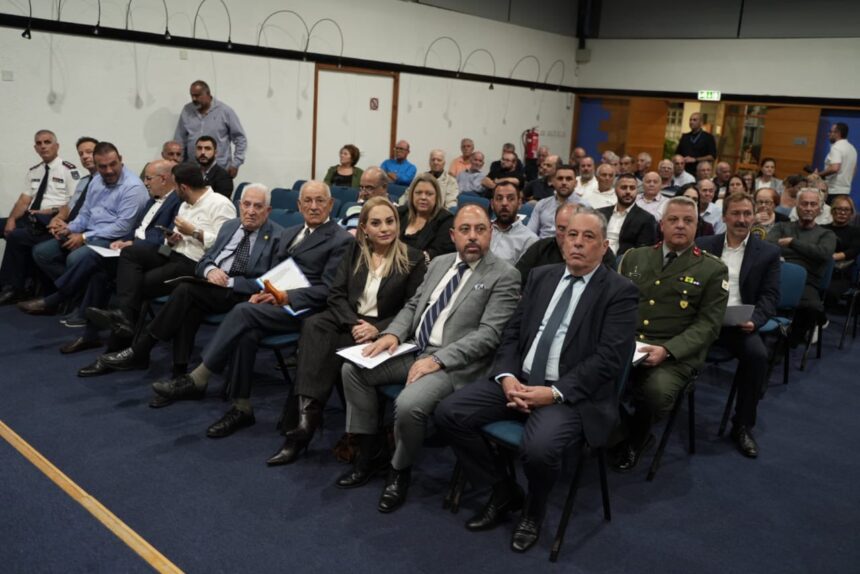
The Eoka struggle, a defining chapter in Cyprus’s history, was commemorated on Monday evening by Defence Minister Vasilis Palmas in Paralimni, marking its 70th anniversary. This event, organised by the Paralimni-Deryneia municipality in collaboration with the historical memory council of the Eoka struggle, brought together community members to reflect on the sacrifices made during the national liberation movement from 1955 to 1959.
Eoka struggle: Honouring the Legacy of Eoka Fighters
In his address, Palmas paid tribute to both prominent and lesser-known figures who participated in the armed campaign against British colonial rule. He highlighted the multifaceted nature of the struggle, which transcended military efforts to encompass social and spiritual dimensions. Families, neighbourhoods, schools, and churches played integral roles in supporting the movement, illustrating its widespread impact across Cypriot society.
The Experiences of Young Fighters
Palmas shared poignant accounts of young Eoka fighters, many of whom publicly protested under the Greek flag, joined their comrades in mountainous regions, and faced brutal realities in detention camps. These young men and women endured torture, executed without capitulation, and engaged in ambushes that often resulted in their deaths. His portrayal served to emphasise their unwavering determination and resilience, reflecting the spirit of a generation committed to liberation.
Paralimni’s Role in the Struggle
Focusing on the local context, the minister acknowledged the vital role of Paralimni and its surrounding areas in the Eoka movement. He referenced early meetings held at the Anorthosis building, where residents gathered to recruit for the cause. The community’s active participation included orchestrating attacks on the local police station to acquire weapons and ammunition, showcasing a collective resolve against British governance.
A Lasting Memory Amidst Occupation
Seventy years on, Palmas stated that the sacrifices of these fighters continue to resonate deeply within the community, particularly as residents gaze upon the occupied town of Famagusta. The minister reaffirmed the importance of remembering these events as a catalyst for ongoing commitment to the liberation and reunification of Cyprus. The historical perspective serves not only as a reminder of the past but also as a guiding principle for current and future generations.
Reflecting on Historical Invasions
In his speech, Palmas did not shy away from addressing the consequences of the Turkish invasion in 1974, which has left a lasting scar on the island. He noted that, even after 51 years, the ramifications of that invasion continue to affect Cypriots. Yet, he expressed optimism about the resilience and unity demonstrated by the people of Cyprus, who persist in their efforts to create conditions conducive to restarting negotiations.
A Call for Unity and Action
The Defence Minister concluded with a call to action for the current generation to emulate the commitment shown by those who fought between 1955 and 1959. He emphasised that freedom represents not only a fundamental right but also a way of life that must be upheld and cherished. Palmas’s message resonated with attendees, reinforcing the need for solidarity in pursuit of a just and sustainable solution to the Cyprus issue, adhering to United Nations Security Council resolutions and European Union principles.
Looking Ahead
The commemoration in Paralimni serves as a vital reminder of the historical struggles endured by Cypriots and the importance of collective memory in shaping a unified future. As the community reflects on its past, the resilience and sacrifices of the Eoka fighters stand as a beacon of hope and determination for all Cypriots striving for peace and reconciliation.