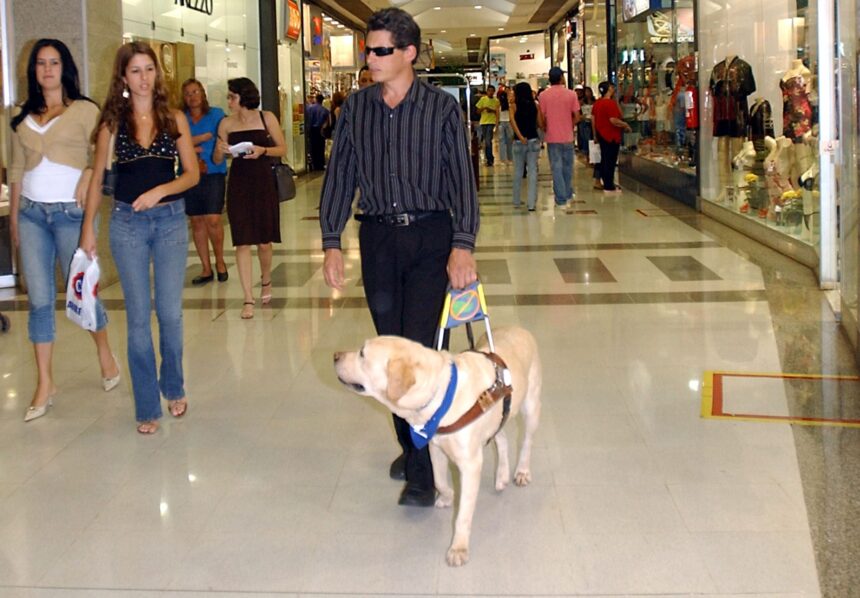
Cyprus is moving to guarantee the legal right for people with disabilities to use assistance dogs, as MPs urge for urgent legislation to address critical gaps in current regulations.
- Cyprus is moving to guarantee the legal right for people with disabilities to use assistance dogs, as MPs urge for urgent legislation to address critical gaps in current regulations.
The House Human Rights Committee convened on Monday, prompted by a motion from MP Christos Senekis, who highlighted the dire situation regarding assistance dogs in the country. With training costs soaring as high as €50,000 and only three certified assistance dogs currently in Cyprus, the need for immediate action has never been more pressing.
Assistance dogs: Addressing Legislative Gaps
Senekis pointed out that although the right to be accompanied by an assistance dog is acknowledged in the UN Convention on the Rights of Persons with Disabilities, which Cyprus ratified in 2011, the country lacks comprehensive legislation to ensure universal access for people with disabilities. This includes access to public and private spaces, public transport, and various services.
He is currently drafting a bill in collaboration with the Cyprus Confederation of Disability Organisations (KYSOA) and the Pan-Cyprian Organisation of the Blind. The proposed legislation aims to clearly enshrine the right to assistance dogs within the law.
Challenges of Training and Certification
Committee chair Eirini Charalambidou emphasised the urgent need for a robust legislative framework, noting that the high costs associated with the certification of assistance dogs present a significant barrier. “It cannot be that around €10,000 is required for the certification of a guide dog,” she asserted, calling for state intervention to streamline the certification process.
MP Charalambos Theopemptou echoed these sentiments, revealing that discussions around exempting assistance dogs from ownership fees have brought to light the stark reality of the scarcity of certified dogs in the country. He explained that while some training costs can reach €10,000, others can be much higher. Furthermore, despite EU regulations mandating acceptance of assistance dogs on public transport, there is a lack of a unified certification system across the member states.
Pelagia Englezaki, director of the School for the Blind, elaborated on the extensive training process required for assistance dogs, stating that it often costs up to €50,000 at international training schools. This lengthy process begins when the dog is young and involves years of training, assessment, and bonding with the owner.
Societal Perceptions and Acceptance
MP Alexandra Attalides raised concerns about the societal attitudes towards assistance dogs in Cyprus, noting that while many European nations have made strides in accepting these animals in enclosed spaces, Cyprus still grapples with prejudice. “For many people with disabilities, the assistance dog is their eyes and protection, and in many cases their only companion,” she said.
Government and Organisational Support
Petros Anagiotis from the Interior Ministry expressed a positive outlook towards regulating the use of assistance dogs, while Christakis Nicolaides, president of the Pan-Cyprian Organisation of the Blind, highlighted that discussions about the need for legislation have been ongoing since 1980. Today, with only three assistance dogs available, he stressed the pressing need for new regulations that ensure certification and allow free access to public spaces for those in need.
A representative from the Ombudsman’s Office pointed out the lack of recorded complaints regarding assistance dogs, which she attributed to the absence of a certification framework. She also noted that the Deputy Ministry of Tourism currently lacks clear provisions for assistance dogs in tourist accommodations. The Road Transport Department, while adhering to EU regulations, requires assistance dogs to have a muzzle and health booklet, which has drawn criticism from MPs.
The police representative added that limited resources hinder the training of assistance dogs, a sentiment echoed by the Union of Municipalities, which expressed support for establishing a clear framework and a willingness to cooperate with relevant bodies.
Next Steps for Legislation
At the conclusion of the session, Charalambidou announced that the matter would be promptly forwarded to the Interior Ministry in conjunction with the Justice Ministry, while Senekis would present the proposed bill. She described the issue as one of social sensitivity and fundamental rights, asserting that the state has a duty to intervene.
The aim is to develop a clear and universal framework that will establish a national certification system for assistance dogs, cover the costs associated with training or provide relevant allowances, ensure explicit exemptions for access to all spaces, and promote staff training and public awareness.