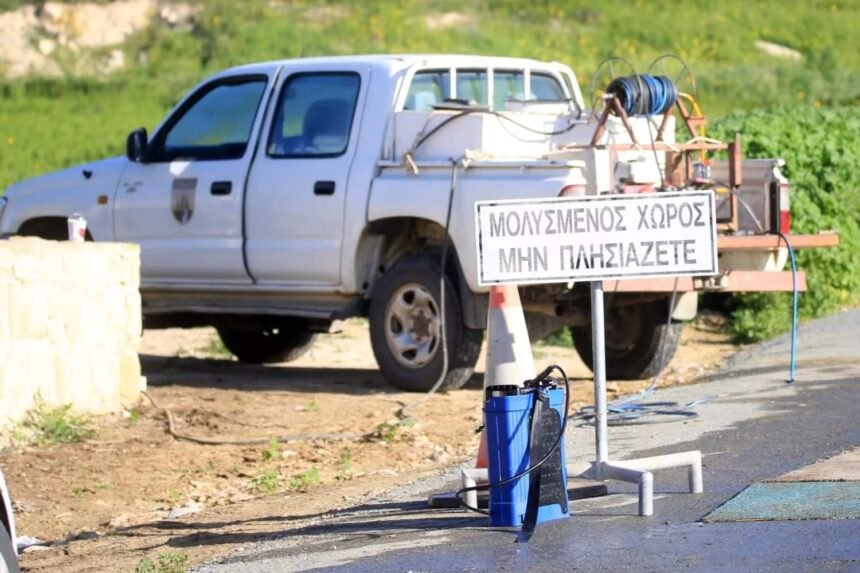
Cyprus is now firmly backing the strict application of EU protocols as a necessary step to protect its livestock farming and safeguard the broader economy from the escalating threat of foot-and-mouth disease. This decision follows a week of intense consultations and emergency meetings aimed at addressing the crisis.

Photo: in-cyprus.philenews.com
Discussions took place at the Presidential Palace with European Commissioner for Health and Animal Welfare, Olivér Várhelyi. Following these talks, President Nikos Christodoulides and government spokesman Konstantinos Letymbiotis underscored the critical nature of the decisions at hand, noting the visible risk of economic exclusion from the EU.
Foot-and-mouth disease: Consequences of Non-Compliance
During his remarks in Ayia Napa, Christodoulides made it clear that failure to adhere to Brussels’ directives could lead to Cyprus’s exit from the common market. Such a scenario would severely impact key exports, including halloumi, and could jeopardise tourism and EU financial support.
Christodoulides emphasised the need for challenging decisions that prioritise long-term interests, assuring that the government would support those affected by the outbreak. The government aims for a swift return to normalcy for livestock farmers, with Letymbiotis announcing an intensified vaccination programme in collaboration with the EU.
Vaccination Efforts Underway
As of now, 73% of cattle and 32% of sheep and goats have been vaccinated, with the first round set to conclude by the end of March. A second round of vaccinations is anticipated to commence on March 17, with 451,000 doses already made available.
Strict Measures Advocated by the EU
Várhelyi, who conducted meetings in Nicosia, reiterated that strict adherence to veterinary protocols is essential for the protection of the livestock sector. He cautioned that any refusal to comply would result in Cyprus being pushed outside the single market, leading to severe consequences for its exports and tourism.
In response to requests from various political parties and farming organisations advocating for the culling of only infected animals, Várhelyi stated, “It is not the time for experiments. We must close the infected areas immediately and quickly.” He referred to foot-and-mouth disease as livestock farming’s greatest enemy, highlighting its extreme transmissibility.
Public Health Concerns
Várhelyi urged the public to refrain from visiting infected areas, warning that this could inadvertently spread the virus. EU veterinarians are expected to arrive in Cyprus to assist with the culling process. Within the 10-kilometre zone surrounding the outbreak, the immediate slaughter of pigs exceeding 80 kilograms has been proposed.
The discussions included the possibility of separating healthy livestock units through internal divisions and strict biosecurity measures, with the EU expressing readiness to support this model if protocols are followed.
Financial Support for Affected Sectors
Várhelyi assured producers that the EU would cover the costs associated with slaughtering infected livestock, as well as losses incurred from destroyed products like milk and meat. Once Cyprus regains its status as free from the virus, additional funding will be allocated to help rebuild livestock numbers.
Despite facing criticism and calls for resignations, the government is resolute in its approach. Christodoulides dismissed criticisms from political opponents, asserting that their positions were fundamentally similar and that the focus must remain on effectively managing the ongoing crisis.