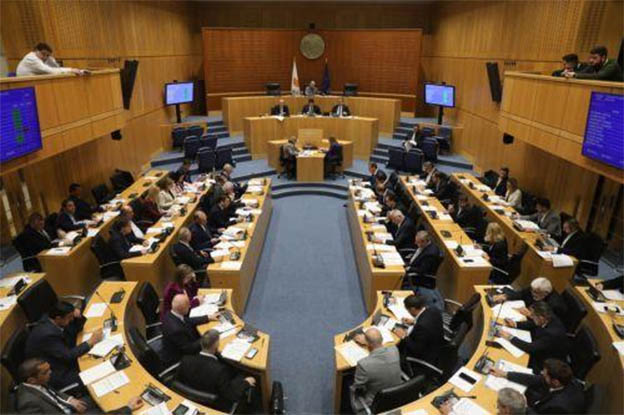
Cyprus recorded the lowest share of female representatives in the European Union in 2025, with women holding just 14.3 per cent of seats in the national parliament, according to Eurostat. This positioning places Cyprus at the bottom of the EU rankings, lagging behind Hungary at 15.6 per cent and Romania at 22.0 per cent.
The disparity is stark when compared to the EU-wide average, where women occupied 33.6 per cent of parliamentary seats in the same year. This collective figure marks a notable increase of 5.4 percentage points from 2015, highlighting a broader trend towards greater female representation across Europe.
While Cyprus faces significant challenges, countries like Finland, Sweden, and Denmark have made remarkable strides, boasting the highest percentages of women in their legislatures at 46.0 per cent, 44.8 per cent, and 44.7 per cent, respectively. These figures contrast sharply with Cyprus’s struggles, underscoring the urgent need for reforms in gender representation.
The report from Eurostat also noted that, despite Cyprus’s low numbers, all EU member states recorded increases in female parliamentary representation since 2015, with the exception of Germany, which experienced a decrease of 3.5 percentage points.
Over a decade, some nations saw rapid improvements, with Latvia achieving a remarkable increase of 19.0 percentage points, Malta at 14.8 percentage points, France at 10.9 percentage points, and Czechia at 10.6 percentage points. These advancements demonstrate a commitment to enhancing gender equality in governance.
In addition to legislative representation, the trend of rising female participation is also evident in national governments, where women held 31.9 per cent of seats across the EU by 2025. This figure indicates a 4.2 percentage point rise since 2015, reflecting an encouraging shift towards gender parity.
Leading the executive rankings, Finland reported a staggering 60.0 per cent of its government comprised of women as of January 1, 2026. Sweden achieved a significant milestone with perfect parity at 50.0 per cent, while France approached half with 48.6 per cent of government seats held by women.
Despite these advancements, several countries continue to report alarmingly low numbers of women in their executive branches. Hungary, for instance, had no women in its national government, while Romania and Czechia reported only 10.5 per cent and 11.8 per cent female government members, respectively. These figures highlight the ongoing gender disparities within the political landscape.
In terms of growth since 2015, Finland experienced the most significant increase, with a rise of 26.7 percentage points, followed by Lithuania at 20.4 percentage points and Estonia at 17.5 percentage points. However, a concerning trend emerged as six EU countries reported decreases in female government participation over the past decade.
Romania faced a substantial decline of 24.5 percentage points, while Slovenia, Czechia, the Netherlands, Belgium, and Poland experienced varying decreases. This decline illustrates the complex challenges that some nations face in achieving gender equality within their governments.
The data paints a clear picture of a widening gap between the leading Nordic nations and countries like Cyprus, which remain far below the continental average for gender representation. This disparity calls for urgent attention and action to ensure that women have equal representation in all levels of government.