Cyprus Sees Significant Increase in Greenhouse Gas Emissions
The Republic of Cyprus has experienced a noteworthy increase in greenhouse gas emissions, rising by 8.3 per cent in the first quarter of 2025 compared to the same period in the previous year. This increase occurred amidst a backdrop of economic growth of approximately 3 per cent, as reported by Eurostat.
This recent surge in emissions marks Cyprus as having the third-largest rise among EU nations, following Bulgaria and the Czech Republic. While many regions strive for sustainability, Cyprus’ situation raises questions about the balance between economic development and environmental responsibility.
Economic Growth Versus Environmental Impact
Despite an overall growth in its economy, Cyprus’ greenhouse gas emissions paint a contrasting picture. Eurostat’s data indicates that the EU as a whole generated around 900 million tonnes of CO₂ equivalent during the same period, which represents a 3.4 per cent increase from 871 million tonnes recorded in early 2024. While this highlights a continent-wide trend of rising emissions, it poses an urgent need for Cyprus to reassess its environmental strategies.
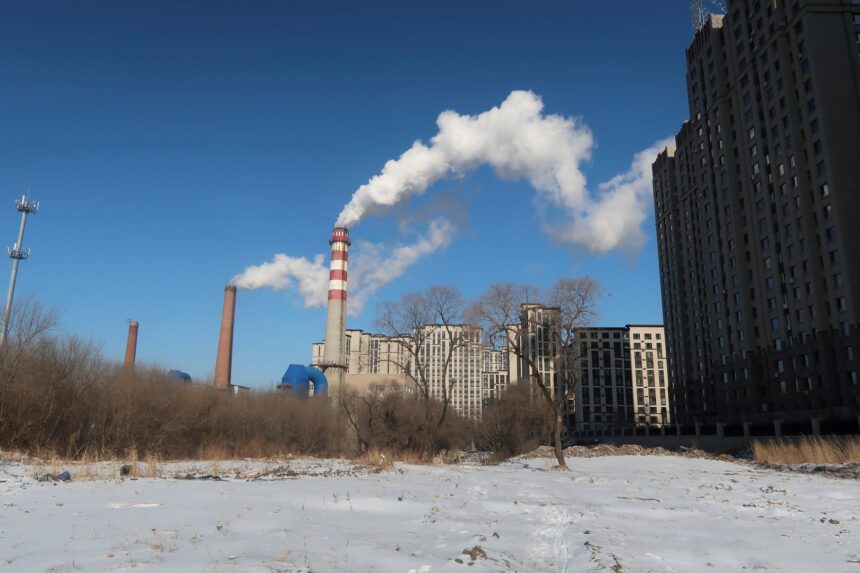
The dynamics of emission increases are complex. Across the EU, the electricity, gas, steam, and air-conditioning supply sectors were the largest contributors, witnessing a staggering 13.6 per cent rise. Households also saw an increase of 5.6 per cent in their emissions. This trend raises important questions about energy consumption and the sustainability practices being adopted in both residential and commercial sectors across the Republic of Cyprus.
Interestingly, while some sectors faced emission increases, others reported declines. Manufacturing saw a slight decrease of 0.2 per cent, while the transport and storage sector declined by 2.9 per cent. Agriculture, forestry, and fishing also experienced a 1.4 per cent drop in emissions, demonstrating that certain sectors are achieving better environmental performance even amidst economic challenges.
Rising Emissions in Context
The rise in Cyprus’ greenhouse gas emissions is not an isolated case; the trend was identified in 20 EU member states, contrasting sharply with only seven countries that reported decreases. Nations such as Bulgaria, the Czech Republic, Poland, Hungary, and Greece experienced increases of over 5 per cent, indicating that this issue is widespread across the region.
On the other hand, countries like Malta, Finland, and Denmark managed to achieve significant reductions in emissions—6.2 per cent, 4.4 per cent, and 4.3 per cent, respectively. Notably, these reductions were accomplished while maintaining economic growth, suggesting that it is indeed possible to harmonise environmental sustainability with economic progress. This example should serve as an important lesson for the Republic of Cyprus as it navigates its own industrial and economic strategies.
Among those seven countries reporting a decrease in emissions, three also faced GDP declines—Estonia, Latvia, and Luxembourg—while the other nations maintained sustainable practices during economic advancements. Such insights are critical for policymakers in Cyprus as they explore pathways to reduce greenhouse gas emissions without sacrificing economic growth.
A Call for Sustainable Policies in Cyprus
The ambitious growth targets of the Republic of Cyprus necessitate an immediate evaluation of existing energy policies and emission reduction strategies. As the nation continues to develop economically, it is imperative that the government, businesses, and citizens come together to foster a culture of sustainability. This can include investment in renewable energy technologies, improvements in energy efficiency, and robust public awareness campaigns focused on reducing individual carbon footprints.
Furthermore, implementing strict regulations on industries contributing to greenhouse gas emissions will also play a vital role. Encouraging industries to adopt cleaner technologies and sustainable practices can trigger a transformation in Cyprus’ environmental landscape, ultimately leading to healthier air quality and compliance with international environmental treaties.
The increase in greenhouse gas emissions in Cyprus serves as a critical reminder that progress in one area should not come at the expense of another. Thus, it becomes crucial for the Republic of Cyprus to capitalise on available insights and commit to a comprehensive approach that aligns economic growth with environmental stewardship.
As 2025 unfolds, the Republic of Cyprus stands at a crossroads: the choices made today will shape its future in combating climate change and positioning itself as a leader in sustainability within the EU. It is time for Cyprus to take proactive measures to reverse the rising emission trend and secure a sustainable future for generations to come.