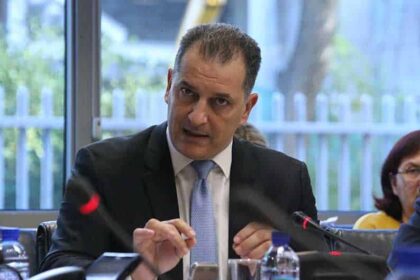
Cyprus is currently experiencing economic growth, highlighted by a fiscal surplus, a decline in unemployment, and a surge in tourism driven by local demand. Interior Minister Constantinos Ioannou recently defended the government’s business-friendly strategy, asserting that the private sector is more efficient in delivering housing and development projects. Speaking at the Gen Z & Millennial Project discussion with young entrepreneurs in the land development and construction sectors, he emphasized the government’s commitment to supporting business initiatives.
Ioannou remarked, “As far as business is concerned, our political direction and our ideology are certainly to help business, in contrast to other ideological spaces.” He noted proposals from other political parties for wealth taxation and restrictions on property purchases by third-country nationals, stating that the government views entrepreneurship as a vital engine for growth and employment.
In terms of fiscal performance, the Cyprus general government recorded a surplus of €593.4 million for January-April 2026, representing 1.5% of GDP. This marks a slight decrease from the €614 million surplus, or 1.7% of GDP, in the same period in 2025. Total revenues increased by €194.4 million, reaching €4.99 billion, while tax revenues from income and wealth rose by 10.3%, amounting to €1.29 billion.
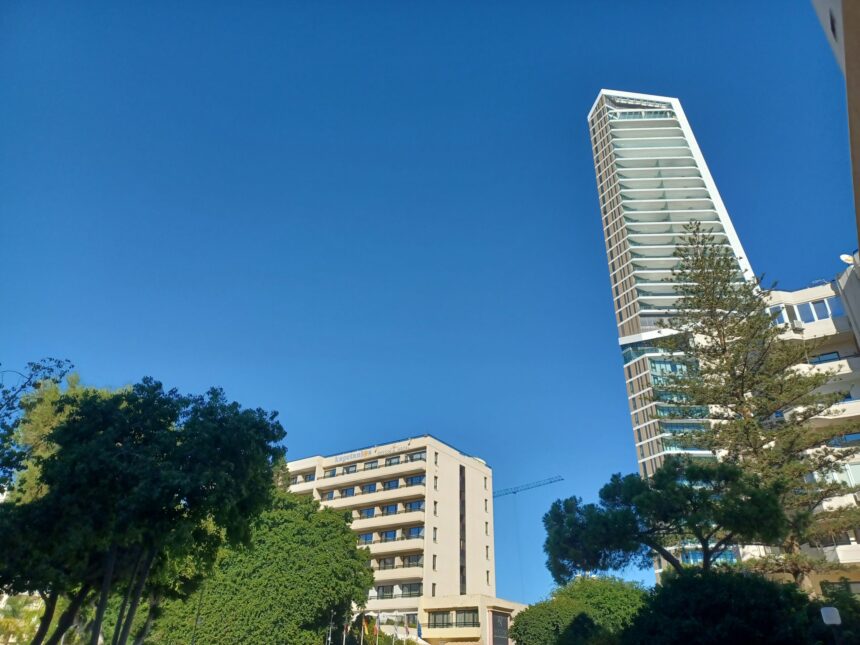
On the tourism front, Paphos hotels are gearing up for a busy Kataklysmos holiday weekend, with occupancy rates expected to exceed 90%. Evripides Loizides, president of the Paphos Hoteliers Association, expressed optimism for the three-day break, indicating most hotels are already operating at high capacity. However, he cautioned that this temporary spike in demand would not sufficiently offset the overall weakness observed in May, a month that had seen significant declines compared to the previous year.
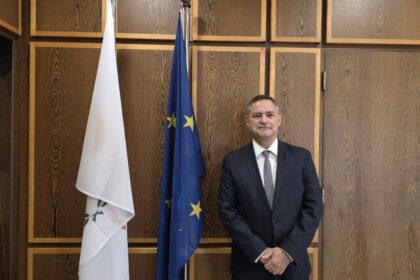
Meanwhile, the EU’s Competitiveness Council recently endorsed conclusions on sustainable tourism, a significant achievement during Cyprus’ presidency of the Council. Deputy Tourism Minister Kostas Koumis described this as a pivotal moment for the country, paving the way for the European Commission’s upcoming sustainable tourism strategy. Koumis stated that, “Tourism is a key driver of growth, employment and cultural exchanges across the EU,” underscoring the importance of long-term resilience in the sector.
In a related development, Christos Tsanos has been re-elected as president of the Limassol district branch of the Cyprus Hoteliers Association (Pasyxe). His renewed leadership comes at a time when the hotel industry is facing significant challenges, including increased competition and rising expectations from visitors. The newly elected board includes Zenon Christophorou as deputy president and several other key figures in the hotel sector.
Looking ahead, a major economic summit will convene in Nicosia on June 4, 2026, focusing on the professional services sector’s role in national economic development. The Fourth Professional Services and Economy Conference will feature key representatives from the Ministry of Finance and the Cyprus Chamber of Commerce, discussing how the domestic knowledge economy can drive future growth.
On the international front, Posidonia 2026 is anticipated to showcase Greek shipping’s global influence, attracting over 2,200 exhibitors from 80 countries. The event is set to take place from June 1 to 5 in Athens, featuring significant participation from major maritime nations.
In the labour market, Cyprus has recorded a notable improvement, with the unemployment rate falling to 4% in the first quarter of 2026, down from 5% the previous year. This reduction translates to 21,246 unemployed individuals, a marked decrease from 26,161 in Q1 2025, reflecting positive trends in employment across both genders. The number of employed persons has risen to 510,265.