Cyprus is facing a critical water management crisis as its dams approach breaking point, with a recent report revealing that many issues from a 2016 audit remain unresolved. The Audit Office released findings on Monday that highlight significant delays and inadequacies in the management of the island’s water resources, raising concerns about sustainability amidst increasing pressure from climate change and water scarcity.
Long-Standing Issues Persist in Water Management
According to the follow-up audit by the Water Development Department, state authorities have been slow to take necessary actions despite the ongoing drought conditions. Auditor General Andreas Papaconstantinou stated, “The prolonged period of drought our country is experiencing provides an opportunity for the best possible preparation and taking of measures, for example maintenance of dams.” This statement reflects the urgency of the situation as Cyprus grapples with its water resources.
Project Delays and Financial Oversight
The report indicates that of the 60 projects outlined in the 15-year Water Development Plan (2016-2030), only 14 have been completed. Despite a substantial expenditure of €767 million from the state budget, there is inadequate monitoring of how these funds are being utilised, leaving uncertainty about whether additional financing is necessary. The delays have also resulted in the River Basin Management Plan and the Flood Risk Management Plan being submitted to the European Commission years late, prompting a reasoned opinion regarding violations of EU legislation.
Dam Safety Concerns Mount
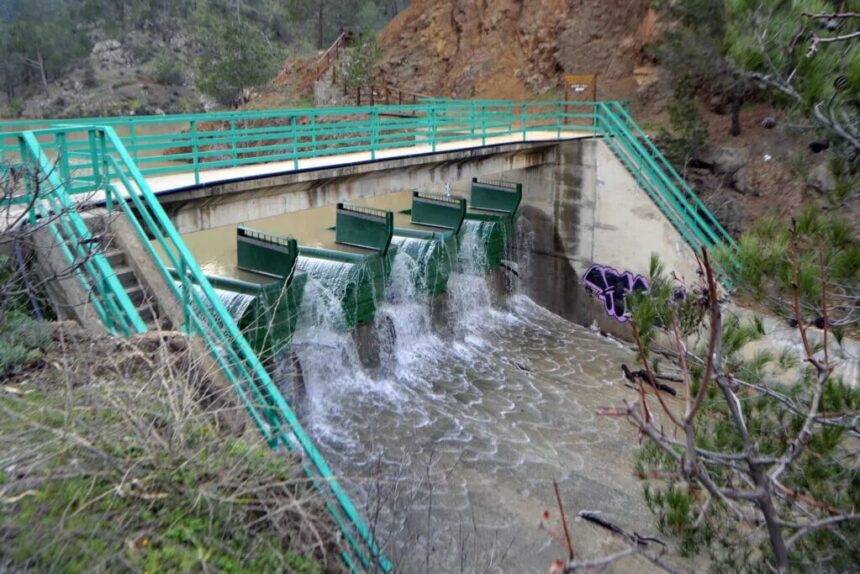
Cyprus operates 104 large dams, with 56 registered with the International Commission on Large Dams (ICOLD). Many of these dams are ageing and lack comprehensive maintenance plans and safety certifications. The absence of independent inspections, coupled with the fact that no final certificates have been issued for private dams, raises alarm about their safety. Most dams have exceeded their designed lifespan without compliance with necessary reservoir safety legislation, highlighting the need for immediate attention.
Critical Maintenance Gaps Identified
The audit underlines several critical gaps, including the lack of operation and maintenance manuals for all dams, insufficient preventative maintenance, and failures to conduct timely inspections by independent engineers. The absence of inundation maps for potential dam failures, particularly for dams near populated areas like Kouris Dam, poses additional risks. A recent incident at Mavrokolymbos Dam in January 2025, attributed to a pipe failure, further emphasised the need for improved accessibility and maintenance practices.
Environmental Concerns Linked to Desalination
While desalination plants have helped meet Cyprus’s water supply needs, the report raises significant concerns about their environmental impact and the economic burden placed on consumers. The discharge of brine—a by-product of desalination—into the sea has negatively affected marine vegetation near the Larnaca and Dhekelia plants. At the time of the audit, only two desalination plants had secured waste discharge permits.
Corrosive Effects on Infrastructure
Water from these desalination plants has corrosive properties that cause damage to pipework and household installations, such as water heaters. The report suggests potential interventions, such as enriching desalinated water with calcium or carbon dioxide or blending it with dam water, to mitigate these effects. Furthermore, underwater pipes for brine discharge or water transportation lack marker buoys, increasing risks for passing vessels and other coastal activities.
Aquifers at Risk
The audit reveals that approximately 64 per cent of Cyprus’s aquifers are in poor chemical or qualitative condition, primarily due to nitrate pollution, salinisation, and inadequate controls. The challenges in accurately estimating available water quantities hinder effective planning. Additionally, water losses across the island exceed 200 million cubic metres annually, with unaccounted-for water rates in Local Water Boards reaching 29 per cent.
Monitoring Shortcomings Highlighted
Systematic monitoring of drinking water quality is lacking in the majority of Local Water Boards, and only 26 per cent of boreholes possess designated Protection Zones. Despite studies conducted since 2009, no measures have been implemented to effectively utilise rainwater, while flood management systems are plagued by delays and deficiencies. The Advisory Committee for Water Management meets infrequently, offering little substantial guidance to Local Water Boards.
Call for Coordinated Action
The Audit Office emphasises the need for a strengthened institutional framework with clear strategic planning, effective resource allocation, and improved coordination among authorities. Auditor General Papaconstantinou noted that genuine improvement in water management will require coordinated action, political will, and full adherence to both European and national obligations.
As Cyprus faces a critical juncture in its water management, the urgent need for reform and proactive measures has never been clearer. Without immediate action, the sustainability of water resources on the island will remain at risk, jeopardising both the environment and the well-being of its citizens.