Cyprus has significantly upgraded surveillance along the Green Line with advanced monitoring systems over the past three years. Modern cameras and audiovisual equipment now provide continuous oversight of the buffer zone, according to sources knowledgeable about the developments, as reported by the Cyprus News Agency (CNA).
Collaboration Between Authorities
Surveillance efforts are a joint initiative between the Ministry of Defence and the police, facilitated through the National Guard. Liaison officers from the United Nations Peacekeeping Force in Cyprus (UNFICYP) are also on hand to support operations when necessary.
“We have various audiovisual means, cameras, and other equipment at specific points, and surveillance is continuous and on a 24-hour basis,” the sources revealed. They added that the National Guard has specific instructions, maintained through ongoing cooperation with UNFICYP. Should any suspicious activity be detected, the National Guard promptly alerts the police.
Changes in Physical Barriers
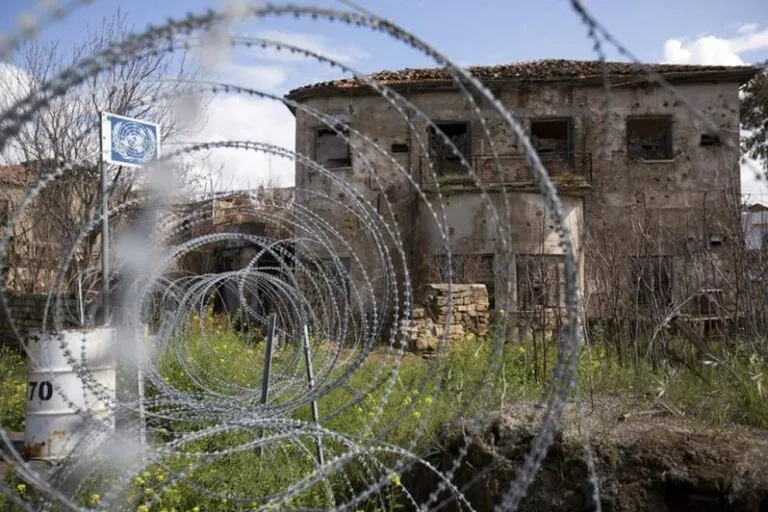
Notably, the wire fencing that previously marked the Green Line has been almost entirely removed, aside from areas where the terrain makes it impractical to do so, such as in ravines. This modification is part of a broader strategy to enhance monitoring capabilities.
While there are advancements in surveillance, areas like Pyla operate under a unique regime where the UN controls access, and no checkpoints or barriers exist. Other regions, due to challenging terrain, remain difficult to monitor fully, including places like Avlona.
Historical Context of the Green Line
The Green Line, which serves as the divide across Cyprus, spans approximately 180 kilometres. In some parts of the old city of Nicosia, it is merely a few metres wide, while in other sections it extends several kilometres. Established on December 30, 1963, the line was drawn using a green pencil by General Young, the then-commander of British forces in Cyprus. Initially covering only parts of Nicosia, it was later expanded after Turkey’s invasion of Cyprus in 1974.
UN troops, deployed in March 1964, have been tasked with patrolling the buffer zone since its inception, which has witnessed various changes in its configuration over the years.
The Role of UNFICYP
UNFICYP plays a crucial role in monitoring the buffer zone. Their operations involve continuous oversight via vehicle, foot, bicycle, and helicopter patrols, with a dedicated unit ready for emergencies. The mission reports an average of 1,000 incidents occurring within the buffer zone each year.
Currently, around 802 troops from various countries, including Argentina, the United Kingdom, Slovakia, and Hungary, are deployed rotationally. The mission consists of four central units stationed in designated areas, ensuring comprehensive coverage.
Structure of UNFICYP Sectors
The UNFICYP force is organised into three main sectors: Sector 1, Sector 2, and Sector 4. Sector 3 was dissolved following Canada’s withdrawal in 1993, and its area was integrated into the remaining sectors. A troop review in 2004 led to a shift in strategy, with peacekeepers now patrolling rather than maintaining fixed positions.
The helicopter unit, under Argentine command, provides essential 24-hour surveillance along the buffer zone and emergency support, operating from Nicosia International Airport.
- Sector 1: Covers about 90 kilometres from Kokkina to Mammari, under Argentine command since 1993.
- Sector 2: Overseen by British Armed Forces, spanning over 30 kilometres from Mammari to Kaimakli.
- Sector 4: Commanded by Slovak Armed Forces since 2018, covering 65 kilometres from Kaimakli to Deryneia.
UN Police Presence
The UN Police (UNPOL), part of the peacekeeping mission since 1964, consists of 69 officers from 16 different countries, supported by civilian staff. UNPOL operates in various locations across the island, including the UN Protected Area, although they do not possess arrest or detention powers.
Crossing Points and Access
Since April 2003, several crossing points have been established across Cyprus, facilitating movement between the two sides. This includes locations in the British Bases area and several in Nicosia, enhancing access for civilians. Recently, two additional crossing points opened in November 2018, further improving connectivity.
Efforts to bolster surveillance along the Green Line reflect Cyprus’s commitment to maintaining security in a region marked by historical conflict. As technology continues to evolve, the hope is that these improvements will lead to more effective monitoring and a safer environment for all residents in the vicinity.