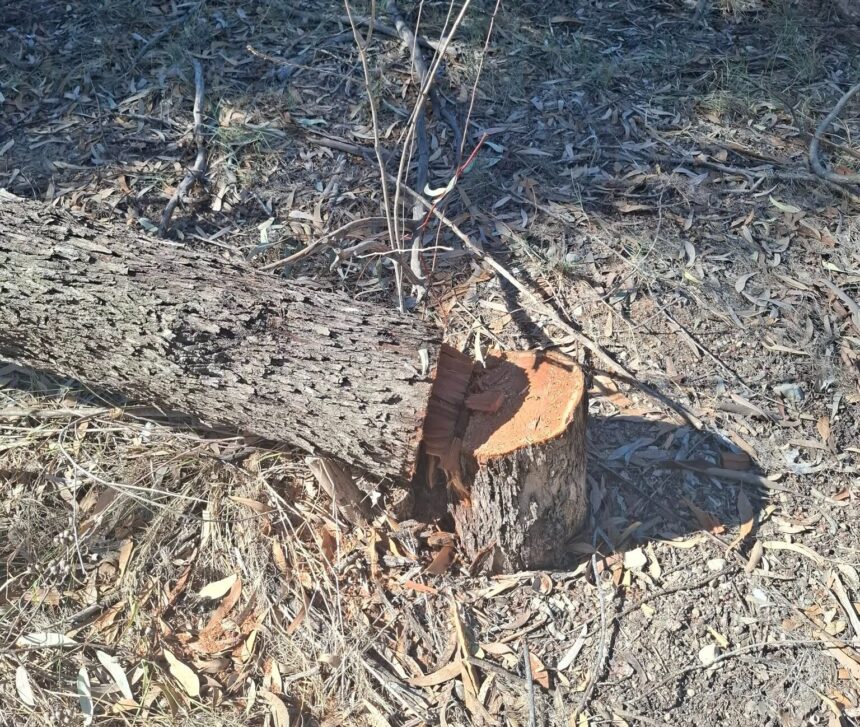
Concerns are mounting over tree management practices at Nicosia’s Academy Forest Park, where sixty trees have been cut or pruned as part of ongoing work. Former Movement of Ecologists-Citizens’ Cooperation Party leader George Perdikis has voiced his apprehension regarding the Forestry Department’s lack of transparency surrounding the project.
Located between the municipalities of Aglantzia and Nicosia, the 45-hectare Pedagogical Academy National Forest Park, also known as Alsos Forest, has a rich history. Established in the early 20th century, it was initially a large wetland that underwent transformation after the British colonial government planted numerous eucalyptus trees to improve accessibility.
On 16 October, the Forestry Department announced plans for maintenance work at the park, which includes flood prevention measures and fire protection strategies. This initiative is part of the Holistic Water Management Plan aimed at improving the lake area and surrounding environments.
Despite the necessity of the work, Perdikis expressed frustration over the department’s failure to provide specific details, including how many trees would be affected and the rationale behind their removal. He requested information a week prior but reported receiving no response.
In a Facebook post, Perdikis noted that around twenty eucalyptus trees were being cut, with an additional forty undergoing significant pruning, raising concerns about the arbitrary nature of the actions. He pointed out that no plans had been presented to the public, which is required under legal provisions for Environmental Impact Assessments.
In response to the growing unease, the Forestry Department released further information on 26 October, clarifying that the flood prevention works were essential to the Cyprus Flood Risk Management Plan. This plan aims to mitigate flood risks from the Kateva River and enhance the park’s overall environmental conditions.
The department explained that the design of the proposed retention lake, spanning 3.8 decares, was informed by a specialised hydrological study. They emphasised their commitment to minimising the impact on the park’s vegetation and natural environment.
Additionally, the Forestry Department highlighted ongoing initiatives to support biodiversity within the park, including tree planting and the establishment of wildlife watering points. However, Perdikis remains concerned about fire risks in the area, citing unremoved biomass like dry branches, grass, and rubbish that could exacerbate fire hazards.
He recalled two instances during the summer when citizens had to intervene to extinguish fires before the fire services arrived, underscoring the need for better fire management measures. Perdikis called for the Forestry Department to engage with local organisations and citizens to create a collaborative approach to preserving the Pedagogical Academy forest.