The state of cemeteries in Cyprus is currently described as “not very encouraging” by Ali Tuncay, the Turkish Cypriot co-chairman of the bicommunal technical committee on cultural heritage. His remarks highlight the pressing need for restoration work across the island, which was initiated as a confidence-building measure following a meeting led by United Nations Secretary-General Antonio Guterres in March last year.
Ongoing Restoration Efforts
Tuncay’s comments came during an interview with the Tak news agency, where he expressed concern over the condition of many cemeteries, mausoleums, and tombstones that are either significantly damaged or missing entirely. Despite these bleak observations, progress is being made. Currently, 30 cemeteries are undergoing restoration, split evenly between Turkish Cypriot and Greek Cypriot sites.
Details of the Restoration Work
The restoration efforts encompass a variety of tasks aimed at improving the conditions of these sites. Repair work includes fixing perimeter walls, fencing the cemetery boundaries, clearing excess vegetation, and restoring existing tombstones. Once these initial tasks are completed, families will have the opportunity to pay for the restoration of individual graves.
Tuncay emphasised the importance of these projects, stating, “Cemeteries are not only physical structures, but also a humanitarian issue. Therefore, we carry out these projects with a very high level of ethical sensitivity.” This perspective underscores the dual significance of cemeteries as both historical sites and places of remembrance for families.
United Nations Involvement and Observations
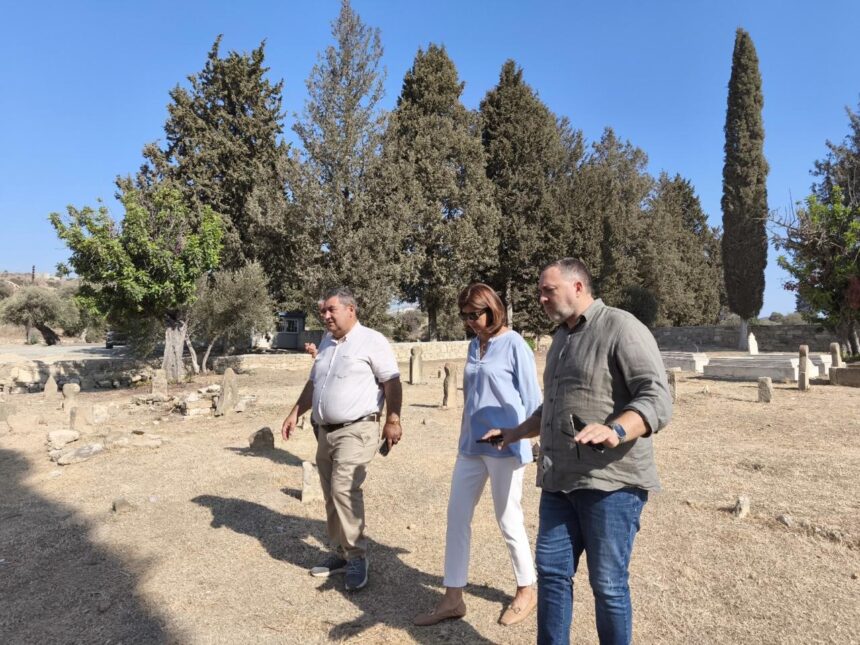
The initiative to restore the cemeteries follows a broader strategy aimed at fostering dialogue and understanding between the two communities. In September, UN envoy Maria Angela Holguin visited two of the cemeteries undergoing restoration alongside Tuncay and the committee’s Greek Cypriot co-chairman, Sotos Ktoris. Holguin expressed her optimism about the progress being made, stating she was “greatly encouraged to hear directly” about the developments from both co-chairs.
During her visit, Holguin inspected the Turkish Cypriot cemetery in the village of Tochni, as well as the Greek Cypriot cemetery in Palaikythro, located in the north. These visits serve to reinforce the UN’s commitment to monitoring and supporting the restoration efforts.
A Historical Perspective on Cemeteries
The cemeteries chosen for restoration are steeped in history and reflect the complex narratives of the island. Palaikythro, for instance, was once a mixed village where Turkish Cypriots and Greek Cypriots lived together until the intercommunal strife of the 1960s and the Turkish invasion in 1974 reshaped its demographics. The Turkish Cypriot population fled in 1964, leaving behind a predominantly Greek Cypriot community.
Tochni holds a particularly grim historical significance, as it was the site of the Tochni massacre during the 1974 invasion, where numerous Turkish Cypriot men and boys were executed. A total of 84 individuals were killed, and many were buried in a makeshift grave. This tragic event has left lasting scars on the community and highlights the urgent need for healing and reconciliation.
Community Reactions and Future Implications
Efforts to restore the cemeteries are not merely about physical restoration; they are also symbolic gestures aimed at fostering reconciliation between the two communities. The restoration initiatives have received mixed reactions from the public, with some viewing them as a crucial step towards healing while others remain sceptical about the sincerity of such efforts.
In 2016, former foreign minister Erato Kozakou-Markoullis publicly apologised to the Turkish Cypriot community for the atrocities committed during the conflict, specifically mentioning the Tochni massacre. Her apology was met with both support and criticism, illustrating the ongoing complexities of addressing historical grievances within the divided island.
Markoullis stated, “I feel the need to express a sincere public apology to our Turkish Cypriot compatriots for the horrific crimes committed on August 14, 1974.” Her acknowledgment of past atrocities is seen by some as a sign of progress, while others question whether such gestures can lead to tangible change.
The Path Forward
The restoration of cemeteries in Cyprus represents a multifaceted challenge that intertwines cultural heritage, humanitarian concerns, and historical narratives. As work continues on the 30 cemeteries, there is hope that these efforts will not only restore the physical spaces but also contribute to a broader dialogue about reconciliation and understanding.
With the support of international bodies like the United Nations, the ongoing restoration efforts may serve as a foundation for future cooperation and a step towards healing the divisions that have long affected the island. The focus now lies on ensuring that the restoration projects are carried out with the necessary sensitivity and respect for the memories they honour.