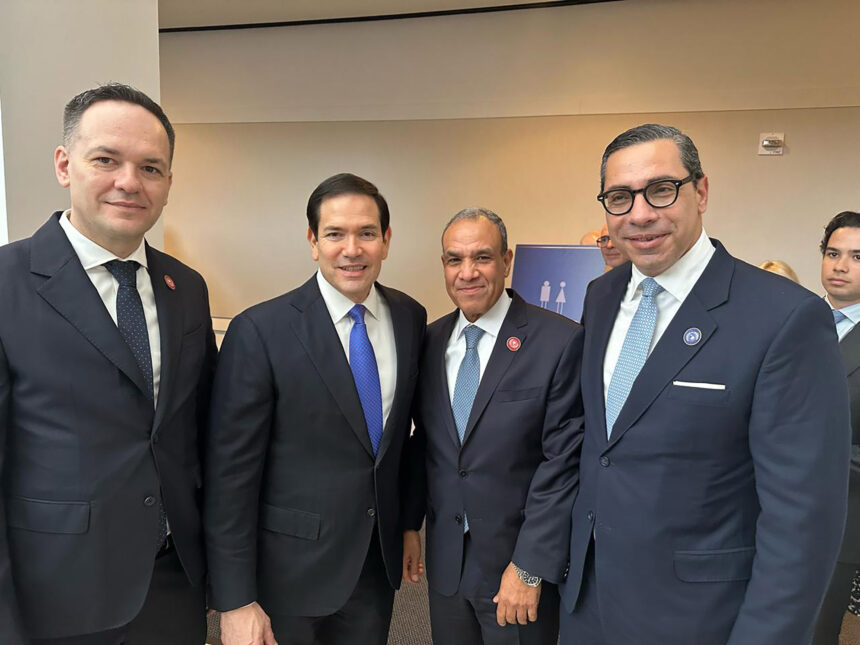
Cyprus has submitted a set of targeted proposals aimed at reconstruction and security in Gaza during its participation in the inaugural meeting of the Board of Peace in Washington, DC. The country’s Foreign Minister, Constantinos Kombos, represented Nicosia as an observer at the event held on Thursday.
In a statement released prior to the meeting, the Cypriot foreign ministry highlighted that representatives from 14 other EU member states were present, alongside Dubravka Suica, the European Commissioner for the Mediterranean.
The discussions in Washington centred around the next steps and mechanisms to monitor the agreements within the Peace Agreement and the Peace Plan set forth by former US President Donald Trump. This plan has been endorsed by UN Security Council Resolution 2803.
Before the meeting, the Cypriot government submitted updated proposals that build on a six-point plan established by President Nikos Christodoulides. The new document outlines four key areas of focus: humanitarian aid via the Amalthea corridor, early recovery efforts for Gaza, restoration of critical infrastructures, and security training in collaboration with EU missions. Additionally, it includes operational support for the International Stabilisation Force.
During his visit, Kombos engaged in talks with officials from various countries participating in the Board of Peace. He emphasised the importance of continuing coordinated international efforts to promote stability and security in the region.
The Board of Peace, which has been established to further peacekeeping initiatives globally, was proposed in September 2025 and formally launched during the World Economic Forum in January 2026. Its creation is cited in UN Security Council Resolution 2803, designating it as a body responsible for overseeing the Gaza peace plan.
European nations have raised concerns regarding the Board of Peace potentially usurping the role traditionally held by the United Nations in peacekeeping and reconstruction efforts. Currently, Cyprus is not a member of the Board, but its proactive proposals reflect its commitment to contributing to regional stability.